


No. 11, 2026 | 17 July 2026
Go to:
From FRSA's Executive Director
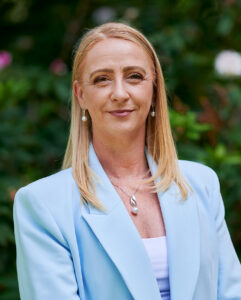
July is proving to be a very busy month for FRSA – and, no doubt, for many of our readers. This week my head is filled with a plethora of ideas and activities that range from AI and family law, to planning for future FRSA events, to highlighting the importance of prevention and early intervention and the role of FRSA’s members’ services as priority areas for the second Action Plan for the National Plan to End Violence against Women and Children. The last two weeks where we have seen four women and adolescents murdered by men or boys known to them is a horrific and pertinent reminder that we need to be thinking outside of the box and taking every opportunity to engage and work with victim survivors, their children and people who use violence at every opportunity when they walk through our doors – regardless of the service point of entry.
Of course, squarely in this mix of work is reform to the child and family programs funded by the Department of Social Services (DSS). From 1 July 2027, five programs under the DSS Families and Children Activity will end, and a new program – the Children and Family Support program – will commence, underpinned by relational contracting. It’s an ambitious timeframe for such a significant shift, and the FRSA team is working hard with our members to help shape the reform and ensure its success.
Central to the new program and approach is to build the Aboriginal Community Controlled Organisations (ACCO) sector through both partnerships and the transition of services.
Earlier this week we hosted a webinar for FRSA Members about transitioning to ACCOs and we were delighted to have Nadia Currie, Acting Director, Sector Engagement and Innovation, present on SNAICC’s approach working alongside mainstream and ACCO partners to support their transformation and transition journeys. Nadia provided helpful practical insights and examples as well as pointing the audience to some of SNAICC’s great resources.
With anything new, it is the practical and experiential insights that really bring an abstract vision to life. I take this opportunity to re-share a webinar presentation that FRSA hosted late last year – Better Together – delivered by Alister Ferguson from Maranguka and Anne-Marie Mioche from CatholicCare Wilcannia-Forbes. Alister and Anne-Marie shared their 8-year journey building a unique partnership grounded in trust, shared values and a commitment to community-led change in Bourke. I’d encourage anyone looking to build partnerships between mainstream and First Nations organisations to spend 45 minutes hearing about Alister’s and Anne-Marie’s journey.
As the week of celebrating and recognising the history, culture and achievements of Aboriginal and Torres Strait Islander peoples – NAIDOC week – came to a close on 12 July, FRSA was thrilled to release our new Reconciliation Action Plan, which will guide us along our Reconciliation Journey over the next two years. See more below.
Kind regards,
Jackie Brady
FRSA Executive Director



FRSA Reconciliation Action Plan 1 July 2026 – 30 June 2028
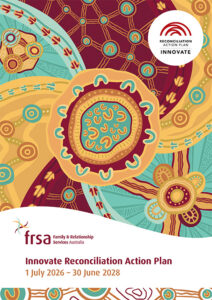 FRSA is proud to publish our Reconciliation Action Plan (RAP) 1 July 2026 – 30 June 2028. This is our fourth strategy to embed reconciliation within our work and our third to be endorsed by Reconciliation Australia as part of the RAP Program.
We were delighted to work with 100% First Nations owned and women-led creative agency, Yirra Miya, who created our RAP artwork and designed the RAP. Artist and founder of Yirra Miya, Leticia Forbes, has beautifully captured the work of FRSA and our reconciliation journey in her artwork. We are grateful for her deep and thoughtful listening.
As we continue our reconciliation journey, we will work hard to ensure that our commitment translates into meaningful action through the three core pillars of the RAP Framework: relationships, respect and opportunities on a foundation of strong Governance.
We look forward to building our relationships with Aboriginal and Torres Strait Islander community partners and friends, to further developing our understanding of Aboriginal and Torres Strait Islander cultures, rights and experiences, demonstrating our respect for First Nations leadership and self-determination, and supporting the equal participation of Aboriginal and Torres Strait Islander peoples in the work we do.
We encourage you to take a look at our RAP, which is published on the FRSA website.

National Plan to end violence – Monitoring and Reporting Framework
 The Domestic, Family and Sexual Violence (DFSV) Commission has released its Monitoring and Reporting Framework, which will guide independent assessment of Australia’s progress under the National Plan to End Violence against Women and Children 2022–2032.
The Framework is central to the Commission’s role and will help to identify systemic barriers, monitor progress against outcomes, and highlight emerging risks and opportunities for reform. Rather than focusing primarily on tracking activities and reforms, the Framework adopts a systems-based approach to assessing whether collective efforts across governments, sectors and service systems are driving meaningful change.
The Framework will continue to evolve as new data sources become available, and will integrate Our Ways – Strong Ways – Our Voices – National Aboriginal and Torres Strait Islander Plan to End Family, Domestic and Sexual Violence 2026–2036, alongside its Action Plan and combined Theory of Change and Outcomes Framework.
You can access the Monitoring and Reporting Framework here.
Preventing financial abuse through Child Support strategy (the strategy) and action plan
Services Australia has published the Preventing financial abuse through Child Support strategy (the strategy) and action plan.
 The strategy aims to strengthen how Services Australia prevents and responds to financial abuse and the weaponisation of Child Support. It responds to issues highlighted in the Commonwealth Ombudsman’s June 2025 report, Weaponising Child Support: When the system fails families, and supports broader government work to address family and domestic violence.
The action plan shows how Services Australia will deliver on the strategy’s objectives of safety, certainty, equity, stewardship and partnership. It outlines improvements made in the last 12 months, as well as measures that will be implemented progressively from 2026, including actions linked to the 2026-27 Budget Child Support reforms.
You can access the strategy and action plan on Services Australia’s website at: Preventing Financial Abuse through Child Support Strategy – About us – Services Australia
National information and referral service for victims and survivors of child sexual abuse
On 14 July, the Australian Government announced that the Australian Childhood Foundation will deliver a new national information and referral service to assist victims and survivors of child sexual abuse.
The service, which has been developed in response to Recommendation 9.5 of the Royal Commission into Institutional Responses to Child Sexual Abuse, will provide free assistance to victims and survivors of child sexual abuse, practitioners and the general public to navigate the service system and access help and information. The service will be accessible via a website, helpline and specialist service navigators, and is expected to launch by the end of this year.
Australia’s Health 2026
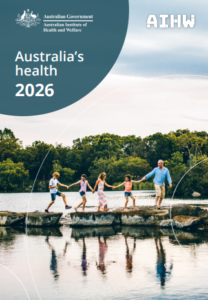 The Australian Institute of Health and Welfare (AIHW) has released Australia’s health 2026 – its 20th biennial report on the health of Australians. The report provides a point in time summary of the state of health in Australia and is supported by a collection of 65 web pages on a broad range of health topics.
The report has six focus areas:
- Understanding chronic conditions: patterns, prevention and outcomes
- Supporting people across health, aged care and disability systems
- Factors influencing the health of First Nations people
- Connecting evidence and policy at the intersection of health and welfare
- Australia’s mothers and babies: maternity care and outcomes
- From silos to systems: strengthening Australia’s health data.
A few interesting findings:
- Dementia is Australia’s leading cause of death, responsible for almost 1 in 10 deaths
- Mental disorders among young people aged 16-24 rose from 26% to 39% between 2007 and 2020-2022
- Around 1 in 5 young people aged 18-24 reported using vapes in 2022-2023
- 3 in 5 Australians live with at least one chronic condition.
Cyber security research – “Too small to be a target”
 Australian not-for-profit organisation, .auDA, has just released its sixth annual ‘Digital Lives of Australians’ research – Digital Lives of Australians 2026.
The research focuses on businesses and consumers but has findings and insights that may be of interest and relevance to the not-for-profit sector – particularly small organisations.
The research shows that small businesses underestimate their cyber risk: one in three think they are too small to be targeted and nearly half believe that if large organisations cannot avoid cyber attacks, they have little chance of protecting their own business. While 92% of small businesses hold personal or sensitive data, only 26% feel confident they can protect it. This mindset leaves businesses exposed.
Other key findings include:
- AI use is accelerating
- There is a strong desire for AI regulation with 69% of consumers and 68% of small businesses seeing a need for AI regulatory safeguards
- The top regulatory priorities are:
- Rules against using AI in ways that may cause harm to individuals
- Data security requirements for AI platforms
- Rules against collecting or using personal data to train AI models without consent.
auDA CEO Bruce Tonkin said, “auDA’s annual Digital Lives of Australians study offers a timely view of how Australians are navigating an increasingly complex digital world, and opportunities to address gaps in trust, capability and security.”
You can find out more about .auDA and read the report here.

Secretary of the Attorney-General’s Department reappointed
On 9 July 2026, Prime Minister, Anthony Albanese, announced that the Governor-General had accepted his recommendation to reappoint Ms Katherine Jones PSM as Secretary of the Attorney-General’s Department for three years.
Katherine Jones was first appointed Secretary of the Attorney-General’s Department for five years on 16 August 2021.
Prior to her current position she held a variety of senior executive roles including as Associate Secretary of the Department of Defence, Deputy Secretary in the Department of Finance, and Deputy Secretary in the Attorney-General’s Department.
DSS Consultations closing by end July – have you say
The Department of Social Services is running three consultations that are closing soon.
- Relational Contracting – consultation on draft documents All future providers of the new Children and Family Support (CaFS) program will be on a relational contract from 1 July 2027. This is your opportunity to help shape the foundational documents for relational contracting. Submissions close 26 July 2026.
- Consultation on the Second Action Plan (National Plan to End Violence against Women and Children 2022-2032) There are a number of ways you can have your say on the second Action Plan. This consultation closes 31 July 2026.
- National Redress Scheme Eighth Anniversary Review The National Redress Scheme (Scheme) is undergoing an independent review. The review will focus on priority areas for improvement and critical measures to support safe closure of the Scheme. Submissions close 31 July 2026.
New appointments to ACNC Advisory Board
The Government has announced the appointment of a new group of charity leaders to the Australian Charities and Not-for-profits Commission (ACNC) Advisory Board. The new appointments bring expertise from across charity law, philanthropy, governance, multicultural communities and service delivery to help ensure Australia’s charities continue to benefit from informed, independent advice.
The Advisory Board is a part-time advisory body that supports the ACNC Commissioner by providing sector-specific advice on matters affecting registered charities.
The Government has reappointed Ms Sarah Davies AM as Chair, Ms Sara Harrup as Deputy Chair, and Mr Ian Hamm as a member, who were first appointed on 1 August 2023.
The Government has also appointed as general members:
- Ms Alice Macdougall, a nationally recognised expert in charity law
- Professor Ian Murray, who teaches taxation, corporations and not-for-profit law at the University of Western Australia and researches the intersection of not-for-profit law, taxation, trusts and corporate governance.
- Mr Krystian Seibert, who has extensive experience shaping policy and regulatory frameworks for philanthropy and the not-for-profit sector.
- Dr Rosy Walia, who brings 25 years of senior management and non-executive director experience across the community and health sectors.

Relationships Australia South Australia CEO transition
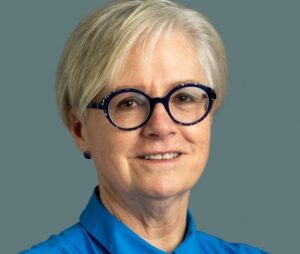
Relationships Australia South Australia has announced that after 29 years of dedicated service, including the past 10 years as CEO, Dr Claire Ralfs will step down from her role at the end of September.
Since joining RASA in 1997, she has guided the organisation through significant growth and change. RASA said, “We are incredibly grateful for Claire’s extraordinary contributions and the lasting legacy she leaves behind.”
RASA also announced that current Deputy CEO, Pete Allred, has been appointed as RASA’s next CEO.

Pete brings extensive experience in the NGO sector, a vision for our services and a strong commitment to improved service impact. His deep knowledge of RASA and values-driven leadership will provide strong foundations at an important time for our sector.
FRSA congratulates Pete on the new role and wishes Claire all the best for the future.
CatholicCare Diocese Of Broken Bay welcome interim Executive Director
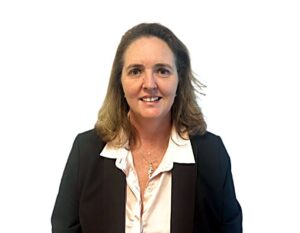 CatholicCare Diocese Of Broken Bay has welcomed Jodie Rollason as Interim Executive Director.
Jodie brings more than 20 years of leadership experience across the for-purpose sector, spanning child, family and legal services. With a unique background as both a nurse and practising lawyer, she has dedicated her career to supporting vulnerable individuals and communities, championing social justice, and breaking down barriers that limit opportunity. Her extensive leadership experience includes community legal services, youth services, and board roles with organisations including Koorana Child and Family Services and Lifeline Central West.
Jodie takes over following the resignation of former Executive Director Tim Curran. FRSA looks forward to working with Jodie in the future.
FRSA Members celebrate NAIDOC Week
Last week was NAIDOC week (5-12 July) and for five decades, NAIDOC Week has celebrated the voices of our communities — steady, unapologetic, and proud. This year’s theme was 50 Years of Deadly, a tribute to the people who built this movement, the Elders who stood firm, the organisers who made space, the artists who turned resistance into expression, and the communities who keep showing up, year after year.
See how FRSA Members around the country celebrated below:
- Mercy Community’s Pathways to Early Learning and Development (PELD) Gatton team and Play Matters and Lowood teams, attended the Kambu NAIDOC celebration in Laidley.
- Relationships Australia Tasmania’s team took part in activities that encouraged learning, reflection and connection. Through a quiz, shared resources and team conversations, they explored the history, achievements and ongoing contributions of First Nations peoples while building their cultural understanding together.
- CatholicCare Wollongong’s teams attended NAIDOC Week celebrations in Nowra and Koonawarra.
- Uplyft’s teams in Goldfields and Port Hedland joined their local communities in celebrating NAIDOC Week.
- Sora Community Services celebrated in Quirindi for their NAIDOC Week Family Fun Day.
- Lutheran Care staff attended the NAIDOC SA Gala Ball, which brought together community leaders, organisations and supporters to celebrate Aboriginal and Torres Strait Islander culture, achievements and contributions.
- Interrelate took part in 14 events across the communities they serve.
- MacKillop Family Services’ Blacktown team had a stall at local NAIDOC Week celebrations connecting with local families and, community members throughout the day.
- Accordwest staff took took part in a range of local events and activities, including a community opening ceremony, the Wardandi Aboriginal Corporation South West NAIDOC Awards, a NAIDOC footy match, flower-making workshops and a shared team lunch.
- Relationships Australia Canberra and Regions’ Wagga Wagga team joined a range of local celebrations, including the Flag Raising Ceremony and march, Riverina Medical and Dental Aboriginal Corporation NAIDOC Community Day and the Ashmont Community Centre NAIDOC Celebration. headspace Batemans Bay staff attended the Mogodha Big Day Out, joining local youth services in the dedicated youth zone, which was full of free activities for young people and families.
- Uniting Country SA celebrated the week at the Port Pirie NAIDOC Ball and shared a reel of all the events their staff took part in during week
- Centacare Brisbane’s teams took part in local activities and conversations and joined colleagues at an event at the Cathedral of St Stephen, Brisbane – Cathedral Communities precinct.
- Anglicare NT continuted their tradition of celebrating NAIDOC week at their Ludmilla site and took part in the annual NAIDOC March in Darwin.
- ac.care reflected and shared photos from events their staff took part in during the week.
- CatholicCare NT held their Director’s Awards 2026 which celebrated the long and dedicated service of their Aboriginal and Torres Strait Islander staff who have been with CatholicCare NT for over 15 years and made extraordinary contributions through partnership and serving the community across the Northern Territory.
- Manning Support Services attended NAIDOC Week events in Forster, Wauchope and Taree.
- Across the week CatholicCare Central Queensland’s teams joined local marches, community events and wonderful celebrations, sharing in the strength, pride and culture of their communities.
- Kyabra Community Association Inc held a a bush tucker workshop for staff and community to attend in Moreton Bay, facilitated by proud Bidjara man, Alara Cameron Geebung. They also shared a video asking staff what NAIDOC week means to them. (Watch the video under the photo gallery)
- Anglicare Sydney’s teams took part in a number of events in their local communities.
- Centacare NQ had a stall at the Townsville NAIDOC Deadly Day Out event.
- Ngala held a NAIDOC week event which included a Welcome to Country by Aunty Di Ryder OAM and a Smoking Ceremony by Aunty Tina Hayden.
-
The Livable team celebrated NAIDOC Week with their communities in Iluka and Grafton.
-
Anglicare Southern Queensland celebrated with a number of events including, at their Nalingu Day Respite Centre in Zillmere and a market at their corporate office, creating space for First Nations businesses to connect with their teams and local community. Their staff also took part in community events in Musgrave Park, Ipswich and Logan.
- Centcare Catholic Community Services celebrated 50 Years of Deadly at an event at Ngani Pari-Arra Cultural Centre.
- The FamilyCare team began NAIDOC Week by attending the local Rumbalara Flag Raising Ceremony.
- Barnardos Australia held an art competition for children and young people across their programs.
- Uniting SA staff had the opportunity to deepen their connection to culture and Country through a guided tour of Yitpi Yartapuultiku in Port Adelaide.
- The Bouverie Centre joined the NAIDOC March in Melbourne to walk with the community and show their respect, recognition, and solidarity.
- Mallee Family Care staff took part in the NAIDOC Family Fun Day at the Mildura Sporting Precinct.
- Anglicare SA join this year’s NAIDOC March & Family Fun Day, walking alongside community through the Adelaide CBD. Their residential aged care homes came together to celebrate NAIDOC Week with meaningful moments of culture, creativity, and connection. They also held an morning tea at their Western Hub to honour the week.

Poverty over time in Australia
Always, usually, sometimes: Poverty over time in Australia is looking for people who have experienced poverty within the past five years to take part in paid research activities. The study aims to understand the day-to-day and long-term impacts of poverty in Australia and how experiences of poverty might change over time.
The study is looking for people who are currently living in Australia, aged 18 years or older, can participate in the study until 2031 and have experienced poverty and disadvantage within the past five years. The ACOSS and UNSW Poverty and Inequality Partnership is running the project.
Those participating will be asked to do a five minute screening questionnaire and three online or phone interviews in 2026, 2028 and 2030 and share a photograph of something from a person’s everyday life approximately once every 6 months.
The study is also asking organisations to use recruitment materials by printing and putting up a flyer on noticeboards at service locations, creating and sharing social media posts, including a recruitment call-out in newsletters and sending out email invitations through email lists.
This project is led by Dr Yuvisthi Naidoo with Co-investigators Dr Mia Harrison, Dr Megan Blaxland and Professor Carla Treloar at the UNSW Social Policy Research Centre. The research is approved by the UNSW Human Research Ethics Committee (reference: iRECS9901).
For more information or to participate go to Always usually sometimes: Poverty over time, email AUSpoverty@unsw.edu.au or call 02 9348 8415.

CHC81015 Graduate Diploma of Relationship Counselling – June 2026, Online
CHC81115 Graduate Diploma of Family Dispute Resolution – July 2026, Online
Couples Counselling Course: A contemporary and client-focused approach

SA
FAMILY DISPUTE RESOLUTION PRACTITIONER (Qualified or Trainee) | Centacare Catholic Country SA
NSW
Family Dispute Resolution Practitioner | CatholicCare Sydney
VIC
Team Leader Therapeutic Foster Care | OzChild
MST CAN Therapist Goulburn Valley Shepparton / Seymour | OzChild
Family Group Conferencing Convenor | OzChild
Community Connector Shepparton | OzChild
If you have any events you’d like listed on the FRSA Events and Training Calendar or job vacancies you’d like listed on the FRSA Jobs Board, email Communications Officer, Vanessa Lam at communications@frsa.org.au. Please note that posting onto the FRSA website is reserved for FRSA Members only.

National suicide prevention outcomes framework: data quality framework | National Mental Health Commission
 This document describes what the framework is, why it is important for the National suicide prevention outcomes framework and who is responsible for using it. The Data quality framework is a systematic approach to defining, assessing and improving the quality of data relevant to the outcomes framework.
AI and employment in Australia | Department of Employment and Workplace Relations
 The report examines whether occupations more exposed to artificial intelligence (AI) in Australia have grown more slowly than other occupations since November 2022. It also examines a range of labour market indicators to see whether there are signs of AI-related disruption. The report sets up a framework that could be used for ongoing monitoring.
Skills in the AI age | OECD Publishing
 This paper examines how artificial intelligence (AI) is transforming labour markets and the policy responses needed to harness its transformative potential while mitigating its risks. It finds that adapting requires developing new skills aligned with evolving labour market demands and policymakers play an essential role in ensuring workers are equipped to thrive in an AI-driven economy.
Young Australians’ concerns and trust are related to their family formation goals | Australian Institute of Family Studies
This report provides the first national evidence on how trust in institutions and societal concerns are associated with young Australians’ thoughts about family formation.
OECD employment outlook 2026 | OECD Publishing
 The outlook looks at the latest labour market developments and prospects in OECD member countries. This edition highlights that the geography of opportunity matters. Local labour markets are also being reshaped by trade and technology shocks. The report highlights the need for policies that support regions and help workers adapt to change.
Giving together: the power and potential of collective giving in Australia | Philanthropy Australia
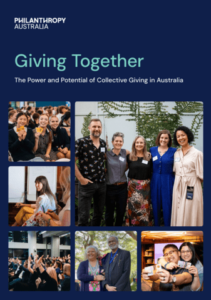 This report provides a comprehensive snapshot of collective giving, or pooled funding, across Australia. The research shows that the impact of collective giving goes beyond the money and is a gateway to deeper and more sustained civic engagement. At the same time, the movement is progressing without the infrastructure and support it needs to fully flourish.
Identifying and supporting children and families experiencing food insecurity | Emerging Minds
This short article draws on research and practice resources to guide practitioners on how to identify families experiencing food insecurity and the strategies, programs and interventions that can provide support.
Young Australians’ civic engagement | Australian Institute of Family Studies
Patterns of civic and social engagement from childhood into young adulthood – including how young people participate in their communities and express their views as they grow older – are in focus in this report.
Want to submit something to the FRSA eBulletin?
If you have an news item or event that you would like to be featured in a future eBulletin please submit your announcement via the form below or email communications@frsa.org.au with the subject “FRSA eBulletin submission”.
Please note FRSA members receive priority for items posted in the eBulletin. And to keep information current, relevant and useful, submissions will not be repeated from week to week.
Subscribe
Subscribe to receive future eBulletin editions directly to your inbox!
