


No. 12, 2026 | 4 August 2026
Go to:
From FRSA's Executive Director
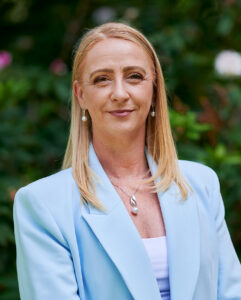
We are excited this week to release early findings from our workforce project, Australia’s Family and Relationship Services Workforce – Now and into the Future. FRSA commissioned the Centre for International Economics (The CIE) to undertake this study to provide an authoritative national evidence base describing the size, composition, employment characteristics and key challenges of the Commonwealth-funded Family and Relationship Services (FRS) sector workforce. While the FRS workforce is funded across multiple programs, it is rarely examined as a cohesive sector, limiting its visibility in workforce planning and policy development.
While the project is still underway, it is great to see early results emerging and to begin imagining ways that the workforce could be better supported to meet emerging challenges. This project will wrap up at the end of October. See more below.
It’s been a busy few weeks for our sector – particularly those funded to deliver services under the Department of Social Services Families and Children Activity. On Sunday 26 July the department’s public consultation on relational contracting closed. Relational contracting, described as a longer‑term, more flexible partnership approach between government and providers, will underpin the new Children and Family Support (CaFS) Program that will commence on 1 July 2027. Then, on Tuesday 28 July, feedback to the department on the draft Grant Opportunity Guidelines for the CaFS program was due. FRSA members engaged generously with us through these processes, informing and shaping our feedback to the department. I extend my heartfelt thanks.
You can read more about our relational contracting submission below. We also made a submission to the consultation on the second Action Plan (National Plan to End Violence Against Women and Children 2022-2032), which closed last Friday 31 July.
This week is a week of both reflection and a call to action. Today is National Aboriginal and Torres Strait Islander Children’s Day, raising awareness for the bright futures of Aboriginal and Torres Strait Islander children. It is also Homelessness Week & Loneliness Awareness Week. These activities serve us well as a reminder about the inter-connected and highly complex lives of so many of the children, adults and communities our sector works with.
Kind regards,
Jackie Brady
FRSA Executive Director



A first look at Australia’s Family and Relationship Services Workforce
FRSA is excited to share the Interim Findings from our commissioned study, Australia’s Family and Relationship Services Workforce – Now and into the Future.
The Interim Findings offer an early glimpse into the people who make up Australia’s Commonwealth-funded Family and Relationship Services workforce. Based on responses from 121 organisations, together with workforce insights from LinkedIn and national job advertisement data, the findings begin to tell an important story about the sector.
They reveal a workforce that is highly skilled and committed, supporting children, families and communities across Australia. At the same time, the interim findings highlight growing workforce pressures – including funding uncertainty, recruitment challenges and increasing demand for specialist skills to meet client complexity – that will shape the future of service delivery.
These findings are just the beginning. The Centre for International Economics (The CIE) is out in the field running focus groups, as well as conducting more in-depth analyses of key data sources, to continue building the workforce picture.
We invite you to explore the Interim Findings and see what the survey is already telling us about our workforce and where the opportunities lie for the future.
To find out more about the project, visit our project webpage.
FRSA Submission on relational contracting
This week FRSA provided a submission to the Department of Social Services consultation – Relational contracting – consultation on draft documents.
FRSA Members support a relational contracting approach that prioritises long-term partnerships, shared outcomes, and a more collaborative and flexible way of working that is responsive to client and community needs. While heading in the right direction, it was felt that the foundational documents will benefit from more work so that a relational way of working can be fully realised in practice. As yet, the foundational documents do not fully align with key relational elements such as shared risk, shared accountability, and trust. Introducing mutual obligations, building in recognition of the governance and operational realities of service providers, and ensuring that enforcement measures are used as a last resort and preceded by relational remedies will bring this new relational approach to life.
Our thanks to our Members who engaged with us so generously to bring together our submission. Development of our submission was guided by a Working Group comprised of seven FRSA members and a large cohort of our membership contributed to our online member discussion, as well as providing one-on-one feedback.
We look forward to working with the department as the relational contracting model and supporting documents are refined and further developed over the next few months.
You can read our submission here.
FRSA Submission - Consultation on the Second Action Plan
Last week, FRSA made a submission to the Department of Social Services consultation on the Second Action Plan (National Plan to End Violence against Women and Children 2022–2032), which closed on 31 July.
The Australian Government is working with states and territories to develop the Second Action Plan building on recent evidence, reviews and inquiries as well as the public consultation.
FRSA’s submission focuses on the role of prevention and early intervention initiatives through the lens of the family and relationship services sector. We discuss the role that prevention and early intervention can play in building protective factors, including the opportunity to circumvent the intergenerational impact of violence on individuals and families. We also discuss the role that community services that sit outside the specialist FDSV sector can play in improving access to support. The experience of the FRSA membership suggests that if set up well, the low or no-stigma universal service system can play an important role in helping people experiencing violence access the support they need, including specialist family violence services.
One of the priority areas in the consultation discussion paper is ‘children and young people in their own right’. FRSA members have long been concerned about the dearth of support for children and young people experiencing and recovering from FDV and we propose that the Action Plan includes investing in specific child-focused services for children affected by family and domestic violence.
The Action Plan also includes a focus area on ‘people who use violence’. As identified in our 2025 Member Mapping Project, a number of FRSA members deliver targeted intervention programs for people who use violence in their intimate and family relationships. We’d like to see further investment in building the evidence base, including research to understand the extent to which government requirements inhibit the use of practice wisdom and/or overseas evidence/models to develop new approaches to service design and delivery, noting that these requirements vary around the country.
You can read FRSA’s submission here.

ACOSS releases briefing note on indexation
The Australian Council of Social Service (ACOSS) recently released a briefing note that looks at improving indexation of Commonwealth grants to community services. Inadequate indexation rates lead to a decrease in the real value of grants over time. To put this another way, indexation applied to grants, rarely reflects the full increased cost of delivering services. It is also often unclear how the indexation rate has been determined by the administering agency.
ACOSS’ briefing note identifies structural limitations with the Commonwealth’s approach to determining indexation rates and highlights the financial impacts on community organisations.
The briefing note includes two recommendations to improve the indexation rate including introducing a Producer Price Index (PPI) that is tailored to community services and removing the productivity offset currently applied to Wage Cost Indexes.
State of the Nation 2026: New report on loneliness
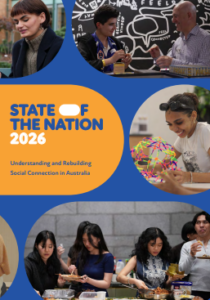 Loneliness Awareness Week runs from 3-9 August and Ending Loneliness Together has released a new research report exploring loneliness and social connection.
The report found:
- 1 in 2 people are lonely, socially isolated, or both
- 45-54 years old are the most lonely and socially isolated
Having just one friend can reduce loneliness and social isolation by 89%. Read the full report.
Cost of leaving domestic and family violence has risen sharply
 New research undertaken by Anglicare Sydney has found that the cost of leaving domestic and family violence has risen by 71% in the past decade (from $4,098 to $7,017), significantly outpacing inflation.
Anglicare Sydney undertook the comparative analysis to chart the difference of the immediate costs of leaving, including bond, moving truck rental, and temporary accommodation, and the follow-on costs of rebuilding a household and establishing safety.
Over the decade, rent and bond costs have more than doubled. Both fuel and childcare costs are also more than 50 per cent more expensive in 2026 than in 2016.
Anglicare Sydney is calling for stronger support for victim-survivors of domestic and family violence, including:
- Stronger immediate financial supports, including increasing the Leaving Violence Program from $5,000 to $7,000
- An expansion of housing responses
- Improved economic and employment protections.
You can view the report here.
Marriages and Divorces – latest data release
The Australian Bureau of Statistics (ABS) has released data on Marriages and Divorces in Australia for 2025.
Key statistics
- 118,804 marriages were registered in 2025, 1.7% fewer than in 2024
- The most popular date to marry was 25/10/2025, with 2,035 marriages on that day
- The number of divorces granted in 2025 increased by 4.1% to 49,148.
When adjusted for population size, the crude marriage rate in 2025 decreased slightly from 5.5 in 2024 and 2023 to 5.3 marriages per 1,000 people. The median age at marriage for males in 2025 was 32.7 years, a slight decrease from the 32.8 years recorded in 2024. The median age at marriage for females was 31.2 years, the same as was recorded in 2023 and 2024. There were 4,636 marriages registered in 2025 for couples of the same or non-binary gender, down by 2.3% from the 4,746 marriages registered in 2024.
The median duration of marriages (from marriage to separation) increased to 9.4 years (from 9.3 years in 2024). The median age at divorce has increased for both males and females from 2024.
You can find out more here.
Closing the Gap Annual Data Compilation Report July 2026
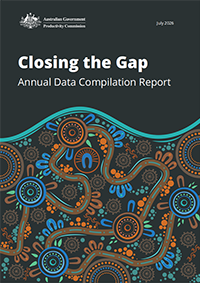 On 29 July, the Productivity Commission released the sixth Annual Data Compilation Report (ADCR) to inform reporting on progress under the National Agreement on Closing the Gap.
The ADCR shows that of the 19 targets, 1 has been met, 3 are on track to be met, 5 are improving but are not on track to be met and 4 are worsening. The deadline for meeting most of the targets is 2031 and the Productivity Commissioner has noted that Governments will need to redouble their efforts if all targets are to be met on time. The Commission also observed that “where governments have started sharing power with communities, progress has followed”.
In the child and family space, SNAICC issued a media release noting that that the data “paints a mixed picture” for First Nations Children with the target for preschool enrolment met, while outcomes in child protection and youth justice have worsened.
You can access the ADCR and related information in the Closing the Gap Information Repository.
New appointments to the Federal Circuit and Family Court
The Albanese Government has announced the appointment of three new judges to the Circuit and Family Court of Australia (Divisions 1 and 2). Judge Steven Middleton and Judge Sandra Taglieri have been appointed to Division 1, and Ms Tracy Flintoff has been appointed to Division 2.
- Judge Steven Middleton was admitted as a Solicitor in the Supreme Court of New South Wales and the High Court of Australia in 1996. Judge Middleton has been a Judge of the Federal Circuit and Family Court of Australia (Division 2) in Brisbane since 2015.
- Judge Sandra Taglieri was admitted as a Barrister and Solicitor of the Supreme Court of Tasmania and the High Court of Australia in 1989. Judge Taglieri has been a Judge of the Federal Circuit and Family Court of Australia (Division 2) in Hobart since 2021.
- Ms Tracy Flintoff was admitted as a Legal Practitioner of the Supreme Court of New South Wales in 2001. Ms Flintoff has been a Senior Judicial Registrar of the Federal Circuit and Family Court of Australia since 2021.
Standing Council of Attorneys-General communique
The Standing Council of Attorneys-General met on 31 July in Darwin, chaired by the Hon Michelle Rowland MP, Commonwealth Attorney-General. All jurisdictions were represented by their ministers either in person or virtually.
Participants noted a presentation by the National Children’s Commissioner on priorities for strengthening child safety and consultations with children and young people on policy responses to child sexual abuse, and family, domestic and sexual violence. They discussed a range of matters including:
- child safety – working with children check reform
- responses to gender-based violence
- developing a national standard for responsible media reporting on domestic family and sexual violence
- Closing the Gap justice targets
- national access to justice partnership long-term reforms
- artificial intelligence use in the system
- workplace protection orders
- forced marriage.
You can read the communique here.
New Fair Work Court
On 23 July 2026, Prime Minister Albanese announced that the Government will create a new Fair Work Court to provide simpler, fairer and faster justice for working Australians.
The new federal Fair Work Court will provide a specialist forum for resolving workplace relations disputes that works seamlessly with the Fair Work Commission. Specialist judges with workplace relations expertise would sit on the Court, with the aim of supporting faster, simpler and more accessible dispute resolution.
The Government will consult on the design of the proposed court this year to help shape how the Court works, including how it will work with the existing Fair Work Commission, and how it will improve access to justice and better support workers and employers navigating disputes.
More details will be released soon about the consultation process.

Uniting NSW.ACT's new Chief Executive Officer
 Uniting NSW.ACT has appointed Ben Keneally as its new Chief Executive Officer.
Throughout his career, Ben has worked to improve systems, services and outcomes for communities. Ben said he was inspired by Uniting’s vision and its commitment to building stronger communities.
“Uniting has a remarkable history of standing alongside people through every stage of life while also advocating for the systemic changes needed to build a more just society. I’m excited to join an organisation with such a clear sense of purpose and look forward to working with the Uniting Church and Uniting’s people and partners to create even greater impact.”
Mr Keneally will commence as Chief Executive Officer in October, succeeding Tracey Burton, who will retire in September after leading the organisation since 2018. Read more
Relationships Australia South Australia welcome new Executive Manager of Relationship Services and Client Pathways
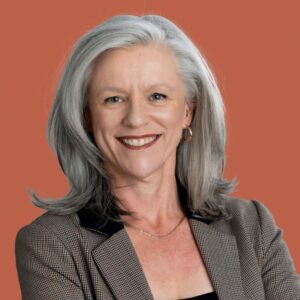 Relationships Australia South Australia (RASA) announced the appointment of Tonia Keating as Executive Manager of Relationship Services and Client Pathways.
With more than a decade of experience across a range of practice and leadership roles at RASA, Tonia brings extensive expertise in delivering inclusive, trauma-responsive and evidence-informed services.
RASA said, “Tonia has a proven ability to translate organisational strategy into practical, system-enabled service delivery, aligning practice, workforce capability and accountability to achieve positive outcomes for clients.”
Congratulations to Tonia on the appointment.
Better Place Australia welcomes new Executives

Better Place Australia recently announced the appointments of Johann Kelaart as their Executive Manager Corporate Services and Di Nally as their Executive Manager Quality & Impact.
With extensive executive leadership experience across health, aged care, education and the not-for-profit sector, Johann brings deep expertise in strategic, operational and financial management.
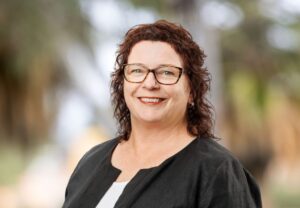
With more than 20 years’ leadership experience across mental health, homelessness, alcohol and other drug services, and community health, Di brings deep expertise in quality improvement and service transformation. Her leadership experience includes roles with Windana, Neami National and Mind Australia.
FRSA congratulates Johann and Di on their new roles, FRSA looks forward to working together in the future.
UnitingSA farewells CEO
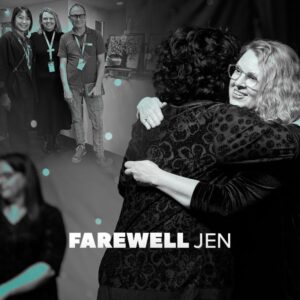 UnitingSA recently said farewell to their CEO, Jenny Hall, and recognises the significant contribution she has made across our organisation.
In their LinkedIn post UnitingSA said, “During the past five years Jen’s leadership and dedication have played an important role in shaping our programs and services and driving our strategic directions.
Jen always has a heart for people – whether that’s chatting to a resident in aged care; inspiring staff at a leadership event; or addressing a politician and advocating for the needs of the most vulnerable people in our community.”
FRSA wishes Jenny all the best for her new role as Chief Executive Officer of SYC.

National Aboriginal and Torres Strait Islander Children's Day
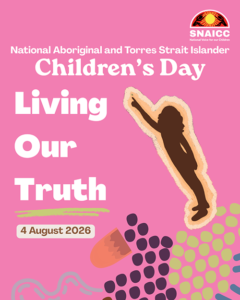 Today is National Aboriginal and Torres Strait Islander Children’s Day. This year’s Children’s Day theme is ‘Living Our Truth’, it honours the power of truth-telling, the sharing of knowledge across generations and the importance of telling our stories.
The day is raising awareness for the bright futures of Aboriginal and Torres Strait Islander children and the potential for their voices to pave a new path for our nation. As always, we support the voices of our children in calling for a future where they are proud and empowered by their culture to speak their truth and be listened to by all Australians.
Get involved, register your Children’s Day event and download resources on the website.
Lived Experience Advisory Council – Expression of Interest
The Domestic, Family and Sexual Violence Commission is seeking Expressions of Interest for its Lived Experience Advisory Council, established under the National Plan to End Violence against Women and Children 2022–2032. The Council brings together people with lived or living experience of domestic, family and sexual violence to provide advice, identify opportunities for reform, and help improve systems, services and policies across Australia. Eight positions are available for people from diverse backgrounds and communities, with members supported through payment, travel assistance and flexible participation arrangements.
Expressions of Interest open on 20 July 2026 and close on 10 August 2026.
More information, including how to apply, is available online.
Family Violence Sexual Violence Project Evaluation Survey
Have you heard of the Family Violence and Sexual Violence Knowledge Hub or attended one of their events? TheCentre for Excellence in Child and Family Welfare, together with Safe+Equal, SASVic and No To Violence, have been collaborating to deliver the Family Violence Sexual Violence Knowledge project, providing evidence-informed resources, events and knowledge-sharing opportunities for the sector.
Whether you’ve accessed the Knowledge Hub, attended an event, or used resources, they would love to hear from you. Complete their short survey to help themunderstand what’s working well and how we can better support the sector with evidence, resources and events.
As a thank you, you’ll have the chance to win one of four $25 Prezzee gift vouchers. Complete the survey here.
Homelessness Week 2026
 Homelessness Week is this week from 3-9 August 2026. The week is hosted by Homelessness Australia to raise awareness of the impact of homelessness, and the solutions needed to end homelessness.
The theme for Homelessness Week 2026 is “Homelessness Action Now”.
Download a Homelessness Week action pack, resources or submit your event on the Homelessness Australia website.
Have your say in the 2026 Census
The 2026 Census will take place on Tuesday 11 August 2026, when every person and household in Australia is counted. Conducted every five years, the Census provides essential information about Australia’s people and communities, helping governments, businesses and community organisations plan services such as health care, education, housing, transport and local infrastructure. Completing the Census is compulsory, and every response helps build a more accurate picture of Australia’s changing communities to ensure services and support are delivered where they are needed most.

CHC81015 Graduate Diploma of Relationship Counselling – June 2026, Online
CHC81115 Graduate Diploma of Family Dispute Resolution – July 2026, Online
Couples Counselling Course: A contemporary and client-focused approach

ACT/NSW
Manager Post Separation Services (PSS) | Relationships Australia Canberra & Region
TAS
Regional Family Dispute Resolution Practitioner – Part Time | CatholicCare Tasmania
Regional Family Dispute Resolution Practitioner – Full Time | CatholicCare Tasmania
QLD
Placement Worker | UnitingCare Community
VIC
Team Leader Therapeutic Foster Care | OzChild
MST CAN Therapist Goulburn Valley Shepparton / Seymour | OzChild
Family Group Conferencing Convenor | OzChild
Community Connector Shepparton | OzChild
If you have any events you’d like listed on the FRSA Events and Training Calendar or job vacancies you’d like listed on the FRSA Jobs Board, email Communications Officer, Vanessa Lam at communications@frsa.org.au. Please note that posting onto the FRSA website is reserved for FRSA Members only.

Growing up online: parenting young children in the digital age | eSafety Commissioner
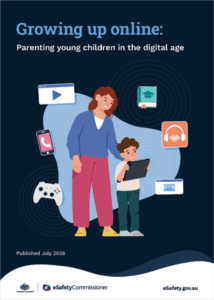 A new report explores the online experiences of children aged 3–10 through the perspectives of more than 2,000 Australian parents and carers. The research highlights that most young children are engaging online for entertainment and connection, while parents and carers play a critical role in helping children navigate digital spaces safely. While online safety concerns are common, most parents/carers are having conversations with children about risks and are seeking the confidence, knowledge and resources needed to support children in an evolving digital world.
National Carer Strategy Annual Report | Department of Health, Disability and Ageing
 The Australian Government has released the first Annual Report for the National Carer Strategy 2024–2034, a 10-year plan developed with carers to improve support for Australia’s unpaid carers. The report highlights progress over the past year, including increased access to mental health support, respite and peer support, identification of culturally safe online training, and the introduction of an additional 10,000 free phone counselling sessions each year through Carer Gateway. The annual report provides an update on actions underway to strengthen support and improve outcomes for carers across Australia.
Missing and Murdered Indigenous Women and Children roundtable report | Domestic, Family and Sexual Violence Commission,
This report describes a roundtable that brought together stakeholders to consider Australia’s response to the ongoing crisis of Murdered and Missing (Disappeared) Aboriginal and Torres Strait Islander Women and Children. Six key themes emerged and the roundtable issued four calls to action.
Measuring trust in health and medical science | Australian Academy of Health & Medical Sciences
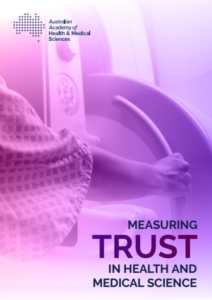 A new evidence brief highlights growing challenges to Australians’ trust in health and medical science, with implications for public health, research participation and engagement with the health system. Drawing on survey data, research and health indicators, the report examines how trust is reflected not only in what people say, but also through behaviours such as vaccination uptake and interactions with health services. It highlights the important role of trusted professionals, including general practitioners, in supporting communities to navigate an increasingly complex information environment shaped by misinformation and changing health advice.
Submission to inquiry into the Interactive Gambling Amendment (Gambling Reform) Bill 2026 | Australian Institute of Family Studies
 The Australian Gambling Research Centre (AGRC) has provided a submission to the inquiry into proposed changes to interactive gambling regulation and the National Self-Exclusion Register. The submission draws on AGRC research commissioned by the Australian Government in 2024, which examined the potential social and economic benefits of reducing wagering advertising in Australia and provides recommendations to support the objectives of the proposed reforms.
Understanding mental health service use by people with disability | Australian Institute of Health and Welfare
This AIHW report uses lived experience and linked national data to examine how people receiving government disability supports use hospital-based mental health services. It shows that people with disability supports are more likely to present to emergency departments or be hospitalised for mental health care, highlighting the need for more accessible, responsive and coordinated mental health systems.
Improving housing outcomes for people with disability | AHURI
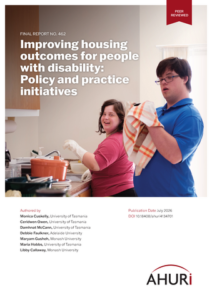 A new report examines what good housing outcomes look like for people with disability, the barriers they face, and opportunities to improve housing policy and practice. It highlights ongoing challenges including access to suitable housing, affordability and community connection, with many people navigating complex systems to have their housing and support needs met. The report emphasises the need for a more inclusive housing system that supports the goals of Australia’s Disability Strategy and better meets the diverse needs of people with disability.
Race discrimination minimum standards | Australian Human Rights Commission
The guideline sets five minimum standards that employers must meet to comply with their positive duty to prevent race discrimination in Australia. The minimum standards provide employers with clear steps and guidance to make their organisation anti-racist and comply with the positive duty.
Healthy starts: the state of Australia’s child and family health service system | Centre for Policy Development
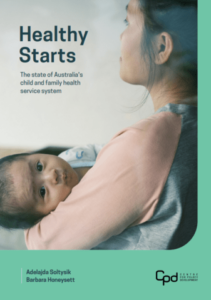 This report maps the experiences of families accessing the network of health services and supports in Australia available from the very beginning of pregnancy, through birth, and across the first 2,000 days of a child’s life. It identifies key system-wide barriers that prevent children and families from accessing high-quality, connected support.
Want to submit something to the FRSA eBulletin?
If you have an news item or event that you would like to be featured in a future eBulletin please submit your announcement via the form below or email communications@frsa.org.au with the subject “FRSA eBulletin submission”.
Please note FRSA members receive priority for items posted in the eBulletin. And to keep information current, relevant and useful, submissions will not be repeated from week to week.
Subscribe
Subscribe to receive future eBulletin editions directly to your inbox!
