


No. 16, 2026 | 16 October 2026
Go to:
From FRSA's Acting Executive Director

Last week we were excited to open the call for abstracts for the FRSA National Conference 2027. The theme for next year’s conference is Building Strong and Safe supports for children, families and communities and it will be held in Melbourne (see more below).
We also encourage friends and Members of FRSA to submit abstracts for our Child Inclusive Practice Forum, which will be held in Canberra in March next year. The call for abstracts closes next Friday 23 October so you’ll need to get in quick! The theme for 2027 is Children and Young People in Their Own Right (see more below). We’d love to hear from you.
This week (11-17 October) is Anti-Poverty Week, which aims to help Australians understand poverty and act to collectively end it. The facts are sobering – more than 3.24 million people live below the poverty line in Australia, including nearly 774,000 (1 in 6) children. We know, of course, that FRSA Members and the broader family and relationship services sector are working every day with children and families living in poverty and that financial hardship can compound the stresses in family relationships.
It’s also National Carers Week, which provides an opportunity to raise community awareness among all Australians about the diversity of carers and their caring roles. More than 3 million Australians (including many of our readers) provide unpaid care to a family member or friend. A reminder that information and advice about carer support is available on Carer Gateway.
FRSA Executive Director, Jackie Brady, is on a well-deserved break but will be back with you for next fortnight’s edition of the eBulletin.
Kind Regards,
Dr Robyn Clough
Acting Executive Director



FRSA National Conference 2027 - Call for abstracts now open!

Family & Relationship Services Australia (FRSA) invites you to submit an abstract to present at the FRSA National Conference 2027, which will be held at the Melbourne Convention & Exhibition Centre, 10-13 May 2027.
The theme for the FRSA National Conference 2027 is Building Strong and Safe supports for children, families and communities.
The opportunity to present as part of the Conference concurrent session program provides you with an opportunity to showcase your work and share your knowledge and experience with the sector. In particular, we are looking for abstracts that demonstrate:
- the ways you are working to meet the needs of children, adults, families and communities
- the evidence underpinning and emerging from practice
- the impact that different practices and approaches generate for the people accessing services – and for your local communities.
We welcome abstracts that speak to the conference theme – Building Strong and Safe supports for children, families and communities.
Submissions close 5pm AEDT Wednesday, 4 November 2026.
Please call the FRSA office if you would like to discuss further: events@frsa.org.au or via phone (02) 6162 1811.
Child Inclusive Practice Forum 2027 - Call for abstracts closing soon!

Call for abstracts for the Child Inclusive Practice Forum close NEXT WEEK at 9:00pm AEDT, Friday, 23 October 2026.
The theme for 2027 is Children and Young People in Their Own Right. The forum will showcase innovative approaches, emerging evidence, and reflective practice from across the family and relationship services sector, providing opportunities to strengthen capability, share practical strategies and explore how child inclusive practice can continue to evolve across a range of service settings.
FRSA invites abstracts for presentations from all professional domains that promote the genuine participation of children and young people and ensure their experiences and views are central in practice. The content will have a focus on research and practice presentations that incorporate the views and experiences of children and young people. How can we engage ethically and meaningfully with children and young people in their own right?
If you have any questions please contact the FRSA National Office at events@frsa.org.au or via phone (02) 6162 1811.

Poverty in Australia 2026
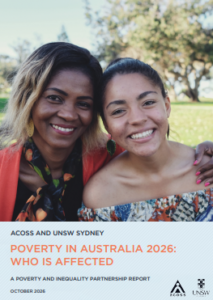 ACOSS and UNSW Sydney-led Poverty and Inequality Partnership released new research – Poverty in Australia 2026: Who is affected – at the start of Anti-Poverty Week (11-17 October).
The research found that three in four people in households relying on Jobseeker and Youth Allowance were below the poverty line. It also showed half of all people in households relying mainly on income support were living in poverty in 2022–23 – around 1.9 million people, including children. The risk was highest in households relying mainly on JobSeeker Payment (76%), Youth Allowance (73%) and Parenting Payment (71%).
The findings build on the Partnership’s earlier overview report (2025), which found 3.7 million people – or 14.2% of the population – were living in poverty in 2022–23, including one in six children (757,000 children).
This report updates estimates of poverty from the Partnership’s seven previous reports. The purpose of this report is to break the overall figures down to show how rates of poverty vary among different demographic groups and people with different sources of income.
ACOSS is calling on the government to lift the lowest income support payments – including JobSeeker and Youth Allowance – to at least 61% of the minimum wage and to introduce and improve supplements to cover essential costs above and beyond basic income support, including the extra costs of sole parenthood and disability.
Trends in Violence Against Children in Australia
New University of Sydney research has found a significant increase in violence against children between 2014 and 2024 that could be attributed to a range of factors, including income inequality and the manosphere.
In this cohort study of 2.6 to 2.8 million girls and 2.7 to 3.0 million boys, national administrative data showed that police-recorded sexual assault and family and domestic violence–related assault of children increased from 2014 to 2024. Overall child maltreatment substantiation rates and assault hospitalizations remained stable, despite declines in physical and sexual abuse substantiations. The findings highlight the importance of strengthened surveillance and cross-sector integration to inform public health and policy responses to violence against children.
In an article for the Guardian, researchers said, “In Australia, income inequality is at its highest point in 20 years, with substantial increases from 2021, coinciding with the acceleration of rates found in the current study.”
“Economic stress may be especially salient in the post-2020 period, when pandemic-related financial disruptions intensified for many families, while government benefits providing economic relief, such as the JobKeeper payment scheme in Australia, ended in March 2021.
“Shifts in gender norms and online cultures may also play a role … traditional gender attitudes that favour male authority within households are resurging among young men [and] the expansion of misogynistic online communities and broader toxic masculinity narratives are associated with hostility toward women and girls.” Read the full paper.
Responding to the rise of technology-facilitated abuse
 WESNET has highlighted the growing impact of technology-facilitated abuse within domestic and family violence in their latest report, 2025 Third National Survey of Technology Abuse and Domestic Violence in Australia.
The report found that 99.7% of specialist domestic and family violence practitioners surveyed said they had supported someone who had been abused, stalked or threatened through technology.
Domestic and family violence perpetrators have adopted technology as a multifaceted tool to control, isolate, and terrorise
women and children. The findings also offer a unique opportunity to track technology facilitated abuse (TFA) as technology evolves.
The organisation is calling for national good practice guidelines and a capability framework to help specialist services better support victim-survivors. WESNET emphasises the need for responses to keep pace as perpetrators increasingly use digital tools to monitor, control and threaten those experiencing violence. Read the report.
Funding to address gender undervaluation in care sectors
On 13 October 2026, the Australian Government announced it would invest $630 million to help meet increased wages costs for 460,000 health, disability and community services workers following the Fair Work Commission’s recent findings that these industries have been undervalued.
The $630 million will support charities and not for profit organisations that deliver Government programs to meet these wage increases while continuing to deliver the essential services that millions of Australians rely on every year. Over 128,000 organisations funded under 92 programs will receive extra funding.
First phase of Thriving Kids Supports commences
On 1 October the first phase of Thriving Kids Supports commenced with families of children with extra developmental needs able to access information and supports. There will be a gradual rollout of Thriving Kids supports both nationally and across states and territories, with all supports to be in place by 1 January 2028.
Key resources were also launched:
- the Thriving Kids Autism Helpline (1300 654 789), which will provide autism-specific information, guidance and connections to relevant supports and services
- the Thriving Kids Information and Resource Hub, delivered by the Raising Children Network.
Thriving Kids will provide supports to children aged 8 and under with developmental delay and/or autism with low to moderate support needs. You can find out more here.
Funding boost for emergency relief
Minister for Social Services Tanya Plibersek has announced a $4.7 million boost for emergency relief providers who provide food, clothes and other essential services to those struggling with cost of living and financial stress.
Funding includes:
- $2 million to be shared amongst Oz Harvest, Good360, Foodbank and Secondbite
- A 15% funding boost to 70 Emergency Relief providers in specific regional and remote communities
- A $1.1 million funding boost to the National Debt Helpline, ensuring more people have access to free and confidential counselling when struggling with financial pressures.
More information on emergency relief and financial counselling, including how to find a provider, is available on the Department of Social Services website.
Parliamentary Inquiry into financial abuse – Government response
On 14 October, the Australian Government tabled its response to the Parliamentary Joint Committee on Corporations and Financial Services Report – Financial abuse: an insidious form of domestic violence.
The Committee’s report, which was tabled in December 2024, outlined the growing evidence that perpetrators of family and domestic violence are exploiting government and financial systems to control, threaten or harass a current or former partner, often as part of a pattern of coercive control and financial abuse.
The Committee made a total of 61 recommendations, most of which have been supported or supported in principle by the Government.
You can read the Committee’s inquiry report here. You can read the Government’s response here.

Enrolments Open for AISR Qualifications in 2027
 Looking to begin or grow your career in the community services sector? Enrolments are now open for AISR’s qualifications starting in February 2027, including the Graduate Diploma of Family Dispute Resolution.
All courses are Nationally Recognised Training delivered by Relationships Australia SA. Students learn from experienced trainers with practical industry knowledge. The qualifications offered in 2027 are:
- Graduate Diploma of Family Dispute Resolution (CHC81115)
- Diploma of Community Services (CHC52025)
- Certificate IV in Mental Health (CHC43315)
- Certificate IV in Community Services (CHC42021)
- Certificate IV in Mental Health Peer Work (CHC43515).
Courses include flexible learning opportunities, resources and support, with a face-to-face component to be completed in Hindmarsh, South Australia. Graduate Diploma of Family Dispute Resolution is also offered in Perth, WA in partnership with Relationships Australia WA.
Whether you’re entering the sector, building on your experience or moving into a specialised role, AISR can help you build practical skills and confidence, wherever you are in your career.
You can explore AISR’s 2027 qualifications at https://aisr.edu.au/qualifications
Ngala and Rainbow Families partner to deliver inclusive parenting courses
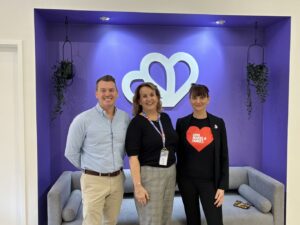 Ngala has announced a new partnership with Rainbow Families to develop parenting courses specifically designed for LGBTQIA+ families.
The organisations have signed a Memorandum of Understanding, with plans to introduce the tailored courses in 2027.
The partnership will combine Ngala’s expertise in parenting education with the lived experiences of rainbow families, providing opportunities for parents to access practical support in an environment where they feel welcomed, understood and included.
Ngala CEO, Michelle Dillon said the partnership reflected the organisation’s commitment to ensuring its services are accessible and inclusive of all families.
“Every family deserves to feel welcomed and supported when accessing parenting services, regardless of what their family looks like,” she said.
A key feature of the courses will be their delivery by facilitators with lived experience as both parents and members of the LGBTQIA+ community. Read more.
Anglicare Social and Affordable Housing Impact Report 2026
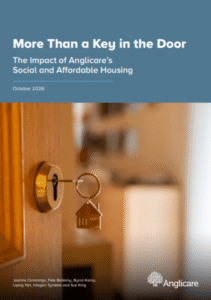 Anglicare Sydney has released a new report, More than a key in the door: the impact of Anglicare’s social and affordable housing.
The report examines resident outcomes and perceived impacts of Anglicare’s social and affordable housing on residents’ housing stability, safety, wellbeing and lived experience. It examines how providing safe, affordable housing combined with practical support, can help people build stability, maintain independence, strengthen community connections and improve wellbeing over time.
Centacare Central West & Orana Director steps down
 Centacare Central West and Orana Director, Robert George is stepping down at the end of the year, after 26 years with the organisation.
Robert has been with Centacare since 2000, commencing initially as a Counsellor before being appointed as Director in 2009.
The recruitment process for a new Director has commenced. FRSA wishes Robert all the best for the future.
CatholicCare Social Services Toowoomba farewells Executive Director
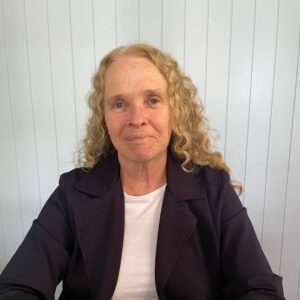 CatholicCare Social Services Toowoomba recently said farewell to their Executive Director Dianne Swan who concluded on 25 September.
Di commenced her role as Executive Director in January 2025, bringing a wealth of experience in the social services sector including previous leadership roles within Centacare Brisbane for more than 10 years.
FRSA wishes Di the best for the future.
Connection is Protection report
 Relationships Australia NSW recently launched, Connection Is Protection, a new report and campaign exploring the relationship between our connections and our wellbeing, and what can help Australians build and maintain stronger relationships.
The research identifies three important gaps:
- Relationship skills: only one in three Australians were taught how to handle difficult conversations in relationships while growing up.
- Everyday connection: one in six Australians felt lonely often or very often in the past month.
- Getting help early: just 9% seek help when a relationship first begins to feel strained, while 29% never seek help at all.
The findings also show the difference strong relationships can make. When their relationships are going well, 62% of Australians say they feel less stressed or anxious, 61% feel emotionally supported and 57% feel more confident.
Connection Is Protection makes the case for giving relationships a greater place in how we think about health and wellbeing – by building relationship skills, strengthening everyday connection and making it easier to seek support earlier.
Read the full report and find out more about the campaign via their website.

Parenting Styles Survey
Researchers from the University of Melbourne are seeking health, education and social service professionals to take part in a research study examining awareness and attitudes towards parenting behaviours and their impact. The anonymous 15-minute survey is open to practitioners working with children and families, with findings set to inform future policies and programs that support families.
- Questions about parenting practices and how professionals talk with parents about parenting styles
- As a thank you: a $10 donation made on your behalf to UNICEF Australia, or entry into a prize draw for 1 of 5 $200 gift cards
Your insights as a practitioner are invaluable in helping understand how parenting knowledge and attitudes vary across professional groups in Australia. Findings will inform policies and programs that support Australian families. Click here to complete the survey
National Workforce Survey 2026
 The 2026 Emerging Minds National Workforce Survey for Child, Parent and Family Mental Health is open to practitioners across Australia’s health, education, social and community service sectors. The survey explores workforce knowledge, skills, confidence, challenges and practice in responding to children’s mental health needs. You don’t need to work directly with children or specialise in mental health to participate. The findings will help inform policy, advocacy, workforce learning and the development of resources to support the sector to meet the changing needs of children and families.
- Takes approximately 25 minutes
- Confidential participation
- Open until 30 November 2026
- Chance to win one of five iPads

CHC81015 Graduate Diploma of Relationship Counselling – June 2026, Online
CHC81115 Graduate Diploma of Family Dispute Resolution – July 2026, Online
Couples Counselling Course: A contemporary and client-focused approach
If you have any events you’d like listed on the FRSA Events and Training Calendar or job vacancies you’d like listed on the FRSA Jobs Board, email Communications Officer, Vanessa Lam at communications@frsa.org.au. Please note that posting onto the FRSA website is reserved for FRSA Members only.

Locked out: the growing generational housing divide | Senate Select Committee on Intergenerational Housing Inequity
The final report from an inquiry on the extent and nature of intergenerational housing inequity in Australia across housing tenure types. It finds that Australia is in a housing crisis that is intergenerational in nature. The committee agrees that there is no single solution to the crisis. A range of recommendations are made by committee members.
Playing it safe: how online game services are (or are not) keeping kids safe online | Office of the eSafety Commissioner
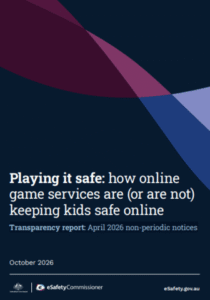 This report summarises the response to notices given in April 2026 to four major online game and gaming-adjacent service providers. Providers were required to report on how they’re meeting the Basic Online Safety Expectations and steps they’re taking to protect children from child sexual exploitation and abuse, violence material and activity, cyberbullying and online hate.
The impact of language | National Centre for Action on Child Sexual Abuse
This resource supports leaders and organisations to embed trauma-informed and victim-survivor-centred communication across everyday practice.
It shares insights from lived experience and sector feedback on how language is experienced, and what this means for creating safer, more respectful systems and services.
Intergenerational Wealth Transfers in Contemporary Australia | Australian Institute of Family Studies
This snapshot considers intergenerational wealth transfers as family resources shaped by social, economic, relational and legal factors. It builds on AIFS’ research synthesis on contemporary couple relationships by examining what existing data show about how changing family structures, expectations and obligations can shape the material resources available to different family members over time.
It raises questions about the wellbeing of people and families across generations and shows how evidence of the effects of intergenerational wealth transfers is important for informing future policy and legislative action.
Auslan resource supports recognition of DFV in children with disability | Barnardos Australia
Barnardos Australia has developed an Auslan animation in partnership with the Deaf community to help build understanding of the signs of domestic and family violence in children with disability. The resource supports the organisation’s Connecting Three Dots program, which provides trauma-informed therapeutic support for children with disability across Western NSW who have experienced domestic and family violence. The animation offers an accessible tool for practitioners, families and communities seeking to better recognise and respond to abuse.
Preventing gender-based violence: early years | Our Watch
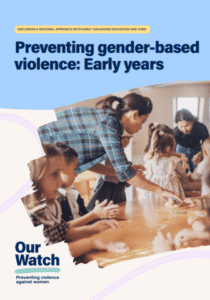 Our Watch consulted with early childhood education and care, and prevention sector stakeholders about a national approach to primary prevention of gender-based violence. This summary report presents an overview of the key findings from consultations and the opportunities arising for future work. Stakeholders see a clear role for a national approach.
Children’s safety and well-being in the age of AI: best practices and incentives | World Economic Forum
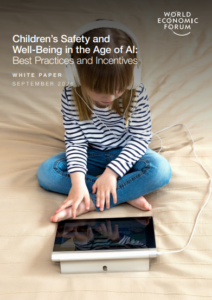 Artificial intelligence (AI) is becoming part of how children learn, create, communicate and play, offering new opportunities for education, accessibility and creativity. At the same time, generative, conversational and agentic AI can introduce or intensify risks. This report provides a set of best practices for actors across the AI life cycle.
Children’s experiences of family animal abuse in domestic and family violence | Australian Institute of Family Studies
This resource describes what the research evidence says about children’s experiences of family animal abuse in the context of domestic and family violence (DFV). It outlines what DFV-related family animal abuse looks like, children’s experiences of DFV-related violence against family animals and the impacts this can have on children. It also provides some considerations for practitioners who work with children and families impacted by, or experiencing, DFV that may include family animal abuse.
Adolescent perceptions of warning messages to counter online sexual abuse | Australian Institute of Criminology
 Adolescent engagement online brings with it exposure to problematic and illegal online content and behaviours. Online warning messages may help deter illegal and otherwise problematic online behaviour. However, the target audience must perceive these messages as useful. This study sought feedback from adolescents on the perceived utility of online warning messages.
Digital technology experiences of children and young people | National Mental Health Commission
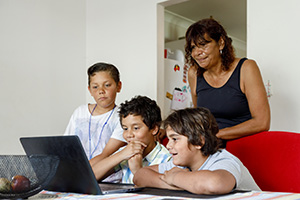 This report explores how children and young people aged 5 to 25 in Australia use digital technology and how it may affect their mental health and wellbeing. The overarching implication is the need to move beyond simplistic, isolated or single-factor approaches to understanding and intervening in digital technology and mental health. The report provides 19 recommendations.
Coercive control monitoring report: June 2026 | NSW Bureau of Crime Statistics and Research
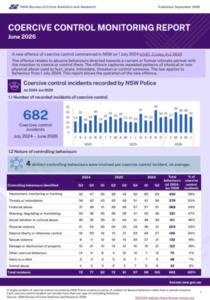 A new offence of coercive control commenced in NSW on 1 July 2024. The offence captures repeated patterns of physical or nonphysical abuse used to hurt, scare, intimidate, threaten or control someone. This report shows the operation of the new offence. On average, each coercive control incident involved four distinct controlling behaviours.
Kids, Culture, Community | SNAICC
SNAICC’s official podcast, sharing the voices, stories and knowledge of Aboriginal and Torres Strait Islander children, families and communities. Episodes bring together community expertise, lived experience and cultural knowledge to explore issues affecting children and families across Australia. The series highlights strengths-based, community-led solutions and the work of the Aboriginal and Torres Strait Islander community-controlled sector. It aims to inform, empower and advocate for systemic change grounded in culture, self-determination and community leadership.
The social media ban – South Australian young people: shaping the conversation on the social media ban | Commissioner for Children and Young People (SA)
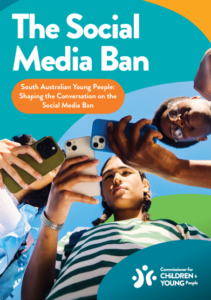 This report explores the views of South Australian young people on Australia’s social media ban for under-16s. It examines how young people themselves have experienced the changes, including impacts on their wellbeing, relationships, sense of connection and daily lives. The report finds a nuanced picture rather than a clear story of the ban being positive or negative.
Want to submit something to the FRSA eBulletin?
If you have an news item or event that you would like to be featured in a future eBulletin please submit your announcement via the form below or email communications@frsa.org.au with the subject “FRSA eBulletin submission”.
Please note FRSA members receive priority for items posted in the eBulletin. And to keep information current, relevant and useful, submissions will not be repeated from week to week.
Subscribe
Subscribe to receive future eBulletin editions directly to your inbox!
