


No. 5, 2026 | 13 April 2026
Go to:
From FRSA's Executive Director
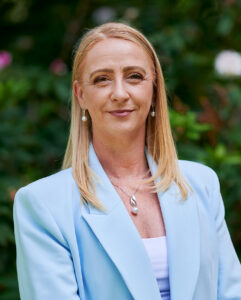
The world has an eerie COVID-esque feeling about it. People are not required to stay put by virtue of a health pandemic but the cost of fuel and living pressures is having similar impacts. We are hearing from our members that people and communities are coming forward seeking support to fund the items we all know are getting more expensive. We are also hearing that people are either cancelling appointments with services providers or looking to move the session online to save on fuel. This of course makes sense – as the Government’s recent campaign suggests – ‘Every little bit helps’. However, we also know that it is important to keep eyes on those in our community for whom the ‘choice’ of leaving home is being eroded. It is also important that we keep an eye out for each other too. Sometimes it is the small things that can make a world of difference.
As a member of ACOSS, FRSA has been linking into their policy and advocacy activities relating to the cost of fuel and living pressures and we value real time feedback from our members that we can bring to that table. Robyn Clough would be the best point of contact at policy@frsa.org.au. ACOSS has updated their Briefing note (dated 31 March 2026) and they also have a ‘Joint Statement on Tax and Spending’ – if you want to sign up to that.
I am excited to let our e-bulletin readers know that we have been working hard in setting up the Family and Relationship Services Workforce Project and following an exceptionally high calibre Request for Proposal process, will be working with the Centre for International Economics on this exciting project. We can’t wait to tell you all about it and will have a dedicated stand at the FRSA Conference promoting this activity so, please be sure to drop past and find out how you can get involved. As part of the project we will be aiming to define the family and relationship services workforce so, we will need members and non-members involved!
I also wanted to congratulate current CEO of Families Australia, Jamie Crosby, on the recent announcement that he will be moving to head up the Centre for Excellence in Child and Family Welfare (Tas/Vic). He will certainly be missed on the national scene, but I have no doubt his strong commitment and service to families, children and young people will find new life and meaning in this new role. Fortunately, he will still be around for Families Week finishing up as CEO of Families Australia on 29 May 2026.
If you have been keeping up-to-date with the FRSA Conference, we are edging closer to 18 May and looking forward to bringing together people from the Family & Relationship Services sector in Brisbane. It is not too late to register and we will be keeping registrations open until the Friday beforehand.
Kind regards,
Jackie Brady
FRSA Executive Director



Conference bursaries awarded
FRSA was delighted to award three bursaries for Aboriginal and Torres Strait Islander people from FRSA member organisations to attend the 2026 FRSA National Conference. Congratulations to the successful applicants:
- Nadine Atkinson – CatholicCare Central Queensland
- Dwayne Hayden – Centrecare Inc, Western Australia
- Karina Harback – Inspire Connections, Tasmania
The Bursary Program is an FRSA initiative and is designed to assist with covering the cost of conference registration, and travel & accommodation.
We look forward to welcoming Nadine, Dwayne and Karina to the FRSA National Conference 2026 in May!
It's not too late to register!
It’s not too late to register for the FRSA National Conference 2026, which will be held in Brisbane 18-21 May.
Registration details are available on the Conference website including registration and pre-conference workshop rates.
The FRSA National Conference 2026 provides a platform to showcase and learn from on the ground practice, policy, and research. The Conference is the must-attend event for anyone passionate about family and relationship services.
Welcome Sponsors
We’re excited to welcome the following sponsor who will join us in Brisbane for the FRSA National Conference.
- CatholicCare Victoria as the Coffee Cart Sponsor (Tuesday)
We still have a range of other sponsorship options available, designed to maximise visibility to showcase the work and activity of your organisation/business. Or if you are interested in a more bespoke package for your organisation don’t hesitate to get in touch with the FRSA team on (02) 6162 1811 or events@frsa.org.au.

Our Ways Strong Together
On 25 March 2026, a new national Aboriginal and Torres Strait Islander peak body for family, domestic and sexual violence was launched.
The peak body, Our Ways Strong Together, will bring together Aboriginal and Torres Strait Islander community-controlled organisations that work with families and communities affected by violence to help shape policies and programs that support community-led solutions.
Establishing this peak organisation is a key action in the Aboriginal and Torres Strait Islander Action Plan 2023–2025 which sits under the National Plan to End Violence Against Women and Children 2021-2031. It will help deliver the Our Ways – Strong Ways – Our Voices strategy.
In May 2025, the Department of Social Services engaged the Coalition of Peaks Secretariat, on behalf of the sector, to lead the establishment of the Peak Body, building on decades of advocacy by Aboriginal and Torres Strait Islander peoples, the expertise of community-controlled organisations and the strong foundation of existing peak bodies.
You can find out more about Our Ways Strong Together, including the organisation’s story, staff, work and artwork here.
Perceptions of poverty – new report
Brotherhood of St Laurence (BSL) has released a new report – Perceptions of poverty in Australia – which finds that people living in Australia recognise the realities of poverty and believe that more should be done to address it.
BSL commissioned two major studies surveying more than 2,600 people across Australia in 2025 and 2026. The findings highlight widespread concern about the rising cost of living, growing inequality and the impact these pressures have on individuals, families and communities.
Key findings:
- 94% of people believed more should be done to reduce poverty
- 82% of people believed it is especially important to support people experiencing poverty during a cost-of-living crisis
- 61% of people living in Australia agreed poverty is a major issue affecting many people in the community
- 70% of people living in Australia agreed that no matter where people start in life, we all deserve access to safe housing, fair pay and the things we need to live a meaningful life.
- 76% had been directly affected by cost‑of‑living pressures in the past two years
- 38% of respondents had personally experienced poverty or know someone who has.
BSL is calling on the government to adopt official poverty measures including a Multidimensional Poverty Index and a monetary poverty measure.
The report is available here.
Labour Force Participation – latest ABS release
The Australian Bureau of Statistics (ABS) has released the latest data on barriers and incentives to labour force participation in Australia.
The release covers the December 2025 quarter. In this period:
- 1.1 million people (aged 18-75) without a (paid) job wanted a job, with 939,200 available to start within 4 weeks.
- The most common reason men who wanted a job were unavailable to start within 4 weeks was ‘Studying or returning to studies’.
- The most common reason women who wanted a job were unavailable to start within 4 weeks was ‘Caring for children’.
- 9 million people without a job did not want a job, with a further 2.1 million either retired or permanently unable to work.
You can find out more about the incentives and barriers to labour force participation here.
Social Security for Women Outside Our Cities
Economic Justice Australia (EJA) has released the third and final report of its Social Security for Women Outside Our Cities three-part series.
The third report addresses a range of intersectional issues that undermine access to social security support for women in regional, rural, remote and very remote (4R) Australia. Issues include those related to family and domestic violence, residency and migration status, incarceration, and natural disasters. The report also considers the impact of the problematic compulsory income management system on women in 4R Australia, as well as issues associated with the cause, raising and recovery of social security debts.
The first report in the series focused on access to services and service delivery. The second report focused on issue of eligibility related to specific payments.
All three reports provide practical recommendations to improve social security for Women in 4R Australia.
Inquiry into the factors driving educational attainment - submissions open
The House of Representatives Standing Committee on Education has commenced a new inquiry into the factors driving educational attainment.
The inquiry will consider the factors that drive variations in educational attainment including between and among boys and girls, from early learning, through school education, (including vocational education and training (VET) in schools), to tertiary education. It will seek to identify the factors driving differential engagement, participation, and outcomes at all levels and transitions from lower to senior secondary school; from school to tertiary education; and from education into the workforce and broader society.
The inquiry may be of particular interest to FRSA members who deliver school readiness and early years programs.
The Committee is inviting submissions that respond to any or all of the inquiry terms of reference by Friday, 12 June 2026.
The extent and nature of poverty in Australia – Government response
The Albanese Government has published its response to the recommendations arising from the Senate inquiry into the extent and nature of poverty in Australia.
The Senate referred the inquiry to the Senate Community Affairs References Committee on 7 September 2022. The committee tabled its final report on 28 February 2024.
The Government supports 4 of the 14 recommendations made in the main Committee report including:
- that the Australian Government take urgent action so that Australians are not living in poverty, including through considering the suitability, adequacy, and effectiveness of the income support system (recommendation 1).
- the Australian Government continue to invest, and consider increasing investment, in early intervention and place-based initiatives to address child poverty. Any initiatives aimed at supporting First Nations families and children must be led by and co-designed with First Nations people, and support existing commitments under the National Agreement on Closing the Gap (recommendation 12).
- the Australian Government takes action to reduce child poverty (recommendation 13).
- the Australian Government, in consultation with stakeholders, continue developing funding of longer-term place-based initiatives aimed at reducing poverty and disadvantage (recommendation 14).
The Government’s Response outlines an overview of commitments made across the 2023-24 to 2025-26 Budgets that speak to the above recommendations. With so many people across the country now experiencing financial stress, we hope that the upcoming Budget for 2026-27 will contain further measures to counter poverty – particularly for those on income support payments.
Emergency relief boost
On 1 April 2026 the Albanese Government announced an additional commitment of $11.7 million to boost emergency relief and financial counselling across Australia.
$8.5 million will be distributed to 196 Commonwealth-funded emergency relief providers to help meet increased demand as more people experience cost of living pressures.
$1 million will be distributed to 30 emergency relief providers in areas impacted by Ex-Tropical Cyclone Narelle. $2.24 million will be distributed to Financial Wellbeing Hubs in the Northern Territory, Queensland and Northern Western Australia, and the financial counselling sector in other high needs and high disaster prone areas.
Inquiry Report - Quality and safety of Australia’s early childhood education and care system
On 31 March, the Senate Education and Employment Committee tabled its report on the Quality and safety of Australia’s early childhood education and care system.
The matter was referred to the Committee for inquiry on 25 August last year following extensive media reporting on safety and quality issues in early childhood education and care (ECEC), including child sexual abuse.
The inquiry looked at a range of child safety-related issues including the effectiveness of current regulation, employment and workplace conditions, suitability of funding, the impacts of private for-profit incentives on quality and safety, and transparency of, and access to, information and data.
The committee made 23 recommendations for improvement of the ECEC system. Dissenting reports were put forward by Labor Senators and the Australian Greens.
You can read more about the inquiry here.

BaptistCare launches new vision

BaptistCare has unveiled a new Vision, Purpose, Values and Brand that will define who the national purpose-led aged care and community services organisation is, why it exists, and how it shows up for the people and communities it serves.
At the heart of the new framework is a Vision of communities where everyone can live to their full potential, and a Purpose of being inspired by Jesus to champion care for all.
A new visual identity brings this to life through a flower in bloom with interlinking petals, representing the connections and communities of care at the centre of BaptistCare’s work.
The values – Inclusivity, Accountability, Compassion and Teamwork – have been welcomed by BaptistCare employees and volunteers, who will reflect them in how they care, connect and work together each day.
The launch comes one year after BaptistCare’s regional organisations across South Australia, Victoria, Tasmania, Western Australia, New South Wales and the Australian Capital Territory formally came together as one national body.
You can view BaptistCare’s brand story here.
Neighbours Every Day - day of action
 Each year the Neighbours Every Day campaign holds a day of action on the last Sunday in March. Relationships Australia is the custodian of Neighbours Every Day, which helps create, share and grow belonging every day across Australia.
The annual day of action – Neighbour Day – was celebrated on Sunday 29 March this year. The day provides an opportunity for people across the country to increase social connections through, for example, hosting or supporting events that assist and engage local communities.
Check out the Neighbours Every Day website – it provides simple, practical tools to create, share and grow belonging, each and every day of the year.
You can also watch the Neighbours Every Day Community Service Announcement.
Vale Mary Yaxley
The FRSA team was deeply saddened to hear that Mary Yaxley passed away earlier this year. Mary was the CatholicCare Tasmania Communities for Children coordinator for many years and her dedication to the Communities for Children Facilitating Partners Program and to the Burnie Community will be greatly missed. Mary was a keen contributor to the Communities for Children network discussions and FRSA valued her insights, generosity and passion.
We extend our heartfelt condolences to Mary’s colleagues, friends and family.
Farewell Stephanie!

Last week Relationships Australia Canberra and Region (RACR) farewelled their Chief Executive Officer, Stephanie Hodson.
In their tribute to Stephanie RACR said “Over the last four years Steph has led our organisation through a significant change journey to improve our governance, sustainability and ability to respond to meet our community need.
She has made such an impact on RACR – not just as a CEO but also as a person, through her warmth, compassion and genuine care for staff and the communities we serve. Leaving a lasting legacy, her next chapter is very “Steph” full of adventure, travel and making the most of life while travelling around Australia!
We are so grateful for Steph’s leadership – not only for what she has achieved, but in how it was achieved – through connection, integrity, and a real belief in people.”
FRSA, too, has greatly appreciated the opportunity to work with Stephanie in her time with RACR. We are so grateful for Stephanie’s openness and generosity. Her wisdom has helped inform our approach to many sector-wide issues. We look forward to following Stephanie’s adventures.
Uplyft - formerly Wanslea
After more than 80 years of service, Wanslea is rebranding to provide a clearer, more contemporary way to reflect who they are, the services they provide and how they work.
Uplyft reflects the organisation’s purpose in action. It speaks to:
- Lifting children up
- Strengthening families and communities
- Creating pathways for children and young people to thrive.
Uplyft – formerly Wanslea recently joined with stakeholders to celebrate the launch of their new brand and other exciting milestones.

Webinar: How can services enable a healthy village?
 Across Australia, family services are being reshaped, with significant changes proposed to how support is organised and delivered.
This Uniting Families Report webinar, which will be held on Monday 4 May, 10.30am-11.30am (AEST), brings together insights from the Uniting Families Report ‘It takes a village to raise a child’ with what is currently being seen in practice across different communities, family types and states.
Uniting NSW.ACT, Uniting Vic.Tas and UnitingSA will share experiences from services supporting families to connect, build confidence and access help earlier.
These service spotlights will explore what a ‘village’ looks like in practice through community-based programs and relational supports.
The session will also include time to connect with others working with families and communities, and a live Q&A with the speakers.
Carer Wellbeing Survey 2026
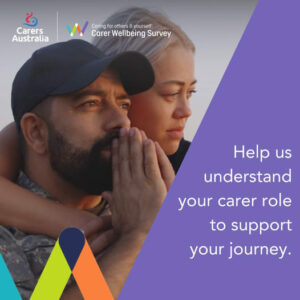 The 2026 Carer Wellbeing Survey is now open, inviting current and former carers across Australia to share their experiences of caring.
Delivered by researchers at the University of Canberra in partnership with Carers Australia and the Department of Health, Disability and Ageing, the survey plays a vital role in shaping policy, services and advocacy to better support carers.
Participation is voluntary. The survey will take between 30 minutes and 60 minutes with flexible options including a shorter version and multilingual access. Responses will directly inform improvements to programs and supports for carers nationwide.
Complete by 4 May 2026 to enter the draw to win one of 13 prizes worth a total of $5,000. Click here to complete the survey.
AIFS Conference 2026 - Aboriginal and Torres Strait Islander Scholarship Program
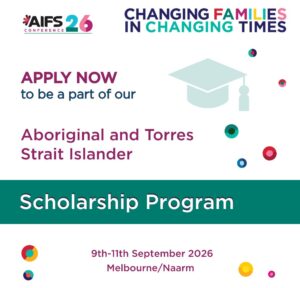 Applications are now open for the Aboriginal and Torres Strait Islander Scholarship Program, supporting researchers and practitioners to attend the 2026 AIFS Conference 2026 in Melbourne (9–11 September).
The scholarship program provides full conference registration, travel, accommodation and attendance at the conference dinner, along with opportunities to build networks, elevate work and lived experience, and contribute to national conversations on family wellbeing.
The scholarship program is open to Aboriginal and/or Torres Strait Islander people engaged in family-related work or study, and aims to strengthen the presence and influence of First Nations perspectives in research, policy and practice. Apply Here
National Directory of Services for people who use violence - Sector Launch
Not To Violence is launching the National Directory of Services for people who use violence. Held in-person or online, this launch will introduce the new directory and explore how it can support the Domestic and Family Violence sector and other professionals in their efforts to end family violence and build safer communities.
The event is open to DFV and allied service sectors and will include a panel of sector experts sharing practical insights into how the Directory can be used in day-to-day work. In-person attendees will also have the opportunity to connect with colleagues with some post-panel networking.
When: Thursday 14 May 2026, 3pm to 6pm.
How to join:
- Melbourne – panel session and networking
- Sydney – livestream viewing hub and networking (watch the Melbourne event together with local colleagues)
- Online – join from anywhere across Australia
To learn more about the new directory and secure your spot, register now.

CHC81015 Graduate Diploma of Relationship Counselling – June 2026, Online
CHC81115 Graduate Diploma of Family Dispute Resolution – July 2026, Online
Couples Counselling Course: A contemporary and client-focused approach

ACT
Manager – Counselling Services | Relationships Australia Canberra & Region
NSW
Support Workers (Education, Engagement & Attainment) | CatholicCare Wilcannia-Forbes
Coordinator (Education, Engagement & Attainment) | CatholicCare Wilcannia-Forbes
SA
Child Focused Educator | Centacare Catholic Country SA
QLD
Service Manager | UnitingCare
VIC
Team Leader | Each
If you have any events you’d like listed on the FRSA Events and Training Calendar or job vacancies you’d like listed on the FRSA Jobs Board, email Communications Officer, Vanessa Lam at communications@frsa.org.au. Please note that posting onto the FRSA website is reserved for FRSA Members only.

Heat in homes: survey report 2026 | ACOSS
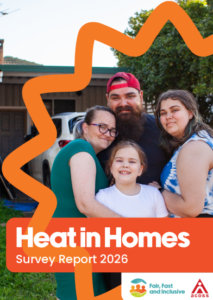 The Heat in Homes survey highlights the growing impact of extreme heat on people’s ability to stay safe and comfortable at home, revealing strong links between housing quality, energy affordability, climate change and health. An overwhelming 91% of respondents said their homes get too hot in summer, with 75% struggling to cool them, up sharply from 54% in 2025. The findings point to disproportionate impacts on renters, First Nations communities, and people on low incomes or with disability or chronic illness, with over half of respondents reporting they went without essentials to pay energy bills. The report calls for urgent government action, including improving the energy performance of homes, expanding renewable energy support, reforming energy concessions, and investing in accessible cool spaces during heatwaves.
Overview of Aboriginal and Torres Strait Islander health status 2025 | Australian Indigenous HealthInfoNet
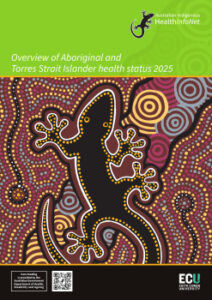 The Overview of Aboriginal and Torres Strait Islander health status 2025 (the Overview) provides a comprehensive snapshot of the health of Aboriginal and Torres Strait Islander people, bringing together up-to-date data across states, regions and population groups to support the health workforce, students and policymakers. It highlights the influence of social, political and environmental determinants on health, and is structured around the Social and Emotional Wellbeing framework, emphasising the importance of connection – to culture, Country, spirituality, body, mind and emotions, community, and family and kinship in shaping health outcomes and wellbeing.
Surviving in a cost-of-living crisis: Australia’s fraying care infrastructures | Western Sydney University
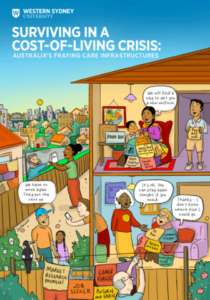 This report examines how Australia’s care infrastructures, encompassing welfare, housing, food and community support systems are fraying and increasingly failing to meet the basic needs of those on low- or no- income. The report documents the labour-intensive and precarious work required to piece together fragmented supports amid a worsening cost-of-living crisis.
Social media minimum age: compliance update | Office of the eSafety Commissioner
 A status report highlighting what is known to date about the implementation of the Social Media Minimum Age obligation since it took effect. It shows there has been some progress in the first three months, including large scale account removals. However, insights from a range of sources show major gaps remain.
Parenting our way | Emerging Minds
The Parenting our way resources were created with Aboriginal and Torres Strait Islander parents, families and workers to share ideas and tips for supporting children’s social and emotional wellbeing.
For Aboriginal and/or Torres Strait Islander families, it might be hard to find resources about parenting that feel right or culturally relevant. These resources are made with Aboriginal and Torres Strait Islander ways of knowing, being and doing at their centre, honouring and building on families’ strengths and skills.
Equal identities: a human rights review of the experiences of trans and gender diverse people in Australia | Australian Human Rights Commission
 The report explores challenges facing trans and gender diverse people across all domains of Australian society. It draws on the expertise, insight, lived and living experience shared in 97 submissions, as well as Australian and international research. It identifies what must change to ensure trans and gender diverse people can fully realise their human rights.
Language Matters: Belonging and Inclusion – What young people think about CALD vs CARM | MYAN
In 2025, the multicultural youth advocacy network (MYAN) conducted a national survey asking young people what terms resonated with them. The two most common terms used in public policy and advocacy are Culturally and Linguistically Diverse (CALD) and Culturally and Racially Marginalised (CARM). This survey report outlines the responses of how multicultural young people identify with terms used to represent them, and the approaches MYAN will take with a youth-informed perspective.
Artificial intelligence and Australian charities | University of Queensland
 The report examines the adoption and governance of artificial intelligence (AI) by Australian charities, finding the benefits for the sector come with particular risks. Although AI adoption in charities is driven by structural necessity, algorithmic decision-making could introduce new risks of accountability gaps and discrimination. The report identifies six principles for AI governance in charities.
Want to submit something to the FRSA eBulletin?
If you have an news item or event that you would like to be featured in a future eBulletin please submit your announcement via the form below or email communications@frsa.org.au with the subject “FRSA eBulletin submission”.
Please note FRSA members receive priority for items posted in the eBulletin. And to keep information current, relevant and useful, submissions will not be repeated from week to week.
Subscribe
Subscribe to receive future eBulletin editions directly to your inbox!
