


No. 8, 2026 | 29 May 2026
Go to:
From FRSA's Executive Director
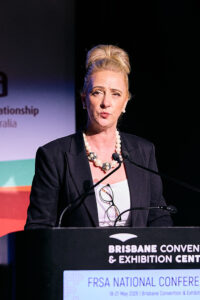
Today I was privileged to be in attendance at Minister Tanya Plibersek’s first consultation roundtable to inform the Second Action Plan under the National Plan to End Violence against Women and Children 2022-2032. This session brought together national peaks, national organisations, representatives from national reviews and Commissioners. The formal consultation period opened on 22 May 2026 and will run through until 31 July 2026. You can read more below.
I was also pleasantly surprised to receive numerous comments from many people in that room today about the success of the FRSA Conference – even some who weren’t there said they had heard great things about it. I am extremely grateful to all those who attended and to the organisations who supported them to be there.
One of the key questions we have in our Conference Evaluation is ‘All in all, how useful was the Conference for furthering your thinking on adapting to new ways of working and engaging with children, families and communities to meet emerging challenges?’ (the takeaway question). I am so pleased that just under 70% of respondents to that question answered ‘very useful’ and around 30% said ‘potentially useful for future consideration’. This is fantastic to hear!
I thank the team here for pulling together a great snapshot of the Conference in this edition of the eBulletin. I believe the vast majority of concurrent session slides are up on the website but it does take a few weeks to get the plenary sessions which we record and edit published on the website (where we have permission to share). We did have a concurrent session at the Conference presented by DSS on relational contracting and DEX that we recorded due to the huge interest in the topic. We are working on that as a priority and will get it published as soon as we can.

This week is of course National Reconciliation Week and the focus of our Member News feature this week. For FRSA, we are in the final stages of having our Innovate Reconciliation Action Plan approved and have been working very closely with the very talented and wonderful Leticia Forbes from Yirra Miya who has developed our RAP artwork and document. I can’t wait to be able to share the completed work and RAP with you but I am delighted to share a snippet of Leticia’s interpretation of FRSA and our work.
This element of the artwork represents ‘Connection’ which for me is one of the key features and aspects of FRSA’s work. Letitia describes this element as representing ‘our members coming together at FRSA and how they are all connected in providing better societal outcomes for improving the wellbeing, safety and resilience of families, children and communities across Australia’.
Kind regards,
Jackie Brady
FRSA Executive Director



The FRSA National Conference 2026 – Showcasing: Practice, Evidence, Impact
On 18-21 May 2026, FRSA held its annual National Conference at the Brisbane Convention and Exhibition Centre, on the lands of the Jagera and Turrbal peoples.
It is always a pleasure to bring the sector together to share research, practice learnings and insights and we were thrilled to have close to 600 delegates join us for this year’s conference. Practitioners, academics and policy makers working to support children, families and communities came together to share what is working in our sector, why it works, and to share the outcomes of these interventions.
The week started with four well subscribed pre-Conference workshops:
- Trauma and Healing Informed Care (Dr Carmen Cubillo, Healing Circle Mob)
- Embedding practice improvement and monitoring, evaluation & learning (MEL) for evidence-informed child and family services (Australian Institute of Family Studies)
- Family Law Workshop (facilitated by FRSA)
- Intersectionality in Practice (Drummond Street Services).
On Tuesday 19 May we were privileged to have proud Yagara, Koenpul, Ngugi, and Bundjalung woman, Aunty Sandra King OAM Welcome us to Country – to beautiful Magandjin / Meanjin. Our first two keynote speakers – Deb Tsorbaris, National Children’s Commissioner, and Sue-Anne Hunter the inaugural National Commissioner for Aboriginal and Torres Strait Islander Children and Young People – reminded us of the importance of centring children’s voices and children’s rights in decision making and ensuring that children and young people are kept safe and supported.
Corri McKenzie, Deputy Secretary, Department of Social Services then addressed the audience outlining the details of key relevant Budget measures, including measures that will underpin the new Children and Family Support program, due to come into effect on 1 July 2027.
Our sector is often asked to tell the stories of the people they work with – to gather case studies that can speak to the value and impact of our services. So, FRSA sought out an expert to help us in the art of storytelling – Kirk Docker, the mastermind behind TV series like ‘You can’t ask that’ and ‘I was actually there’. Kirk has a gift for asking curious and difficult questions whilst upholding the dignity of the individuals he works with. He joined the conference to share tips and techniques on the art of storytelling.
Day 2 of the Conference opened with another great plenary line-up. The Hon Michelle Rowland MP, Attorney-General provided a pre-recorded address and spoke to the value of community-based family law services.
We were thrilled to then welcome Judge Kylie Beckhouse, Federal Circuit and Family Court of Australia (Division 2), who gave an address about exploring how reform and frontline practice intersect to support safer outcomes for families navigating increasingly complex circumstances.
FRSA was delighted to welcome back Micaela Cronin, Domestic, Family and Sexual Violence Commissioner who provided an update on national priorities to address violence. Micaela emphasised the need to work with those using domestic, family and sexual violence as well as victim/survivors of violence if we are to make serious in-roads to reducing violence across the country. Micaela’s address set the scene nicely for the following panel discussion, Building the evidence for change: What does success look like in working with people who use violence?
The panel discussion, which was facilitated by FRSA Executive Director, Jackie Brady, provided thought-provoking insights into what works when engaging with men who use violence. Panellists included:
- Allison Wainwright, Family Life
- Professor Silke Meyer, Griffith University
- Michael Hawke, Anglicare SA
- Grace Jennings, Relationships Australia NSW.
On Day three of the Conference we were honoured to have the Hon Ged Kerney MP, Assistant Minister for Social Services and Assistant Minister for the Prevention of Family Violence, address conference delegates. Minister Kerney shared recent Government’s commitments and outlined the National Healthy Men Community Conversations project to support the health and wellbeing of men and boys.
The final conference keynote was delivered by psychologist, author, podcaster and co-founder of three-time AFR Fast 100 company, Pragmatic Thinking, Allison Hill. Ali delivered a dynamic and engaging address on ‘becoming the boss of busy’ with practical strategies to keep pace with change and connect with purpose and progress.
The great richness and diversity of the sector was showcased each day in the concurrent session program. With 65 presentations and five symposiums delivered by FRSA members and stakeholders, we felt privileged to bring this part of the program to delegates. Slides from these presentations will be made available via the FRSA Conference page subject to author permission. Keynote presentations and the Panel Discussion will be uploaded to FRSA’s YouTube channel in the coming weeks.
Gala dinner
The Conference Gala Dinner provides an opportunity to come together, relax and celebrate all that the sector has achieved over the previous year. This year’s dinner was held at the beautifully lit Brisbane Town Hall and the FRSA Board and team were delighted to have close to 350 Conference delegates join us in an evening of music, dance and fine food.
We were thrilled to have the fabulous comedian and actor Steph Tisdall entertain the room with her trademark humour, warmth and generosity.
Local band, the Radio Club Band, kept people dancing till late in the evening!

National Plan to End Violence against Women and children – consultation on Second Action Plan
 Consultation on the Second Action Plan under Australia’s National Plan to End Violence against Women and Children 2022–2032 has opened.
The Australian Government is working with states and territories to develop the Second Action Plan and wants to hear from a wide range of people. Government will be consulting broadly, including people with lived experience, frontline workers, peak bodies, policy experts, academics, employers, and the broader community.
A series of public webinars will be held over the coming weeks and there are a number of other ways to get involved. To find out more information about the consultation, please visit DSS Engage.
The consultation closes on 31 July 2026.
The way you send branded text messages is changing soon – important information for service providers
The Australian Communications and Media authority (ACMA) will launch the SMS Sender ID Register on 1 July 2026. Your organisation may be impacted.
The register is being introduced to protect Australians from scams that impersonate organisations in branded text messages (SMS or MMS). The register will help protect your brand and create a safer communications channel for people who receive text messages.
From 1 July, SMS sent using an unregistered branded sender ID will display the word ‘Unverified’ instead of the brand name. They will also be grouped with messages from other unregistered senders, including potential scams.
Who needs to register
You must register if you want to send text messages (for example, appointment reminders) using a sender ID, including if you are a:
- business, including a sole trader
- charity
- school or educational institution
- community group or club
- government agency.
How to register
To find out more information, including how to register please visit the ACMA website. If you have any queries please contact the AMCA SMS Sender ID outreach team at SenderIDOutreach@acma.gov.au
Children's voices are the key to ending violence before it begins
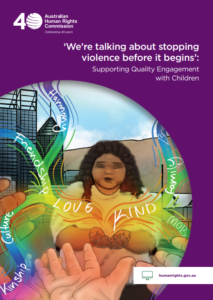 A new national report released by the Australian Human Rights Commission highlights the power of positive relationships, and the critical importance of listening to children, when designing the systems, services and supports that shape their lives.
We’re talking about stopping violence before it begins: Supporting Quality Engagement with Children draws on the insights of more than 300 children and young people from across Australia.
It offers a hopeful, evidence-based roadmap for building respectful, safe and supportive relationships and preventing violence before it starts.
At the heart of the report is a clear message: children understand what safe and positive relationships look like and they want to be part of the solutions that will improve the systems and policies affecting their lives. Children described positive relationships as supportive, respectful and kind, built on trust, communication and fairness. They emphasised the importance of being able to be themselves, work through challenges, and feel safe, heard and valued.
The report highlights the critical role of families, schools, communities, media and online environments in shaping these relationships and the opportunity to strengthen them through early intervention and prevention.

FRSA Members celebrate National Reconciliation Week
This week is National Reconciliation Week (NRW) from 27 May 3 June. The theme for this year is – All In – a call for all Australians to commit wholeheartedly to reconciliation every single day.
- Ngala’s Aboriginal Advisory Group, Board, and staff representatives attended the National Reconciliation Week Breakfast in Boorloo. And staff also attended the Aboriginal Veterans Service “We Will Remember Them” event in recognition of Aboriginal and Torres Strait Islander veterans.
- Luthern Care’s staff including their Reconciliation Action Plan Working Group, leaders, Board Members and staff attended Reconciliation South Australia’s National Reconciliation Week Breakfast at the Adelaide Convention Centre.
- The Bouverie Centre’s staff gathered ahead of the start of NRW for a flag‑lowering ceremony on National Sorry Day on 26 May.
- CatholicCare NT teams gathered alongside Sisters from Missionary Daughters of the Holy Family of Nazareth and other service providers at the CAAPS Family Fun day in Berrimah.
- Centacare Catholic Community Services’ team attended the 2026 National Reconciliation Week Breakfast in Adelaide.
- Some of Anglicare Southern Queensland’s First Nations employees attended Reconciliation Australia’s Reconciliation Week Gala Dinner in Meanjin.
- Mallee Family Care launched a bespoke artwork that represents their organisation’s ongoing reconciliation journey. Created by Barkindji artist Channy Mitchell Art was inspired by the Country, rivers and communities of the Mallee region and tells a story of belonging, shared learning and commitment to reconciliation.
- Capital Region Community Services launched their first Reflect Reconciliation Action Plan.
- Communicare staff attended a National Reconciliation Week breakfast, hosted by Reconciliation WA and Reconciliation Australia.
- The Uniting Communities team were also in attendance at Reconciliation South Australia’s National Reconciliation Week Breakfast.
- Catholic Social Services Australia attended the National Walk for Truth event on Ngunnawal and Ngambri Country at Parliament House.
- Amity Health WA’s Albany team joined the National Reconciliation Week Breakfast broadcast from Boorloo.
- Uplyft launched their Innovate Reconciliation Action Plan and shared a video with CEO Jo Sadler in conversation with Rickesha Burdett, founder of Makuru Designs and the artist behind the artwork created for their RAP.
- Anglicare SA staff attended the 2026 National Reconciliation Week Breakfast in Adelaide, hosted by Reconciliation South Australia.
- Anglicare WA shared a video asking their what being ‘All In’ for reconciliation looks like in their everyday lives.

‘Tell us what you think about recent changes to the family law system’
The Centre for Social Policy Research, Australian National University, wants to hear from all Family Law Professionals on 2023 changes to the Family Law Act which affect separating parents and their children.
The Centre has been commissioned by the Attorney-General’s Department to evaluate the impact of these changes.
You can share your views by responding to this online survey. The survey will take 15-20 minutes to complete and is open until early June.
Webinar: Advancing a UN Convention on the Human Rights of Older Persons
The Australian Human Rights Commission, in collaboration with the Rights of Older Persons Australia (ROPA) network, is convening a webinar on the development of a UN Convention on the Human Rights of Older Persons.
This webinar will open with an in‑conversation session featuring the Disability Discrimination Commissioner, Rosemary Kayess, and the Age Discrimination Commissioner, Robert Fitzgerald AM.
The webinar will be held on Wednesday, 3 June, 1:30pm – 4pm AEST.
You can register here.
Neurodiversity-affirming practice (NAP) in community-based mental health course
The Australian Institute of Family Studies has launched online training focusing on neurodiversity affirming practice.
The training introduces key concepts of neurodiversity and neurodivergence and supports practitioners to move away from deficit based approaches. It draws on contemporary evidence, practice wisdom and living experience to support more inclusive, respectful and strengths based practice with neurodivergent children, young people and families.
Digital Technology in the Not-For-Profit Sector Survey
Infoxchange is calling for responses to the Digital Technology in the Not-For-Profit Sector Survey 2026, which will enable Infoxchange to advocate for the needs of the sector and direct their focus to where help is most needed, including the delivery of their newly announced NFP Digital Futures initiative. This year’s survey takes around 15 minutes to complete and closes at 5 pm AEST, 5 June, 2026. You’ll be able to save the survey and continue later if you can’t finish it all in one go.

CHC81015 Graduate Diploma of Relationship Counselling – June 2026, Online
CHC81115 Graduate Diploma of Family Dispute Resolution – July 2026, Online
Couples Counselling Course: A contemporary and client-focused approach

TAS
Family and Relationship Counsellor – New Graduate | CatholicCare Tasmania
QLD
Service Manager | UnitingCare Community
Mediation Services Team Leader | CatholicCare Central Queensland
Child Inclusive Practitioner and Educator – Mackay | CatholicCare Central Queensland
If you have any events you’d like listed on the FRSA Events and Training Calendar or job vacancies you’d like listed on the FRSA Jobs Board, email Communications Officer, Vanessa Lam at communications@frsa.org.au. Please note that posting onto the FRSA website is reserved for FRSA Members only.

Bringing relational contracting to life | Social Ventures Australia
This article from Social Ventures Australia explores lessons from the Resolve Social Benefit Bond which funded a recovery-oriented mental health support program delivered by Flourish Australia in NSW. The program provides a case study of how relational contracting works in practice and examines how more flexible, trust-based and outcomes-focused approaches can support collaboration, shared goals and long-term impact in community services.
Social media ban: the impact on young people’s news engagement | Western Sydney University, Queensland University of Technology, University of Canberra
 This report is based on a representative survey of Australians aged 10 to 17 conducted in February 2026. It examines the impact of Australia’s teen social media ban on young people’s news engagement, just two months after the legislation took effect. As the ban affects more young people, it finds that their news engagement will decline.
This article describes the protocol for a culturally responsive scoping review that will map success factors and social and emotional wellbeing impacts of programmes delivered in Australia for First Nations youth aged 10–18 years. The scoping review is designed to be undertaken collaboratively with First Nations people and non-Indigenous allies.
Perceptions of poverty in Australia | Brotherhood of St Laurence
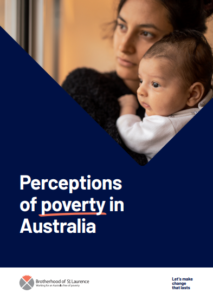 BSL commissioned two major studies surveying more than 2,600 people across Australia in 2025 (89 Degrees East) and 2026 (Essential Research). The findings highlight widespread concern about the rising cost of living, growing inequality and the impact these pressures have on individuals, families and communities.
- 94% of people believed more should be done to reduce poverty.
- 82% said that supporting people experiencing poverty is especially important during the current cost of living crisis.
Young people, online worlds and respectful relationships education: What the research tells us | OurWatch
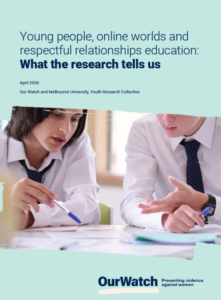 A new research summary highlights the urgent need for earlier and more comprehensive respectful relationships education for children and young people in Australia. Drawing on a literature review, the report examines young people’s experiences of sex, gender and relationships both online and offline, and identifies approaches that support healthy relationships and help prevent gender-based violence. The findings show that attitudes about gender equality and consent are formed early, while online environments, pornography exposure and harmful digital influences are increasingly shaping young people’s experiences and expectations. The report calls for whole-of-school, age-appropriate education that strengthens consent, digital literacy, inclusion and respectful relationships across all stages of learning.
Take a seat: listening to the policy priorities of Australia’s young women | Working with Women Alliance
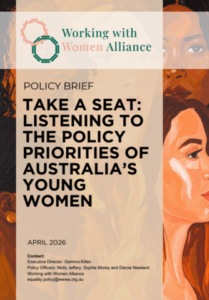 Young women are persistently absent from policymaking, but are overrepresented in experiences of financial stress, gender-based violence, medical misogyny and climate anxiety. This policy brief, written by young women, presents the most pressing policy issues impacting young Australians, and calls on the Australian Government to resource their expertise and safeguard their futures.
National Elder Abuse Research Program: the abuse and mistreatment of Aboriginal and Torres Strait Islander older people | Australian Institute of Family Studies
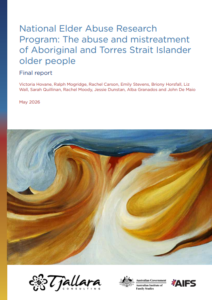 This report provides a nuanced understanding of the nature and dynamics of abuse and mistreatment experienced by Aboriginal and Torres Strait Islander older people. It describes how this differs from the general population. The research identifies strategies and policy responses tailored to the needs of Aboriginal and Torres Strait Islander people experiencing elder abuse.
New Grant Opportunity – National Service for Non-offending Family Members of Child Sexual Abuse Perpetrators | Attorney-General’s Department
The Australian Government has opened applications for a new National Service for Non-offending Family Members of Child Sexual Abuse Perpetrators, to operate from 2026–2029 as part of the National Strategy to Prevent and Respond to Child Sexual Abuse. The service will provide free, trauma-informed national support for non-offending family members, including therapeutic support, advocacy, a national helpline and online peer support. The initiative aims to reduce child sexual abuse-related harms, improve access to coordinated support, and increase understanding of the impacts on families.
Eligible organisations can apply through GrantConnect, with applications closing on 3 July 2026.
Rapid scoping review of protective factors for parent and child wellbeing | Australian Institute of Family Studies
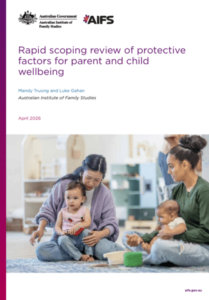 This report summarises the research evidence on protective factors for parent and child wellbeing in the early years (pre-birth to 5 years of age). The evidence shows that a range of programs and interventions can be effective in improving child, parent and family outcomes.
Digital platformisation in the care sector | Anglicare Southern Queensland
 This essay investigates technological innovation and the rise of digital platformisation in the care sector, drawing on research that explores the features of digital care platforms and care management platforms for aged care in Australia. The essay outlines two distinct types of digital platforms in operation.
Want to submit something to the FRSA eBulletin?
If you have an news item or event that you would like to be featured in a future eBulletin please submit your announcement via the form below or email communications@frsa.org.au with the subject “FRSA eBulletin submission”.
Please note FRSA members receive priority for items posted in the eBulletin. And to keep information current, relevant and useful, submissions will not be repeated from week to week.
Subscribe
Subscribe to receive future eBulletin editions directly to your inbox!
