


No. 16, 2025 | 24 October 2025
Go to:
From FRSA's Executive Director
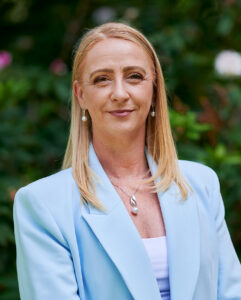
It’s Children’s Week and I’d like to give a huge shout out to FRSA members and friends for the incredible work you do delivering children and family services. Children’s Week is a national annual event promoting awareness of children’s rights under the United Nations Convention on the Rights of the Child (UNCRC). Children’s rights underpin and motivate our sector’s work with children and young people. You are amazing!
Yesterday, the Minister for Social Services, the Hon Tanya Plibersek, announced significant reforms to key child, family and relationship services, with five flagship programs set to be replaced by a single national program from 2027.
The programs affected include:
- Child and Parenting Support (CaPS)
- Communities for Children – Facilitating Partners (CfC FP)
- Family Mental Health Support Services (FMHSS)
- Family and Relationship Services (FaRS)
- Specialised Family Violence Services (SFVS)
Reform has been on the Government’s agenda for some time, and the sector was aware that change was likely coming. It was very unfortunate that the consultation paper about the new single national program was not released at the same time of the announcement which provided little other detail other than the above-mentioned programs would no longer exist. Providers of these services are now scrambling to contain concerns about continuity of key services in the longer term, anxiety about job losses and impacts on the local communities and the children and families living in them.
Recent evaluations, including a 2024 Department of Social Services review of CaPS, CfC FP and FMHSS, highlighted strong client outcomes and value for investment. These findings align with a 2023 cost-benefit analysis commissioned by FRSA and conducted by the Centre for International Economics (CIE). The CIE report found overwhelmingly positive outcomes for children, young people and parents—improvements in family functioning, mental health, wellbeing, and age-appropriate development. Similarly, the analysis showed strong results for FaRS and SFVS clients.
The Department of Social Services will soon open the consultation on the proposed single national program and we trust that a little more detail about the model will be provided at that point. FRSA will work with our members to ensure the reform builds on the strengths of current programs and continues to deliver positive outcomes for children, families and communities across Australia.
Next week’s Strategic Leadership Forum, which will be held in Canberra, will provide an opportunity for CEOs and Senior Managers of the FRSA membership to debrief on yesterday’s announcement as well as consider other challenges and opportunities facing the sector. Do register if you haven’t already.
Also, a reminder to members that the FRSA AGM will be held online on 12 November, 12:00-1:00pm (AEDT). The Board election is underway via an electronic ballot. The election period closes at 4:00pm (AEDT) on Friday 7 November 2025. If you are an FRSA member and have not received your election email, please contact the FRSA office on 02 6162 1811 or via email, admin@frsa.org.au.
As always, please do reach out to the FRSA office on 02 6162 1811 if you have questions, concerns or information to share.
Kind regards,
Jackie Brady
FRSA Executive Director



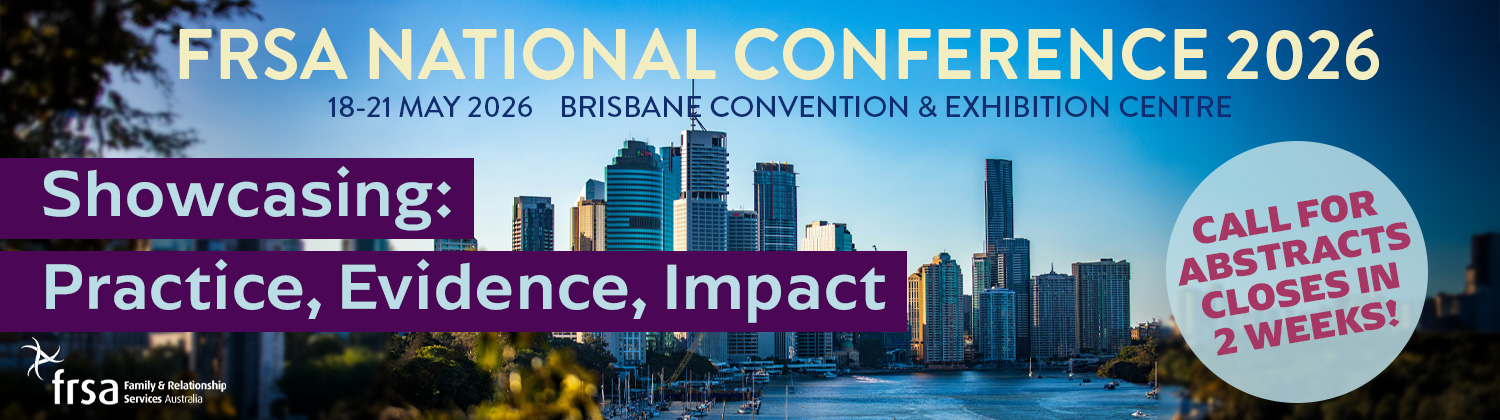
FRSA invites you to submit an abstract to present at the FRSA National Conference 2026, which will be held at the Brisbane Convention & Exhibition Centre, 18-21 May.
The theme for the FRSA National Conference 2026, Showcasing: Practice, Evidence, Impact, recognises the breadth of work undertaken across the sector and its measurable impact on families, children, and communities.
With the federal government contemplating changes to the commissioning of community services, they have expressed a commitment to evidence-based decision making. It is therefore timely to reflect on what is working in our sector, why it works, and to share the outcomes of these interventions.
The Conference will provide an opportunity for the sector to share:
- the ways you are working to meet the needs of children, adults, families and communities
- the evidence underpinning and emerging from practice
- the impact that different practices and approaches generate for the people accessing services – and for your local communities.
The FRSA National Conference 2026 provides a platform to showcase and learn from on the ground practice, policy, and research. The Conference is a highlight event for the family and relationship services network and will, as always, deliver a prime opportunity to share the impressive work of the sector.
We welcome abstracts that speak to the conference theme – Showcasing: Practice, Evidence, Impact.
In preparing and making your submission, you are asked to select and position your abstract within one of the five following streams:
- The early years
(e.g. preconception to birth, the birth of a child, impact on family relationships and transitions into parenting, early child development, and school readiness). - Children and young people at the centre
(e.g. child-focused and child-inclusive practice, supporting children and young people’s participation in policy development, service design and evaluation, school transitions, the safety and wellbeing of children and young people). - Relationship breakdown and re-partnering
(e.g. family legal services, family dispute resolution, parenting after separation and sustaining the best interests and wellbeing of children, sole-parenting, tensions in extended family relationships). - Family Domestic Violence
(e.g. identifying and managing family violence risk, child maltreatment, perpetrator interventions, adolescents using violence in the home, elder abuse). - Across the lifecourse
(e.g. diverse and changing family structures, developing and maintaining respectful relationships, social connection, intersectionality and inclusion).
We are a rich and diverse society, and FRSA encourages presentations that show our sector’s work with different cohorts and communities – First Nations peoples, culturally and linguistically diverse peoples, people with disability and LGBTIQA+ people – and other cohorts who may face particular challenges in accessing safe and appropriate services.
The Call for Abstracts closes 11:59pm AEDT Wednesday, 5 November 2025. For more information, or to submit your Abstract, please visit the FRSA National Conference website here.
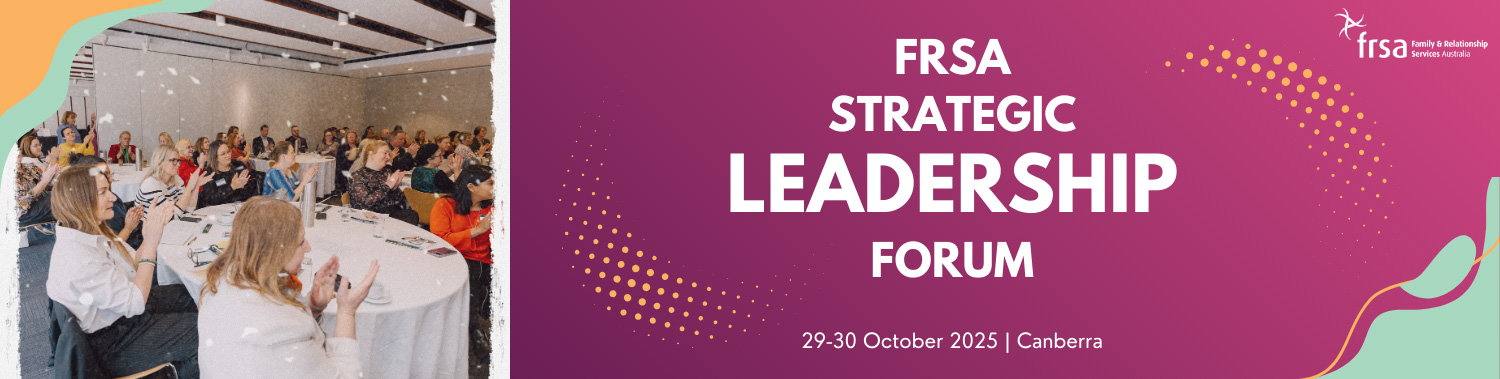
FRSA Strategic Leadership Forum 2025 next week! Last chance to register!
We are excited to welcome the CEOs and Senior Leaders in the FRSA Membership to Canberra to participate in the Strategic Leadership Forum being held 29 October and 30 October 2025. We can promise a strong line-up of presentations on Day 1, and we are working hard preparing the schedule of parliamentary meetings for Day 2.
Access the event details including the event program, speaker information and accommodation on the FRSA Members Only Event page.
Please contact events@frsa.org.au for the password to the FRSA Member’s Only Event page.
Connecting with the Victorian CfC FP Network
Last week, Policy and Projects Officer, Lisa Curtis, had the pleasure of attending the Victorian Communities for Children Facilitating Partner (CfC FP) Forum. This was a valuable opportunity to connect with colleagues across the state and hear from key national stakeholders including the Department of Social Services (DSS), the Australian Research Alliance for Children and Youth (ARACY), and the Australian Institute of Family Studies (AIFS).
Discussions explored balancing place-based, community-responsive work with national grant and reporting requirements and showcased the diverse ways CfC FPs demonstrate outcomes and community impact.
ARACY shared updates on the Child-Friendly Community Engagement Tool, which has been co-designed with CfC FPs to support local measurement of child-friendly communities. AIFS provided an overview of the CFC FP Monitoring, Evaluation, and Learning (MEL) Framework, which is currently being developed to strengthen evidence and support continuous learning across the program.
Overall, the forum reinforced the Victorian CfC FPs shared commitment to improving outcomes for children and families through collaborative, place-based action.
Register for the fourth FRSA First Nations webinar!
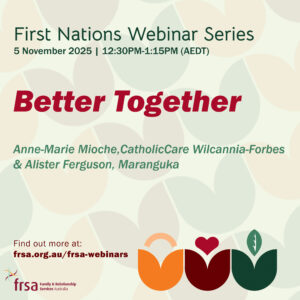 Register for the fourth webinar in our First Nations focus on Family and Relationship services series, Better Together presented by Anne-Marie Mioche, CatholicCare Wilcannia-Forbes and Alister Ferguson, Maranguka on Wednesday, 5 November 2025.
Over the past 8 years, Maranguka and CatholicCare Wilcannia-Forbes have built a unique partnership grounded in trust, shared values, and a commitment to community-led change in Bourke. From the establishment of a men’s centre to shared data and service support, this collaboration offers valuable insights into how NGOs can work together in a competitive environment. This webinar will explore the lessons learned, the challenges faced, and the transformative impact of this partnership on the community.
The final webinar is scheduled for Tuesday, 25 November 2025 at 12:30pm and will explore how the Longitudinal Study of Indigenous Children is being used to tell powerful stories—combining Indigenous knowledge, storying methods, and data—to understand what helps children thrive. Further information about the series is available here.
FRSA Webinar: SistaCare – Collaboration for the safety of women
If you missed the third webinar in our First Nations focus on Family and Relationship services series, SistaCare – Collaboration for the safety of women presented by Sarah Todd & Dorothée Crawley from CatholicCare Wilcannia-Forbes, you can watch the recording now:

New resources to help children whose parents are separating and involved in court proceedings
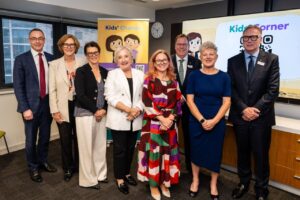
This week the Federal Circuit and Family Court of Australia (Division 1) and (Division 2) (the Courts’) launched the Courts’ Children’s Charter and Kids’ Corner — two new initiatives designed to support children whose parents are separating and are involved in family law proceedings.
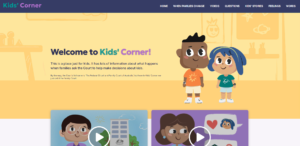
The Children’s Charter outlines the Courts’ commitment to placing children at the centre of decision-making in a way that promotes their safety and wellbeing. Supporting this, the Courts have also developed a dedicated Kids’ Corner on their website, featuring two short animations and age-appropriate information and resources to help children understand what happens when families go to court.
Scale of domestic and family violence’s role in homelessness revealed
New analysis from Homelessness Australia has revealed increases in the leading causes of homelessness in Australia.
Across Australia in June this year, family and domestic violence and cost-of-living were the biggest drivers of homelessness. People seeking homelessness help because of family and domestic violence is also the homelessness driver that has increased most in the last two years; up 13% between June 2023 and June 2025.
The analysis of AIHW monthly homelessness data found the top four reasons people sought homelessness help in June 2025 were family and domestic violence (35,736 people seeking help), eviction (34,094 people), financial difficulty (33,038 people), and housing affordability stress (32,979 people). People needing homeless help due to housing affordability stress increased by 8.1% over two years. Read more.
AIHW releases data on Australia’s Welfare
 The Australian Institute of Health and Welfare (AIHW) has released the 17th biennial welfare report card on the welfare of Australians by looking at how we are faring as a nation.
Australia’s Welfare 2025 explores topical welfare issues and brings together multiple data sources, providing a holistic picture of welfare and wellbeing in Australia. It comprises two products:
- Australia’s welfare: topic summaries present key information and statistics on welfare in Australia, aged care, housing, education, employment, supports and services, justice and safety and First Nations people across more than 30 web pages. Available online as web pages (some updated when new data are available).
- Australia’s welfare 2025: in brief presents key findings and concepts to tell the story of welfare and wellbeing in Australia.
Key statistics include:
- 2 in 5 (40%) Australians in April 2025 reported having experienced loneliness at least some time in the previous week
- Around 1.26 million low-income households were in financial housing stress in 2024-25
- The number of people using home-based aged care has grown faster than the number using residential aged care
- More Australians understand and reject gender inequality and violence against women, compared with 15 years ago.
Out of home care system – new report
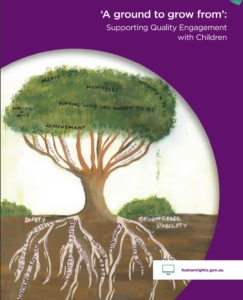 A new report from the National Children’s Commissioner’s project – the Supporting Quality Engagement with Children Project – calls for the needs of children to be prioritised in the out-of-home care system.
A ground to grow from, which is the latest report in the Department of Social Services funded project, makes 8 recommendations to centre the experiences and views of children in an upcoming review by the Australian Government of the National Standards for out-of-home care.
The report outlines findings from consultations with over 500 children and young people across all Australian jurisdictions, including metropolitan, regional and remote locations.
The report and more information about the Supporting Quality Engagement with Children Project is available here.

A new approach to children and family programs – consultation opens soon
The Department of Social Services will shortly be opening a consultation on a new approach to children and family programs
On 23 October 2025, the Minister for Social Services, the Hon Tanya Plibersek, announced reforms to supports and services for families, children, and young people. You can read Minister Plibersek’s speech for more information.
The changes will bring the following five Families and Children Activity programs under a new, single national program to support children and families:
- Children and Parenting Support
- Family Mental Health Support Services
- Communities for Children Facilitating Partners
- Family and Relationship Services
- Specialised Family Violence Services
FRSA issued a media release in response.
You can subscribe for updates on the consultation. FRSA will be in contact with members as soon as more details about the consultation come to light.
New Shadow Attorney-General appointed
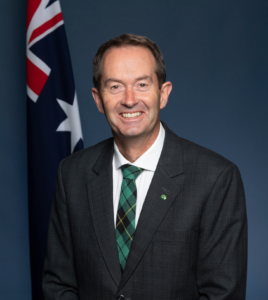 On 13 October 2025, the Opposition Leader Sussan Ley appointed Mr Andrew Wallace MP as the Shadow Attorney-General. Mr Wallace replaces Mr Julian Leeser MP, who has been appointed Shadow Minister for Education and Early Learning.
Prior to entering Parliament, Mr Wallace practised as a barrister for 16 years.
The Ley Shadow Ministry list is available here.
Anti-bullying Rapid Review Final Report released
The Anti-bullying Rapid Review Final Report was released on 20 October, with all Education Ministers asking for an implementation plan to be brought to them to consider actions that can be taken to implement the recommendations.
As an immediate action, the Australian Government will provide up to $5 million for the development of targeted resources for teachers, students and parents to support school community responses to bullying. The government will also invest up to $5 million to support a national anti-bullying awareness campaign about bullying and its impacts and the importance of prevention and supporting behaviour change.
The Review was announced on 16 February 2025 to examine what is working to prevent and respond to bullying in Australian schools and what needs strengthening. It was co-chaired by Dr Charlotte Keating and Professor Jo Robinson AM, and consultations were held across Australia.
The final report includes 8 recommendations that aim to ensure that every school is a safe, inclusive and respectful learning environment where bullying and other harmful behaviours are not accepted.
More about the review and the final report are available here.
Social Media minimum age – eSafety
From 10 December 2025, Government legislative rules will come into effect to enhance online safety for children and young people. Under the rules certain social media platforms won’t be allowed to let Australian children under 16 create or keep an account.
The eSafety Commission has developed resources to support parents and carers, educators and other professionals working with children and young people to navigate the changes, via a Social media age restrictions hub.
The resources include live webinars which will run in the lead up to 10 December.
The 30-minute webinars will cover:
- What the new legislation means for educators, parents and carers, and young people.
- Insights into how platform design features can impact young people’s wellbeing.
- Strategies and resources to support young people through the transition.
You can find out the schedule of webinars and register here.
Victim survivors of institutional child sexual abuse – new initiatives
On 22 October, the 7th anniversary of the National Apology to Victims and Survivors of Institutional Child Sexual Abuse, the Minister for Social Services Tanya Plibersek and the Attorney-General Michelle Rowland announced further steps to strengthen decisions of the National Redress Scheme relating to abuse in medical settings – often referred to by victims and survivors as virginity testing. How the Scheme considers abuse in medical settings has been updated to classify virginity testing as sexual abuse.
Additional Independent Decision Makers have also been appointed to increase consistency and speed of redress for survivors.

Communicare women's refuge awarded Not-for-Profit of the Year
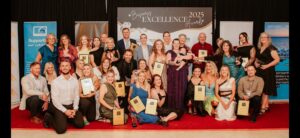 Communicare Tuart House has been awarded Not-for-Profit of the Year at the Busselton Chamber of Commerce and Industry 2025 Business Excellence Awards.
Tuart House is a regional accommodation and support service for women and their children who are homeless, or are at imminent risk of homelessness, as a result of family and domestic violence.
They said, “This incredible achievement celebrates the team’s dedication to supporting women and children impacted by family and domestic violence. Every day, Tuart House provides a safe, supportive and empowering environment where families can heal and rebuild new beginnings.”
Congratulations to the Tuart House team,
FRSA Members mark Anti Poverty Week
Last week was Anti Poverty Week, which aims to help Australians understand poverty and to take action to end it.
See how FRSA Members around the country commemorated the week:
- The Smith Family shared a video interviewing university students about the importance of digital inclusion, why access matters, and why closing the digital divide is critical for educational equity.
- Uniting SA held an Anti-Poverty Week event with SA Power Networks.
- Anglicare WA’s CEO, Mark Glasson, attended the Governor’s Roundtable, hosted by No Place for Poverty. They shared a video with Mark talking about the roundtable and rising poverty rates in Western Australia. During the week they also highlighted a portrait photography series ‘Eye Contact’ by Phil England that was displayed at Lakeside Joondalup sharing the lived experiences behind poverty, homelessness and housing insecurity.
- Lutheran Care’s Senior Manager Homelessness NT attended an Anti-Poverty Week event with one of their Central Intake Service partners, Yilli Rreung.
- Kyabra Community Association Inc. shared a number of posts with community thoughts such as thoughts on poverty, tips that they would give to someone who is struggling financially, what it’s like to live in poverty and personal stories of what it’s like living in poverty.
- Marymead CatholicCare Canberra & Goulburn shared a video message they were highlighting the importance of the week and calling for more to be done.
- CatholicCare Tasmania had stalls at Anti Poverty Week events in Launceston and Hobart to mark the week and raise awareness of the impact poverty has on Tasmanians. The Hobart event was covered by 7NEWS Tasmania, watch the news story below:

Webinar series: Towards a comprehensive child mental health system: Exploring data and policy
Emerging Minds are hosting a free webinar series designed to support organisational and systems leaders across the health, education, social and community services sectors.
The three part series, Towards a comprehensive child mental health system: Exploring data and policy, aims to equip participants with research and data to help build organisational understandings of children’s mental health, the needs of the workforce, and the role that organisations and sectors can play in a comprehensive system.
The series is intended for organisational and systems leaders across the health, education, social and community services sectors, as well as practitioners with an interest in workforce development.
Register for each webinar below:
- Exploring workforce availability | 29 October 2025 | 10:00am-11:00am (AEDT)
- Gaps and Strengths in Workforce competence | 26 November 2025 | 10:00am-11:00am (AEDT)
Opportunities for a coordinated system of support | 25 February 2026 | 10:00am-11:00am (AEDT)
Voices for Action campaign
 The National Centre for Action on Child Sexual Abuse has released a new campaign – Voice for Action – marking the 7th anniversary of the National Apology to Victims and Survivors of Institutional Child Sexual Abuse.
This new campaign invites victims and survivors of child sexual abuse to share their views on the action needed in policy and prevention initiatives. Voices for Action provides a secure platform for victims and survivors to make submissions in whatever way feels right for them, such as artwork, writing, music, video, or other forms. Submissions will help the National Centre identify key issues and themes to inform future policy and advocacy, systems reform and sector capability building.
To learn more or share your voice, visit Voices for Action.

CHC81015 Graduate Diploma of Relationship Counselling – June 2026, Online
CHC81115 Graduate Diploma of Family Dispute Resolution – July 2026, Online
Couples Counselling Course: A contemporary and client-focused approach

NT
Financial Counsellor | Anglicare NT
VIC
Regional Family Dispute Resolution Practitioner (RFDRP) | Mallee Family Care
If you have any events you’d like listed on the FRSA Events and Training Calendar or job vacancies you’d like listed on the FRSA Jobs Board, email Communications Officer, Vanessa Lam at communications@frsa.org.au. Please note that posting onto the FRSA website is reserved for FRSA Members only.

Rental affordability snapshot: essential workers edition 2025 | Anglicare Australia
 This report examines affordability of rental properties for Australians who earn the lowest incomes, people on Commonwealth income support and minimum wage earners. Surveying the rental market for sixteen essential occupations, the report determines how many rental listings they could afford. It finds affordability was worst for early childhood educators, hospitality workers and meat packers.
Gender equity insights 2025: the power of balance | Bankwest Curtin Economics Centre, Workplace Gender Equality Agency
 This report investigates what drives a gender-balanced workforce – having at least 40% women and 40% men in the workforce. The findings are drawn from a dataset of more than 5.1 million Australian employers. The report makes the case that gender equity is not simply a matter of fairness and sets out a clear agenda for employer action.
Poverty in Australia 2025 overview | Australian Council of Social Service, University of New South Wales
 This report outlines poverty lines and people in poverty in Australia from 2022–23 data. It examines trends in poverty from 1999 to 2022, and social security payments and poverty lines in 2023. It finds that more than one in seven people in Australia live below the poverty line.
Capability review: Department of Social Services | Australian Public Service Commission
 The purpose of the review is to help the Australian Department of Social Services enrich its capability to achieve its goals over the next four years. It provides a detailed assessment of the agency capability – and opportunities to improve this capability – in the areas of leadership and culture, collaboration, delivery, workforce and enabling functions.
Australia’s fertility decline: evidence and policy experience | e61 Institute
Declining fertility rates are a worldwide phenomenon, with Australia no exception. Australia’s fertility rate has fallen to a record low of 1.5 births per woman. This report examines both the drivers of fertility decisions and the lessons from past policy interventions. It finds the decline in fertility has been driven by three factors.
Key work health and safety statistics Australia: 2025 | Safe Work Australia
 This report highlights key trends in work-related fatalities, injuries and disease, and provides valuable insights to help improve safety outcomes in Australian workplaces. There are more than 400 serious claims a day across Australia. The report finds the challenges to overcome are significant with harm occurring in a concentration of certain industries.
Understanding parents’ experiences of their child engaging in self-harm and/or suicidal ideation | Child Family Community Australia & Emerging Minds
This short article aims to describe the experiences of parents with children who self-harm or experience suicidal ideation. It outlines the factors that influence parents’ help-seeking behaviour when accessing services for their child. The article also provides practice considerations for how to best support parents and their children.
First Nations carers in the National Carer Survey | Carers NSW
 This report presents the First Nations responses to the Australian National Carer Survey from 2020 to 2024. It focuses on First Nations carers’ economic and social needs, caring relationships, carers’ experiences accessing services, and their health and wellbeing. Findings show that many services do not meet First Nations carers’ needs to support their wellbeing.
Guidance for AI adoption | Department of Industry, Science and Resources
 The guidance sets out six essential practices for responsible artificial intelligence (AI) governance and adoption, based on national and international ethics principles. There are two versions of the guidance: for organisations getting started in adopting AI, and for governance professionals and technical experts. The guidance is accompanied by a policy guide and template.
Improving responses to young men’s use of intimate partner violence | Western Sydney University
 The authors of this report examine the current service landscape and spoke to practitioners working with young people to identify key drivers and risk factors for young men’s use of intimate partner violence. They also undertook co-design with practitioners and young men to develop emerging principles of engagement for effective interventions.
Understanding the experiences of parents who were adopted as children | Child Family Community Australia
This resource summarises the evidence about the experiences of parents who were adopted as children (i.e. adult adoptees). It discusses their experiences of parenthood and the impacts of parenthood on their identity, wellbeing and relationships with others. It outlines the broader complexities of family separation in adoption, the impact of adoption on relationship attachment and the intersection between adoption and parenthood.
Australian Unity Wellbeing Index | Australian Unity, Deakin University
The annual Australian Unity Wellbeing Index has been running for 25 years, this year’s findings include:
- A boost in national wellbeing, while personal wellbeing held steady.
- Economic and generational divides continued. Electorates and individuals with lower household incomes recorded some of the lowest personal and national wellbeing levels. Younger Australians also reported significantly lower personal wellbeing.
- Urban–regional national wellbeing divide was observed. The highest-scoring electorates on national wellbeing were in capital cities, while, on average, regional areas recorded lower satisfaction across every national life domain.
Australian Unity has established a new Data Dashboard, allowing Australians to view and interact with current and historical data from the Wellbeing Index.
Victim-survivors’ reflections on best practice in restorative justice for domestic, family and sexual violence | Australian Institute of Criminology
 Research examining restorative justice (RJ) for domestic and family violence (DFV) and sexual violence is growing. However, there has been little empirical examination of the perspectives of victim-survivors on best practice. This study addresses this gap drawing on victim-survivor participants in an Australian RJ program.
Want to submit something to the FRSA eBulletin?
If you have an news item or event that you would like to be featured in a future eBulletin please submit your announcement via the form below or email communications@frsa.org.au with the subject “FRSA eBulletin submission”.
Please note FRSA members receive priority for items posted in the eBulletin. And to keep information current, relevant and useful, submissions will not be repeated from week to week.
Subscribe
Subscribe to receive future eBulletin editions directly to your inbox!
