


No. 19, 2025 | 11 December 2025
Go to:
From FRSA's Executive Director
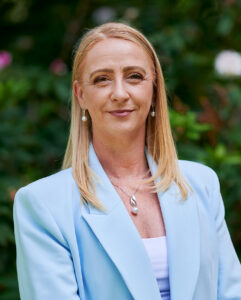
The beginning of this week marked the end of the DSS consultation process “A new approach to programs for families and children”. As the national peak body for the Family and Relationships Services sector, which includes the five programs facing reform, it has certainly been a busy four weeks. The FRSA team extends a huge thank you to our Members for their strong and generous engagement in our consultation processes – particularly when so many were developing their own submissions in the busyness of end of year preparations.
FRSA participated in a DSS Community Sector Advisory Group meeting earlier this week where it was reported by the Department that there were just under 800 people who participated in the various DSS hosted webinars and townhalls (virtual and in person). The Department has advised me that at the close of the written submission deadline (11:59pm on Monday the 9th Dec) there were over 236 written submissions and 144 responses to the online pulse survey received. This is a signficant investment – especially by the community sector. Everyone wants the best outcomes for children, young people, families and communities.
Headline points from FRSA’s submission are captured below, but I offer a few reflections as the FRS peak:
- The five programs slated for reform have demonstrated strong client outcomes and we hope that government will build on the successes of these programs as it seeks to ensure services remain contemporary and fit for purpose.
- After five years plus of governmental reviews, having some direction is welcome. However, we consider that a more measured implementation pace will enable time for departmental capacity building and sector readiness as well as alleviating service disruption for children, adults and families.
- An evidence-based understanding of needs and service gaps on-the-ground should underpin the design of programs – achieving value for money, solid return on investment and equitable outcomes requires a clear, data-informed picture of community needs, existing service coverage and local context.
- Australia is comprised of diverse family structures and involves a broader set of important relationships than contemplated in the department’s proposed approach. A focus on children (and their families) and early in life is only one area that needs the attention of Government. Children, young people, adults/older adults across their lifecourse can require interventions to deal with all manner of issues that challenge their relationships, their emotional health and wellbeing – we believe that this program should continue to support these people too.
- We can’t expect these programs to do all the heavy lifting when it comes to keeping kids out of out of home care, improving AEDC scores (identified as outcomes by DSS) when problems underpinning entrenched disadvantage such as poverty/financial hardship and housing affordability/homelessness prevail. The Program outcomes framework needs to be designed to ensure that outcomes and impact appropriately and realistically attach to activity.
Now to the task of digesting and analysing the massive amounts of information that are coming before the Department – all within very strict timelines. We certainly acknowledge the significant work ahead for those in the Department and relevant Ministerial offices.
I also wanted to take the opportunity to acknowledge a number of Departmental Staff who have worked closely with FRSA and the community sector who are moving on from DSS. I appreciate it is always dangerous to name a few for fear of missing someone – but the following people are also known to our sector through speaking engagements at FRSA events over the years. Our thanks for the dedication and commitment from Tarja Saastamoinen, Veronica Westacott, John Riley and Chris D’Souza – we wish them well!
I also wanted to acknowledge another key departmental figure – this time in the Attorney-General’s Department. Yesterday was Rebecca Mills last day in the Family Law Branch. She is certainly well known to the sector and has often been the ‘Departmental face’ when it comes to engagement with the sector on family law matters through the hosting of webinars, roundtables and visits to agencies. She will be missed but we wish her all the best in her new role heading up the Human Rights Branch in the Department.
Kind regards,
Jackie Brady
FRSA Executive Director



‘A new approach to programs for families and children’ – FRSA submission
FRSA has published its submission to the Department of Social Services’ consultation – A new approach to programs for families and children.
The department’s consultation paper proposes a single national program to replace five flagship programs funded under the Families and Children (FaC) Activity: Family and Relationship Services, Specialised Family Violence Services, Family Mental Health Support Services, Child and Parenting Support and Communities for Children – Facilitating Partners.
FRSA’s submission urges the government to:
- build on the successes of the five in-scope programs
- ensure reforms are evidence-informed, with service mapping and needs analysis made publicly available
- acknowledge and incorporate the diversity of families in modern Australia in program design
- recognise the role of community and community-centred approaches in building protective factors for bringing up safe and strong children and young people
- maintain a diverse service system where value for small, medium and large providers is respected and enabled across rural, regional and metropolitan locations
- ensure adequate time and funding is provided for transitional arrangements.
The department’s consultation is now closed, and the findings of the consultation are expected to be released in early 2026.
Family Law Services Communities of Practice up and running

In the last quarter of 2025, FRSA has expanded its service of sector-wide communities of practice (CoPs) to include the Attorney-General’s Department funded Family Law programs (Family Relationship Centres, Family Dispute Resolution, Regional Family Dispute Resolution, Family Law Counselling, Supporting Children After Separation Program, Parenting Orders Program & Children’s Contact Services). This comes after the success of CoPs for DSS funded programs, led by Policy and Projects Officer, Lisa Curtis.
Delivering this first round of CoPs has been fun, challenging – at times confusing (so many acronyms!) – and overall enlightening for myself as Project Officer. The seven groups facilitated thus far have mostly focused on the impacts of the 2024 and 2025 changes to the Family Law Act, with other programs that are less directly impacted focussing on service integration, comparative models of service delivery and servicing different client cohorts.
Some of the driving sector issues that emerged through discussion are:
- Operationalising ‘child’s best interests’ factors requires heightened coordination between child inclusive practitioners, Family Dispute Resolution Practitioners and Independent Children’s Lawyers, with a shared understanding of children’s developmental needs a key organising principle.
- Services are uniquely placed to offer their observations to courts to assist these ‘best-interest’ determinations, however services would benefit from clear guidelines on how to interface effectively.
- All services that participated in discussion reported increases in the prevalence of Family Violence, and updating / further developing risk management frameworks and trauma-informed practice remains a priority for staff development.
- Services are shaped by the local context and there is variation in the type, duration and intensity of service support with services offering place-based solutions that meet local need and do not fall neatly into a scalable service offering (particularly true for Regional Family Dispute Resolution, Parenting Orders Program & Supporting Children After Separation Program).
The design intention of these first sessions was to support each group to find its identity and provide a space for relationship-building and cross-service insights to emerge about recent sector changes. The feedback from participants has been generally that these CoPs are valuable, allowing rare opportunity for cross-service sector development, and that participants appreciate the meta-thinking components (reflecting on services, intersections & systems).
Some emerging themes for exploration in early 2026 are likely to be:
- improving interface with courts
- developing models of practice
- workforce development
- managing family violence risk.
These sessions have been a rich opportunity to develop cross-sector relationships, identify and wrestle with the challenges and paradoxes of the family law system and ultimately to support the delivery of high quality services to people going through the system.
If you have any questions about the Community of Practice Project please contact me at flprojects@frsa.org.au
Child, Family and Relationship Services Communities of Practice - update

Over the past six months, participation and feedback across the Families and Children Activity Communities of Practice (CoPs) have remained strong, with consistently high attendance and ratings for relevance and usefulness. Each CoP explored a mix of practice, program design and management topics shaped by participant priorities, covering areas such as engaging fathers, workforce challenges, community strategic planning, practice frameworks, working with separated parents and exploring new AIFS resources on neurodivergence and trauma-informed practice.
With all CoP groups (Child and Parenting Support, Family Mental Health Support Services, Communities for Children – Facilitating Partners, Specialised Family Violence Services and Family and Relationship Services) facing significant program reform, the second session for each group also provided space to discuss A new approach to programs for families and children. Participants emphasised the need to protect community-led, place-based work, support smaller providers, maintain an inclusive definition of family and supports that target adults without dependent children, and ensure clear, co-designed implementation.
These rich CoP discussions continue to highlight the depth of expertise across the sector. We look forward to what the next six months of sessions will bring.
For more information, contact me at 02 6162 1811 or projects@frsa.org.au.
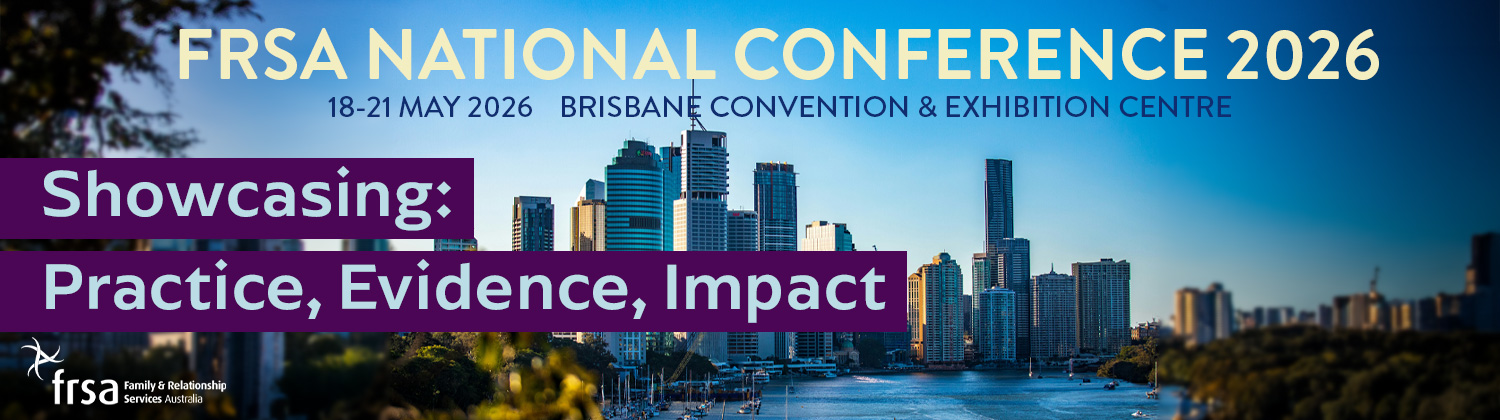
FRSA National Conference 2026 - Welcome Sponsors!
We’re thrilled to welcome the following sponsors who will join us in Brisbane next year for the FRSA National Conference.
- Attorney-General’s Department as a Partner
- Department of Social Services as a Partner
- Uniting NSW.ACT as a Gold Sponsor
- Drummond Street Services as a Gold Sponsor
- Centacare Brisbane as a Gold Sponsor
- Mallee Family Care as Conference App Sponsor
- DV-alert Lifeline Australia as an Exhibitor
- Australian Institute of Family Studies as our Reciprocal Sponsor
There are still a number of sponsorship package options available, designed to maximise visibility to showcase the work and activity of your organisation/business. Or if you are interested in a more bespoke package for your organisation don’t hesitate to get in touch with the FRSA team on (02) 6162 1811 or events@frsa.org.au.
Bursary Program
FRSA is pleased to announce the availability of bursaries for Aboriginal and Torres Strait Islander people who are registered for or would like to attend the 2026 Family & Relationship Services Australia National Conference.
Bursaries are provided to assist with covering the cost of conference registration, and travel & accommodation. To be eligible you must be an employee of a fully financial FRSA member organisation. Each package includes:
- 1 x complimentary full registration to the Conference (including dinner)
- $500 towards travel and accommodation
Applications close on FRIDAY, 27 March 2026. Please note, this Bursary Program is open to people who are yet to register and those who are already registered.
FRSA Webinar: Growing Up Strong from early childhood: Stories and other findings from Footprints in Time: The Longitudinal Study of Indigenous Children
If you missed the final webinar in our First Nations focus on Family and Relationship services series, Growing Up Strong from early childhood: Stories and other findings from Footprints in Time: The Longitudinal Study of Indigenous Children presented by Associate Professor Stuart Ekberg & Tirritpa Ritchie, Flinders University & Professor Kristin Laurens, Queensland University of Technology, you can watch the recording now:

Family Matters Report 2025: Strong, Loved and Full of Potential
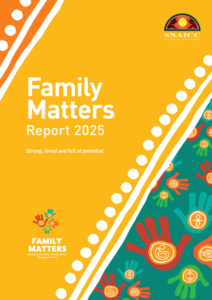 SNAICC – National Voice for our Children has released their Family Matters report 2025: Strong, Loved and Full of Potential.
The annual Family Matters Report examines government action to address the over-representation of Aboriginal and Torres Strait Islander children in child protection and tracks national progress toward ensuring that Aboriginal and Torres Strait Islander children grow up safe, cared for and connected to family, community, Country and culture.
The 2025 Report warns that Australia’s child protection systems continue to prioritise late, punitive interventions over the early support families need to stay strong and together, and that, despite years of commitments to reduce the over-representation of Aboriginal and Torres Strait Islander children in out-of-home care, progress has stalled.
Key findings include:
- Aboriginal and Torres Strait Islander children are 9.6× more likely to be in out-of-home care or on third-party parental responsibility orders than non-Indigenous children.
- Aboriginal and Torres Strait Islander infants are 8.9× more likely to be placed in out-of-home care than non-Indigenous infants.
- Only 7.3% of Aboriginal and Torres Strait Islander children in out-of-home care or on third-party parental responsibility orders were reunified with family, compared to 10.1% of non-Indigenous children.
- 37.6% of Aboriginal and Torres Strait Islander children exited out-of-home care to other circumstances, including homelessness and detention.
- Only 15.6% of total child protection expenditure was spent on family support services, meaning roughly 16 cents of every $1 is invested in prevention.
- Nationally (excluding WA), only 6.8% of child protection spending was directed to ACCOs, with most jurisdictions spending under 10% of their child protection budgets through ACCOs.
- 32.1% of Aboriginal and Torres Strait Islander children in out-of-home care were placed with Aboriginal and Torres Strait Islander relatives/kin.
Mission Australia's Youth Survey 2025 report
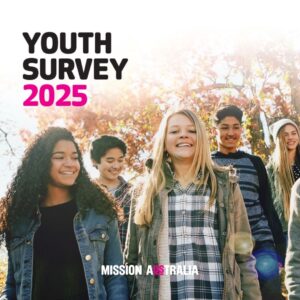 This year more than 17,000 young people aged 14-19 participated in Mission Australia’s 24th annual Youth Survey.
This report details the findings of the survey and provides compelling insight into the strengths, hopes, concerns and experiences of young people.
Young people have identified cost of living, mental health, climate change and the environment and housing and homelessness as the top national issues facing Australia in 2025. Cost of living as a national concern is at a record high, and housing and homelessness have doubled as a national concern since 2022.
New for this year, they asked young people an open response question about their hopes for the future and almost all young people shared multiple aspirations in their own words. Their responses show that young people have strong ambitions for many aspects of their lives. Employment and career goals were the most common, followed by hopes for family, relationships and connections and financial stability and home ownership.
The report has also revealed that:
- Concern around the cost of living is continuing to increase.
- The number of young people who identified housing and homelessness as a national issue has doubled since 2022.
- Financial hardship was experienced by 15% of young people or their families, with 4% experiencing stress about having somewhere to live in the last year.
- Mental health remains a significant concern, with one in five young people classified as having high psychological distress in the past four weeks.
- Three-quarters of respondents have someone to turn to when unsure about important decisions, but loneliness remains an issue for some young people.
- Discrimination and inequality affect many young people, continuing to be higher among Aboriginal and Torres Strait Islander young peoples and gender diverse young people.
Adverse Childhood Experiences and Suicide report
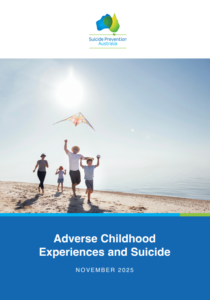 Suicide Prevention Australia’s latest report, Adverse Childhood Experiences and Suicide, has revealed the significant and lasting impact of Adverse Childhood Experiences (ACEs) on suicide risk, and is calling for a coordinated national approach to address the critical issue.
The report highlights that 41% of all suicide attempts among Australians aged 16 to 85 are attributable to childhood maltreatment, as well as a range of other research findings. These findings show the urgent need to strengthen prevention, early identification, and support for children and families experiencing adversity to protect the lives of some of Australia’s most vulnerable.
More than one in four Australians (28.5%) report experiencing sexual abuse before 18 years of age, and almost two in three (60%) adults say they have experienced at least one ACE such as neglect, abuse, or household dysfunction during their childhood. By age 17, one in four young people have experienced the death by suicide of a student at school, and one in five know someone personally who has died by suicide.
The report provides a comprehensive framework for government action, setting out eight guiding principles and more than 30 clear recommendations. Among the key priorities are:
- A National ACEs prevention strategy: mapping and integrating relevant policies and national strategies across sectors and governments.
- Trauma informed education: ensuring teachers and schools are equipped to identify and support children affected by trauma.
- Early screening and support: ensuring children most at risk are assessed by experts and provided with therapeutic interventions where needed.
Women’s Economic Safety: 2025 Snapshot
 The Centre for Women’s Economic Safety (CWES) has released their ‘Women’s Economic Safety: 2025 Snapshot’ report which highlights how economic abuse has a clear and significant impact across all domains of wellbeing.
The findings show less than a third of women who have personally experienced economic abuse know where to turn for support, and just 15 per cent of victim-survivors sought help this year.
Of those women who did seek help for economic abuse, 44 per cent were still unable to access support, with key barriers to access being safety concerns, long wait times and services being too confusing or hard to navigate.
The report was released on Economic Abuse Awareness Day (EAAD), which is a national initiative led by the Centre for Women’s Economic Safety (CWES) to spotlight the financial control and exploitation that are often part of domestic and family violence. Read the full snapshot
Social media age restrictions for under-16s are now in effect
 eSafety will begin monitoring and enforcing compliance with the Australian Government’s social media minimum age from 10 December 2025.
eSafety Commissioner Julie Inman Grant said the world-leading initiative was an important new addition to Australia’s online safety framework.
“Enforcing a minimum account age of 16 will create normative change and give young people a reprieve from powerful and persuasive design features built to keep them hooked, often enabling harmful content and conduct online.”
Visit eSafety.gov.au to access online safety resources, including social media minimum age information hub for educators, parents and young people themselves.

Ombudsman report on Targeted Compliance Framework
The Commonwealth Ombudsman has released its second report into the Targeted Compliance Framework (TCF) and has found the Department of Employment and Workplace Relations’ oversight of decisions by providers is poor and lacking in transparency.
To receive income support, many job seekers are required to complete tasks – also called ‘mutual obligations’ such as searching for jobs and attending appointments. The Department of Employment and Workplace Relations and Services Australia manage job seekers’ requirements to complete these tasks under the TCF.
The Ombudsman’s report made 8 recommendations and 1 suggestion to improve decision making. The Department of Employment and Workplace Relations’ and Services Australia have accepted all recommendations.
The report – Fairness in the Targeted Compliance Framework: when decisions are made beyond your control – is available on the Commonwealth Ombudsman website. The first report, which investigated automation in the TCF and was published in August 2025, is also available online.
Australian Government: National AI Plan 2025
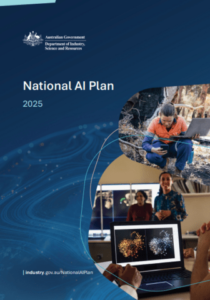 The Australian Government’s new National AI Plan outlines how Australia will build a competitive, productive and resilient AI-enabled economy. The plan focuses on three goals: capturing opportunities by investing in cutting-edge infrastructure, research and partnerships; spreading the benefits so that communities, workers and small businesses across Australia share in AI-driven productivity and improved services; and keeping Australians safe through strong legislative and regulatory frameworks that mitigate AI harms, while promoting widespread responsible practices and international engagement that upholds Australia’s values.

Welcome new FRSA Members!
The FRSA Board approved the following organisations as new members. Welcome to:
 Richmond Community Services Inc is a non-profit community organisation providing services to the Hawkesbury. They have a number of funded services that allow them to provide a range of services to the community.
 HelpingMinds is a long-established not-for-profit organisation that provides safe, high-quality services in the community to support children, young people, families, carers and people living with mental health challenges across Western Australia. HelpingMinds provides a wide spectrum of services in the mental health space, including: Carer advocacy, Understanding and navigating the mental health system, Education and mental health promotion, Counselling and workshops, NDIS support and coordination, and Carer respite.
 The International Centre for Children and Family Law is a child focused research and training centre emphasising appropriate inclusion of children in matters that affect them.
The centre offers specialized training in the areas of child inclusion, children’s rights, child and adolescent development, high conflict separation and divorce, domestic violence and the impact on children and families, child protection and innovative alternative dispute resolution practices including children.
Based in Calgary, Canada, and Sydney, Australia, the Centre seeks opportunities to collaborate with other child focused colleagues.

Seeking participants: Research on adolescent use of harmful behaviours
Are you supporting a young person who has used harmful behaviours at home or in their intimate relationships?
In partnership with the Centre for Excellence in Child and Family Welfare, researchers from Swinburne University of Technology, Monash University and Southern Cross University have received funding from Australia’s National Research Organisation for Women’s Safety (ANROWS) for a Victorian study exploring the pathways that lead young people to use harmful behaviours towards family members or dating partners, Trauma-related pathways into adolescent family violence use.
The research team is seeking participants aged 14–21 who are, or have been, connected to services supporting them with their use of violence. Insights will inform a trauma-informed framework and practice tool for services working with young people. Find out more on how to get involved.
Trauma-informed practice in community-based mental health online training
The Australian Institute of Family Studies (AIFS) has launched their first interactive online training: Trauma-informed practice in community-based mental health. This course transforms their evidence-based resources into a flexible, self-paced learning experience. Designed for early career practitioners, you’ll gain practical tools to support children, young people, and families with engaging modules, real-world scenarios, and interactive quizzes.
Developed in consultation with frontline staff, it’s shaped by the needs of practitioners.
Explore the course and join a community committed to safe, effective, and compassionate support informed by lived experience insights. Find out more.

CHC81015 Graduate Diploma of Relationship Counselling – June 2026, Online
CHC81115 Graduate Diploma of Family Dispute Resolution – July 2026, Online
Couples Counselling Course: A contemporary and client-focused approach

VIC
Family Dispute Resolution Practitioner (FDRP) | Mallee Family Care
Team Leader (Family & Carer Services) | Each
TAS
Practice Manager: Inspire at Home | CatholicCare Tasmania
Family Programs Statewide Manager | CatholicCare Tasmania
If you have any events you’d like listed on the FRSA Events and Training Calendar or job vacancies you’d like listed on the FRSA Jobs Board, email Communications Officer, Vanessa Lam at communications@frsa.org.au. Please note that posting onto the FRSA website is reserved for FRSA Members only.

The state of Australia’s children 2025 | UNICEF Australia, Australian Research Alliance for Children and Youth
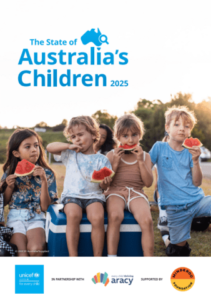 A comprehensive look at the wellbeing of children and youth across Australia, the report combines the latest publicly available data with firsthand perspectives. While many Australian children and young people are getting the support they need, many are falling behind. The report is a call to action to address these gaps and make children a national priority.
The links between childhood sexual abuse victimisation and adolescent offending | Australian Institute of Criminology
Child sexual abuse (CSA) victimisation has been linked to a greater risk of engaging in juvenile offending broadly, and sexual offending specifically, for male youth. This study used data and clinical information from a Queensland specialised service to examine the links between CSA victimisation experiences and sexual offending. Findings highlight the need for early intervention to prevent the emergence of sexual harm.
Australia’s gender equality scorecard | Workplace Gender Equality Agency
 This scorecard for 2024–25 reflects the state of gender equality in Australian workplaces. During this year, the national gender pay gap continued to narrow. Positive signs of progress sit alongside areas where more work needs to be done to ensure workplaces are fair, equal and safe. The report identifies three key opportunities for accelerated change.
Young Australians’ perspectives on the social media minimum age legislation | Digital Media Research Centre
 Prior to the implementation of Australia’s Social Media Minimum Age Act 2024, this report documents young people’s views. Social media is described as integral to their wellbeing, education and relationships, despite recognised risks. Respondents express doubts about the under 16 restriction, cite inadequate consultation and identify limited assistance for the transition beyond December 10, 2025.
Mapping the digital gap: 2025 outcomes report | ARC Centre of Excellence for Automated Decision-Making and Society
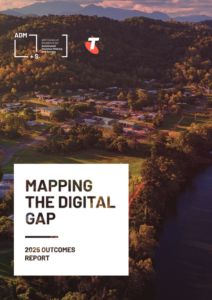 A new report provides the most comprehensive picture yet of communications and media use in remote First Nations communities, underscoring the essential role of reliable and affordable digital access. While communities show strong digital engagement and innovation, significant barriers remain- including poor access, rising affordability pressures, and lower levels of digital ability. Digital exclusion affects First Nations people at twice the rate of other Australians, with wide variation across states and remote regions. The report updates key findings on access, affordability, digital skills and media services, offering evidence to guide community-led solutions and inform national policy as work continues into the next research phase (2025–27).
Ransomware targeting individuals and small businesses: vulnerabilities and impacts | Australian Institute of Criminology
This study examines the experiences of 331 Australian individuals and small to medium enterprise owners who were victims of ransomware. It used survey data to understand how they were targeted and the vulnerabilities that were exploited. The results highlight both the human element in victimisation and the need for technological solutions to protect business owners.
Childcare in Australia: a new approach | Centre for Independent Studies
 The report aims to provide a balanced view of the present state of the Australian childcare system and some recommendations for reform. It finds that while public spending on childcare exceeds $14 billion annually, accessibility and quality remain uneven. It proposes that Australia’s childcare market would perform better with reduced regulatory interference and greater transparency.
National suicide prevention outcomes framework | National Mental Health Commission
 The framework provides a way of measuring the impact of efforts being made in suicide prevention in Australia. This overview provides a description of the framework, its components and how they operate together. The framework comprises four components: an overview, an outcomes map, data quality and improvement plan, and a monitoring and reporting plan.
Policy brief: ending weaponisation of the child support system | Working with Women Alliance
 The weaponisation of the child support system has emerged as a recurrent mechanism for perpetration of financial abuse, with cascading consequences for single mothers and their children. This policy brief outlines systemic flaws in Australia’s child support framework and proposes targeted reforms that prioritise women’s safety and economic security.
The effect of separation on poverty and employment | Life Course Centre
 A new study examining Australian household data shows that relationship breakdown significantly increases poverty risk, particularly for women. Women with young children face a 20-percentage-point rise in poverty in the year after separation, and those who were not employed beforehand experience an even larger increase. The research highlights the protective value of maintaining economic autonomy, noting that once lost, it is difficult for women to regain after separation. Even for employed parents, the shift from one household to two creates financial strain, underscoring the need for ongoing financial support for many separating families.
What does First Nations led truth-telling look like? | Reconciliation Australia
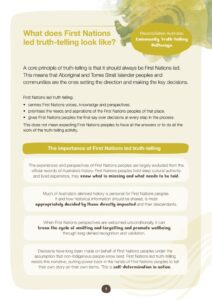 A core principle of truth-telling is that it should always be First Nations led. This fact sheet outlines the principles of First Nations led truth-telling, its importance, knowing whose lead to follow, navigating differing views and non-Indigenous truth-tellers. It identifies places to start and appropriate actions.
Digital technology in the not-for-profit sector | Infoxchange Australia
 The report provides an annual look at how charities and community organisations in Australia and New Zealand use technology to amplify their impact. It is built on insights shared by over 800 not-for-profits across data, cyber, digital transformation and artificial intelligence. The report outlines progress in the sector, the challenges and risks, and scope for improvements.
Rental affordability index 2025 | SGS Economics and Planning
 The 11th annual index compares rents and incomes across Australia to show where households face the greatest stress. It finds that rental affordability has finally stabilised in parts of the country after years of steep decline. However, pressures remain high, especially for people on low and moderate incomes.
Impact of child maltreatment on the costs of health service use and productivity loss: Findings from the Australian child maltreatment study | Monash University
A new Monash University study reveals that child maltreatment costs Australia $21.6 billion annually in health service use and $24.1 billion in lost productivity. Using data from the nationwide Australian Child Maltreatment Study, researchers found that affected individuals incur higher healthcare costs and productivity losses, highlighting the widespread social, health, and economic impacts. Experts stress that prevention and early intervention are not only ethical and public health priorities but also essential for reducing the national economic burden and achieving long-term savings.
Building better responses: NSW strategy to respond to the use of domestic and family violence 2026–2030 | Government of New South Wales
 A dedicated strategy for New South Wales (NSW) to respond to the use of domestic and family violence and address perpetrator behaviour. The strategy provides a focus on people who use violence. It recognises that tackling key drivers of violence early is one of the most effective ways to break cycles of violence and protect victim-survivors.
Want to submit something to the FRSA eBulletin?
If you have an news item or event that you would like to be featured in a future eBulletin please submit your announcement via the form below or email communications@frsa.org.au with the subject “FRSA eBulletin submission”.
Please note FRSA members receive priority for items posted in the eBulletin. And to keep information current, relevant and useful, submissions will not be repeated from week to week.
Subscribe
Subscribe to receive future eBulletin editions directly to your inbox!
