


No. 4, 2026 | 20 March 2026
Go to:
From FRSA's Executive Director
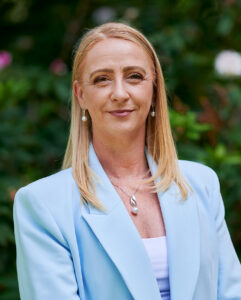
This Government is making no secret of the fact that this year’s Federal budget is going to be a tough one. Inflation and cost of living pressures are on the rise, we have a war in the Middle East and in a tight fiscal environment it is natural that Government is going to be looking to find savings. In the lead up to the May Federal Budget, I’ve been taking the opportunity to meet with politicians and their staffers whilst in Canberra to remind them about the significant benefit our services provide to children, women, men and communities across Australia. Our early intervention/prevention services provide vital supports to people across the lifecourse and our Cost Benefit Analysis Report is being put to good use in demonstrating the value of Family and Relationship Services to not only the Government but to the Australian community.
Earlier this week I attended the first meeting of the Department of Social Services’ Community Sector Advisory Group (CSAG) this year. We are extremely fortunate to have Assistant Minster Ged Kearney Chair that meeting. It is clear she is very alive to the issues that are raised by the Members of CSAG and that she values being part of the conversation. There was no further advice or clarity able to be provided at that meeting regarding the FaC Reform, outcomes of the consultation or any timelines or information about a grants process. However, we were advised the Government was working on a summary document capturing the key points and themes coming through the responses to the Discussion Paper with public release due over the coming weeks.
It is also clear the Government is progressing their work on Relational Contracting arrangements and very conscientiously exploring what that will look like in practice. We also heard that the DEX data team has been developing a training package for service providers adapting to the newly released changes to DEX and SCORE. We have had the benefit of a sneak peak into that training and would strongly encourage our members to join one of the webinar offerings that were sent out from the Data Exchange earlier this week. This would have gone to your organisation’s nominated activity contact. If that person has not seen it – you are advised to contact your FAM.
And whilst I have spoken about the Federal Budget in May – it is also the month in which we celebrate Families Week and hold the FRSA Conference. The dates of the event in Brisbane this year are 18-21 May and we are edging ever closer to the 500 delegate mark two months out! That is exciting. Even more exciting – I am pleased to announce that we will have the two new Children’s Commissioners joining us as keynote speakers – the Inaugural National Commissioner for Aboriginal and Torres Strait Islander Children and Young People, Sue-Anne Hunter; and the National Children’s Commissioner – Deb Tsorbaris. Her Honour, Judge Kylie Beckhouse, Federal Circuit and Family Court of Australia and Chair of the FCFCOA’s Family Violence Committee has also accepted our invitation to speak at the Conference. Conference 2026 is shaping up as another great event for the sector.
You can register here.
Kind regards,
Jackie Brady
FRSA Executive Director



Pre-Conference Workshops
Pre-Conference Workshops will be held on Monday, 18 May 2026. This year’s National Conference will comprise four engaging workshops. We’re highlighting two of the workshops below. Stay tuned for more details on the remaining two workshops! Please note all Pre-Conference Workshops are for FRSA Members only.
Embedding practice improvement and monitoring, evaluation & learning (MEL) for evidence-informed child and family services
Presenters: Kat Goldsworthy, Emily McDonald, Sharnee Moore & Jessica Smart, Australian Institute of Family Studies
This full-day workshop is designed for practitioners in the child and family service sector seeking to strengthen their applied skills in structured approaches to practice improvement. Participants will be introduced to a newly developed framework integrated with a Monitoring, Evaluation and Learning (MEL) approach. Together, these tools support reflective practice, enhance service delivery, and promote alignment with evidence-informed program design.
Child and family services operate in complex environments, where practitioners must balance immediate client needs with long-term goals and sector reforms. Embedding a practice improvement approach—grounded in continuous learning and adaptation—enables teams to reflect on what works, for whom, and under what conditions. When combined with MEL principles, this approach supports monitoring fidelity, tracking outcomes, and generating insights to inform both frontline practice and strategic decisions.
The workshop will explore how this integrated approach can be applied in real-world settings, using case examples and interactive sessions. Participants will build confidence in identifying priority areas for improvement, developing indicators, collecting data, and using findings to guide iterative changes to practice.
By the end of the day, attendees will be equipped to:
- Reflect on and strengthen their own practice;
- Monitor service delivery and client outcomes;
- Align with evidence-informed approaches;
- Gather evidence to help demonstrate impact to funders, partners, and communities.
This workshop is ideal for practitioners, team leaders, and service managers across the Families and Children Activity who are committed to improving outcomes for children and families. It offers a hands-on opportunity to build capability and connect with peers navigating similar challenges.
Bursary Program – Last chance to apply!
Last chance to apply for the for the FRSA bursary program with applications closing on Friday, 27 March 2026. We have four bursaries available for Aboriginal and Torres Strait Islander people who are registered for or would like to attend the 2026 Family & Relationship Services Australia National Conference.
Bursaries are provided to assist with covering the cost of conference registration, and travel & accommodation. To be eligible you must be an employee of a fully financial FRSA member organisation. Each package includes:
- 1 x complimentary full registration to the Conference (including dinner)
- $500 towards travel and accommodation
Please note, this Bursary Program is open to people who are yet to register and those who are already registered.
Intersectionality in Practice
Presenters: Lola-Mae Pink & Daisy Berry, Drummond Street Services
Build skills to work inclusively, safely and effectively with diverse and marginalised communities
This interactive workshop is designed to support practitioners, senior leaders and policy makers to understand intersectionality and its application to practice across family and relationship services.
Throughout this workshop, we will look at why intersectionality matters and we will explore how we can apply an intersectional lens to better support the needs of marginalised communities. We will introduce you to Drummond Street’s Seven Elements of Intersectional Practice Framework and we will use case studies and a range of activities to get you out of your comfort zones, out of your seats and thinking about how you can apply an intersectional lens to your work.
Learning outcomes
By the end of this training you will have:
- Gained a better understanding what intersectionality is and why intersectional practice is important
- Identified how marginalisation can occur on multiple levels at once, for those occupying multiple marginalised identities
- Reflected on your own power and privilege, including where it sits within different contexts
- Considered ways to share power
- Explored best practices for engaging intersectionally, focusing on developing inclusive practice, creating safety and questioning assumptions
- Explored reflexive practice and how this can support working with an intersectional lens.
- Utilised case studies to put intersectional theory into practice.
- Considered the importance of protective factors and resilience, both individually and collectively for those from marginalised backgrounds.
- Considered the role in structures and systems in discriminating against marginalised groups and consider your role in advocacy. Intersectional practice is inherently political!
Welcome Sponsors
We’re excited to welcome the following sponsor who will join us in Brisbane for the FRSA National Conference.
- Anglicare Australia as the Mobile Office Sponsor
We still have a range of other sponsorship options available, designed to maximise visibility to showcase the work and activity of your organisation/business. Or if you are interested in a more bespoke package for your organisation don’t hesitate to get in touch with the FRSA team on (02) 6162 1811 or events@frsa.org.au.

Ending men’s family violence – National Conference 2026

Not to Violence (NTV) in collaboration with SPEAQ and Stopping Family Violence held their National Conference in Hobart on 11-12 March – Ending Men’s Family Violence: From local practice to national strategy.
The conference brought together people with lived experience, policymakers, advocates, practitioners and researchers; to learn and collaborate across the spectrum of prevention, early intervention, response, and recovery and healing to end family violence in Australia.
The program spanned a range of topics including definitions and understanding of systems abuse, Aboriginal-led community responses to men using DFV, impacts on children and young people, supporting the workforce, and the manosphere. Keynote addresses were delivered by First Nations man and justice advocate and author, Thomas Mayo, and Grace Tame, leading advocate for systemic change to prevent child sexual abuse.
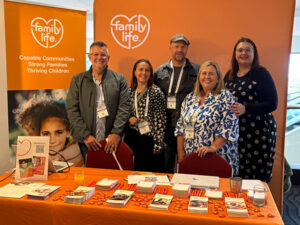
FRSA’s Manager Policy and Research, Robyn Clough, attended the conference and said, “with so many of our members working with people who use violence in their intimate and family relationships, it was an important opportunity to build our knowledge and connections in this critical area of work. It was also great catching up with FRSA members at the conference. They play a key role in helping to end men’s violence through delivery of targeted intervention programs as well as early intervention child, family and relationship services and family law services.”
Rise in family and domestic violence offenders
The latest figures from the Australian Bureau of Statistics (ABS) show that offenders proceeded against by police for family and domestic violence (FDV) related offences rose by 8 per cent (+7,103 offenders) in 2024-25 compared to the previous year.
Key points:
- 2024–25 marked the highest recorded offender rate since national FDV data was first published in 2019–20, at 403 offenders per 100,000 people.’
- More than three-quarters of FDV offenders were male (78 per cent), with a median age of 35 years.
- The total number of offenders proceeded against by police (344,620) rose by 1 percent nationally compared to the previous year.
- The number of youth offenders (aged 10 to 17 years) fell by 5 per cent over the same period to 44,583.
You can find out more about the Recorded Crime – Offenders 2024-25 data here.
An Introductory Guide to the Manosphere
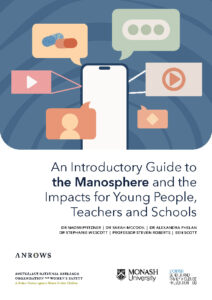 ANROWS and Monash University have developed a guide to help address the harmful impacts of the manosphere in Australian schools.
The manosphere refers to online spaces that promote misogyny and male supremacy. Key beliefs and behaviours promoted in the manosphere encourage men and boys to disrespect women and girls, use violence and aggression, and reject authority.
An Introductory Guide to the Manosphere and the Impacts for Young People, Teachers and Schools is designed for teachers and other school staff who work with young people in secondary schools, but it also provides helpful information for all people working with young people.
The guide includes an overview of the harmful impacts of the manosphere for young people, teachers and school communities, and an introduction to the manosphere, including the key beliefs and links to violence, recruitment pathways for boys and young men, and the role of social media.
National Plan to End the Abuse and Mistreatment of Older People
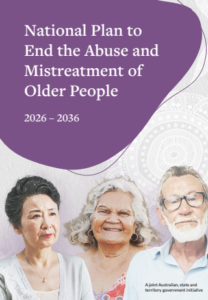 On 16 March 2026 the Albanese Government and all state and territory governments launched the National Plan to End the Abuse and Mistreatment of Older People 2026-2036.
The National Plan represents a shared commitment by governments to prevent, respond to and ultimately end the abuse of older people in Australia.
The abuse and mistreatment of older Australians is a serious and relatively widespread issue that requires a sustained response – particularly noting that the proportion of the population aged 65 and over is set to grow.
The Plan has been under development for some time and FRSA welcomes its release. We would like to see the first 5-year action plan under the National Plan include a clear pathway for building on social and therapeutic interventions, case management and mediation – as well as strengthening legal responses.
You can find out more about the National Plan on the Attorney-General’s Department website.
Suicide prevention policy development and monitoring
The Australian National Audit Office (ANAO) has released a performance audit report on suicide prevention policy development and monitoring.
From 2022–23 to 2025–26, the Department of Health, Disability and Ageing administered 41 suicide prevention measures with total Australian Government funding of over $990 million. The ANAO audit examined six measures with funding of $560 million.
Key findings:
- The department’s development and monitoring of suicide prevention measures is partly effective.
- Policy advice on national strategies and suicide prevention measures is not fully robust.
- Commitments to partner with First Nations people in policy development are partly met.
- Four to five years after several national agreements, objectives to reduce suicide have not been achieved.
- While suicide prevention measures are evaluated, there is no framework to support measuring and monitoring the impact of the Australian Government’s suicide prevention investment.
The report made six recommendations to the department aimed at clarifying roles and responsibilities and strengthening planning, policy advice, partnership, and monitoring and reporting arrangements.
National Disability Insurance Scheme – call for submissions
The Parliamentary Joint Standing Committee on the National Disability Insurance Scheme is calling for submissions to inform its Annual Report No. 2 of the 48th Parliament.
As part of the committee’s role to inquire into and report on the implementation, performance, governance, administration and expenditure of the NDIS, the committee is required to present an annual report to the Parliament as soon as practicable after 30 June each year on its activities during the year. The annual report will include an examination of the annual reports of the National Disability Insurance Agency (NDIA) and the NDIS Quality and Safeguards Commission. The committee is also inviting submissions from NDIS participants, the broader disability community, family members, informal carers and service providers on the implementation, performance, governance, administration and expenditure of the NDIS.
Submission close 30 June 2027. You can find out more information here.
Specialised and trauma-informed sexual violence legal services pilots in NSW and Qld
The Albanese Government has announced funding for specialised and trauma-informed sexual violence legal services pilots in NSW and Qld in the national rollout of pilot services to support victims and survivors of sexual violence in their engagement with the justice system.
The pilots will be delivered by Legal Aid NSW in NSW and Caxton Legal Centre in Qld. They build on the pilots already being delivered in WA, SA, Tas, ACT and NT.
The pilots are a part of the Government’s $21.4 million initial response to the Australian Law Reform Commission’s report into sexual violence which found that when victims and survivors engage with the justice system, it often causes further harm and re-traumatisation.

Centacare Catholic Community Services wins at 2026 South Australia LiFE Awards
 Centacare’s Catholic Community Services’ SPRING program has won the Communities in Action Award at the 2026 South Australia LiFE Awards – Living is For Everyone.
Hosted by Suicide Prevention Australia, the awards recognise individuals and organisations making a meaningful contribution to suicide prevention across the state.
SPRING supports young people aged 11–18 experiencing distress, crisis and suicide risk, working closely with partners including the Women’s and Children’s Hospital Adelaide and Child and Adolescent Mental Health Service South Australia.
Since launching in mid-2024, the program has helped young people and families navigate incredibly difficult moments with compassionate, flexible support. Between July and December 2025 alone, the team achieved a 90% hospital avoidance rate, highlighting the program’s impact.
As the South Australian winner, SPRING will now go on to represent the state at the national LiFE Awards in Sydney this April. Congratulations to the SPRING team.
Harmony Week
This week is Harmony Week. The week is celebrated to include the United Nations International Day for the Elimination of Racial Discrimination (21 March) and is a time to celebrate Australian multiculturalism.
Harmony Week is about inclusiveness, respect and belonging for all Australians, regardless of cultural or linguistic background, united by a set of core Australian values.
See how FRSA Member celebrated the week below:
- CatholicCare Sydney’s celebrated at thjeir Disability Services centre in Belmore with a fun and inclusive annual lunch that brought staff and participants together.
- Anglicare NT staff celebrated their connections and strengths by sharing food and stories from our diverse cultural backgrounds.
- Carers enjoyed a relaxing morning in the FamilyCare Sensory Garden to celebrate Harmony Week.
- UnitingSA’s housing residents came together for free Cooking to Connect classes, sharing food, stories and laughs.
- At ac.care’s Mount Gambier Community Centre, locals have been adding their handprints – and heartfelt messages – to their Harmony Wall. It’s a vibrant reminder of what makes our communities strong: respect, inclusion and the simple act of showing up for one another.
- Centacare Catholic Community Services celebrated the diversity that strengthens of theri communities and the connections that bring them together with some orange-glazed donuts.
- Kyabra Community Association Inc’s playgroups celebrated Harmony Day with some orange themed activities.
- Anglicare WA shared a number of videos highlighting services including housing and events at their locations. Watch one of their videos on housing below:

National Directory of Services for people who use violence
 No To Violence (NTV) has been funded by the Australian Government Department of Social Services to design and build an online National Directory of Services for people who use violence. NTV acknowledges that the majority of people using violence are men (against women and children). However, to develop a truly comprehensive directory, the project is seeking to catalogue services for all people who use violence, including all genders, ages, sexuality, cultural backgrounds, languages and abilities, across a range of service categories including those that address co-occurring issues.
The aim of the National Directory is to increase referrals to and service uptake by those who use or are at risk of using violence. It will support this by improving the findability of and supporting connection to available services.
If you are interested in having your service listed in the National Directory or know a service you think should be listed on the National Directory, head to the project webpage. In addition to providing a project outline, the site houses information on listing eligibility criteria, how to submit an expression of interest to list a service(s), as well as tools to support your cross-promotion of the directory.
If you have any questions, concerns or feedback, please get in touch with the project team at mrsdirectory@ntv.org.au.
'On Your Terms' survey
 This week the Australian Human Rights Commission launched On Your Terms, a national survey of young people to help inform improvements to consent, respectful relationships and sex education in Australia.
On Your Terms is a 10–15-minute online survey open to young people aged 14-18 years and is funded by the Australian Government Department of Education.
‘This survey will give us direct insights from young Australians, so that recommendations for improvements are grounded in lived experience. Many teenagers understand consent in theory but applying it in real-life situations can be challenging,’ said National Children’s Commissioner Deb Tsorbaris said.
On Your Terms survey will run until 30 June 2026. For more information visit the survey webpage.
Victorian Protecting Children Awards applications open
 The Victorian Protecting Children Awards honour people and teams who show excellence in working with children, young people and families.
The awards have been running for 23 years. They celebrate the Victorian child and family services sector and community.
Do you know someone who has helped ensure children, young people and families are safe, supported and thriving? Nominate them today!
There are 12 award categories and anyone can nominate.
All nominations must be received by 5:00pm on Thursday 9 April 2026. Finalists will be announced in late July / early August 2026. Click here to find out more.

CHC81015 Graduate Diploma of Relationship Counselling – June 2026, Online
CHC81115 Graduate Diploma of Family Dispute Resolution – July 2026, Online
Couples Counselling Course: A contemporary and client-focused approach
If you have any events you’d like listed on the FRSA Events and Training Calendar or job vacancies you’d like listed on the FRSA Jobs Board, email Communications Officer, Vanessa Lam at communications@frsa.org.au. Please note that posting onto the FRSA website is reserved for FRSA Members only.

TAS
Family and Relationship Counselling Program – Family and Relationship Counsellor | CatholicCare Tasmania
ACT
Manager – Counselling Services | Relationships Australia Canberra & Region
VIC
Family Dispute Resolution Practitioner | Mallee Family Care
Family Dispute Resolution Practitioner | Each
SA
Family Dispute Resolution Practitioner (Qualified or Trainee) | Centacare Catholic Country SA
QLD
Service Manager | UnitingCare
NSW
Practice Lead | Interrelate
NT
Senior Manager Counselling & Mediation | Anglicare NT
Financial Counsellor | Anglicare NT

Smartphone sharing with intimate partners: implications for telecommunications consumer cybersecurity | Australian Housing and Urban Research Institute
 While cybersecurity self-help advice is readily available to consumers, most advice is ill-suited to intimate relationship contexts where sharing is common. This study creates a new evidence base to understand everyday consumer smartphone sharing in intimate relationships to improve cybersecurity and technology design for all Australians.
2026 Status of women report card | Department of the Prime Minister and Cabinet
The report card is an important mechanism for taking stock of where Australia is making progress towards gender equality and where challenges still remain. It presents both updated and new data points for the following areas: attitudes and norms; gender-based violence; unpaid and paid care; economic equality and security; health; and leadership, representation and decision making.
Gari Yala 2 (Speak the Truth): Centreing the Work Experiences of Aboriginal and/or Torres Strait Islander Australians in 2025-2026 | Centre for Indigenous People & Work
 The new Gari Yala report found that almost 60 per cent of First Nations employees experience racism in Australian workplaces. At the current rate of change, it could take 118 years before First Nations employees never hear racial slurs and jokes at work. Six years on from the inaugural 2020 report, more than 1,100 First Nations employees have again spoken truth about what is happening inside workplaces today. Racism and lack of cultural safety remain widespread, and without organisations deeply committing to truth-listening and truth-acting, meaningful change will remain out of reach
Disengagement from online misogynistic incel communities and its implications for attitudes to gendered violence | Australian Institute of Criminology
Online communities of ‘incels’ (involuntary celibates) have become synonymous with the promotion of misogyny and violence against women. This study used a qualitative survey of self-identified former incels to determine motivations for disengagement, strategies to facilitate disengagement, and whether and how their attitudes towards violence against women changed with disengagement.
Family Violence Sexual Violence (FVSV) Knowledge Hub | Centre for Excellence in Child and Family Welfare, Safe+Equal, SASVic, No to Violence.
The FVSV Knowledge Hub is a project collaboration between the Centre for Excellence in Child and Family Welfare, Safe+Equal, SASVic and No to Violence. Designed for all professionals working with children, young people and families affected by family and/or sexual violence, it brings together the latest research, evaluations and training opportunities in one easy-to-access place. Subscribe to the monthly FVSV Newsletter to stay informed and connected.
Key statistics on children and young people with disability | Children and Young People with Disability Australia
 This report brings together the latest data about children and young people with disability in Australia. It covers a wide range of topics including education, health, employment and the NDIS. It aims to support more informed, inclusive conversations and decisions that reflect the realities of children and young people with disability in Australia today.
‘Shelter is a dignity’: towards antiracism practices in rental housing | University of Melbourne and Tenants Victoria
 This report investigates racism in Victoria’s rental housing system and how it affects the health and wellbeing of renters from culturally and linguistically diverse communities. The study documents racism at every stage of the rental journey: searching, applying, living in and exiting a tenancy. Experiences include being denied housing or steered away from certain areas.
Couple relationships in Australia today | Australian Institute of Family Studies
This new report examines how contemporary couple relationships are evolving, and how Australia’s family law framework must work to keep pace with changing arrangements whilst at the same time continuing to play its protective role.
Stories that matter: learning from Aboriginal and Torres Strait Islander people’s experiences of the criminal legal system | Australian Institute of Criminology
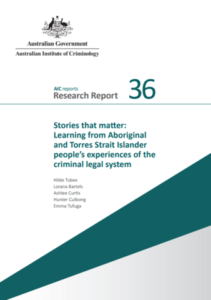 This research report describes the experiences of Aboriginal and Torres Strait Islander people with the criminal legal system in Western Australia, the Australian Capital Territory and Victoria. The findings confirm the lasting impacts of colonisation and intergenerational trauma, which create the conditions that lead Indigenous people into engagement with the criminal legal system.
National respectful relationships education framework | Department of Education
 The framework aims to support Australian primary and secondary schools and school systems to plan and deliver age and developmentally appropriate, evidence-based and expert-developed respectful relationships education. It sets out a national vision, outcomes and principles to guide consistent, high quality respectful relationships education across school communities, reflecting best practice.
Surviving in a Cost-of-Living Crisis: Australia’s Fraying Care Infrastructures | Western Sydney University
This report shares the experiences of people at the sharp end of Australia’s deepening cost-of-living crisis and the support organisations trying to meet growing demand. It examines how Australia’s care infrastructures, encompassing welfare, housing, food, and community support systems, are fraying and increasingly failing to meet the basic needs of those on low- or no- income.
Community Voices: The Pathway to Justice, Equality and Healing | Closing the Gap
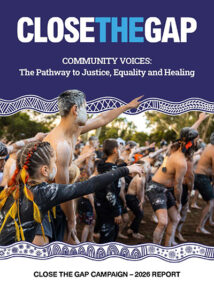 The 2026 Close the Gap Campaign Report highlights the power and leadership of Aboriginal and Torres Strait Islander communities in tackling longstanding health inequities and calls on governments across Australia to move beyond policy promises and take definitive legislative action.
The report, a collaborative effort driven by the voices and strengths of First Peoples, presents clear evidence that community-led initiatives are making a difference and bring positive changes, despite persistent structural and systemic barriers.
Want to submit something to the FRSA eBulletin?
If you have an news item or event that you would like to be featured in a future eBulletin please submit your announcement via the form below or email communications@frsa.org.au with the subject “FRSA eBulletin submission”.
Please note FRSA members receive priority for items posted in the eBulletin. And to keep information current, relevant and useful, submissions will not be repeated from week to week.
Subscribe
Subscribe to receive future eBulletin editions directly to your inbox!
