


No. 12, 2025 | 29 August 2025
Go to:
From FRSA's Executive Director
Last week in a National Press Club address the Minister for Health and Ageing, the Hon Mark Butler MP, noted an “unintended aspect” of the National Disability Insurance Scheme’s (NDIS) rollout, “namely, its enrolment of large numbers of young children with mild to moderate developmental delay and autism.” He announced that young children with mild to moderate developmental delay and autism would be diverted from the NDIS over time to a “robust system of supports to help them thrive”. To this end the Minister announced a new program – Thriving Kids – to be jointly funded with the states and territories that will support children under 9 years with autism and developmental delay. . This announcement seemed to come as somewhat of a surprise to disability peaks and to the states and territories themselves, and everyone is eagerly awaiting more detail. FRSA is conscious that, already, universal services delivered to children and young people by our members under the Department of Social Services Families and Children Activity are routinely working with families who are struggling to get the appropriate assessments and supports for their children with suspected developmental delays and autism. Our members provide holding support to these families and where possible link them into appropriate services. At this stage, it’s unclear what the impacts of this policy announcement will be on universal services and, of course, on the capacity for children and their families to have their needs met. We have been attempting to gain more information about these changes – including where responsibility and delivery of this new service/program will sit and we will be watching developments closely.
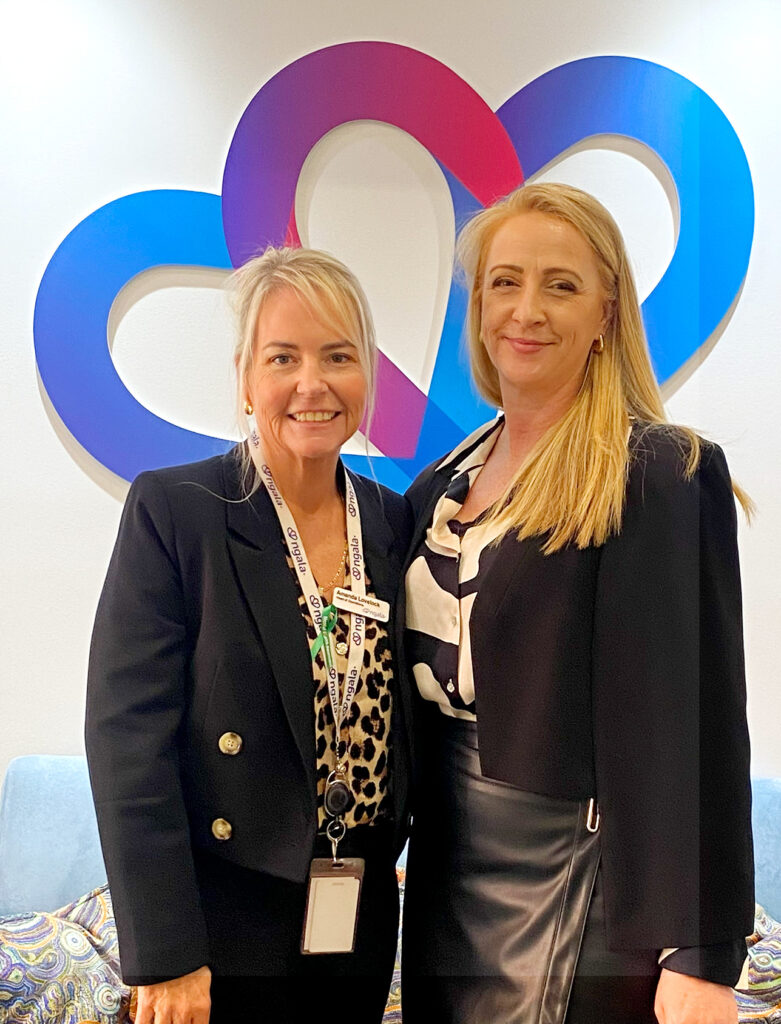
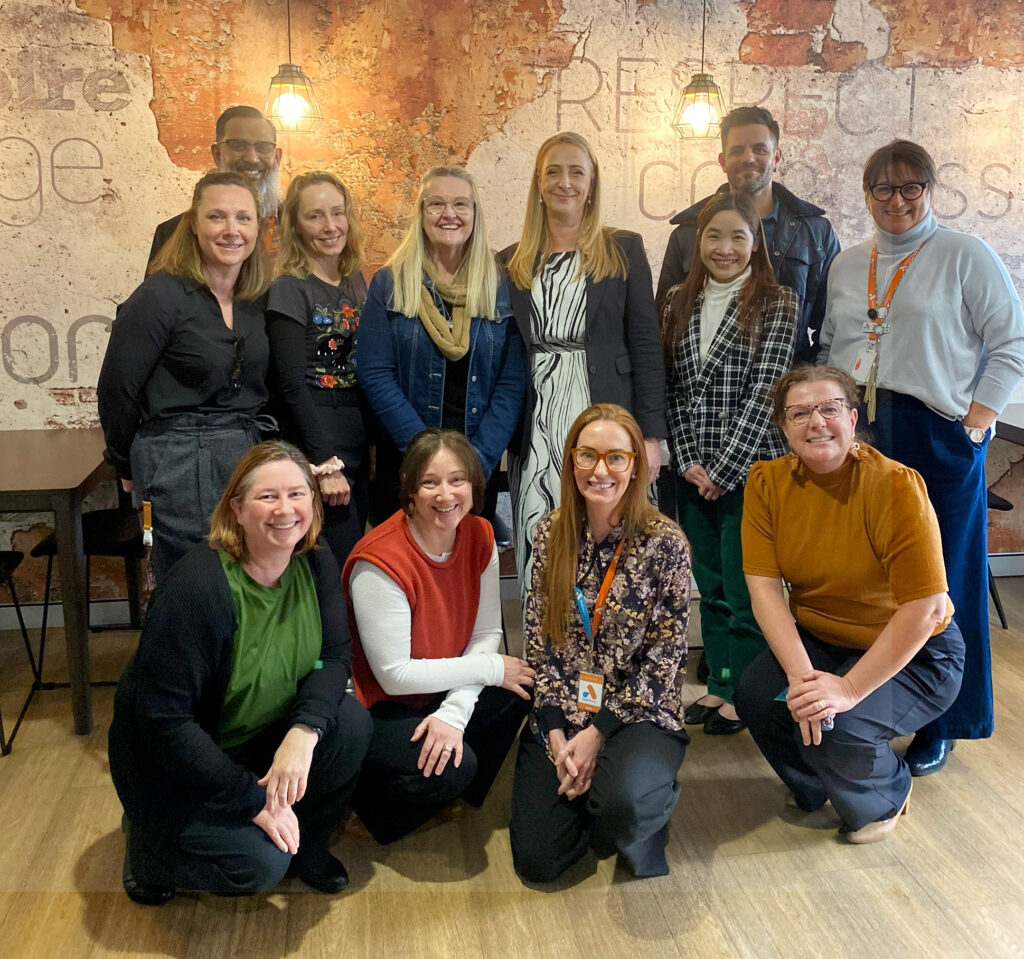
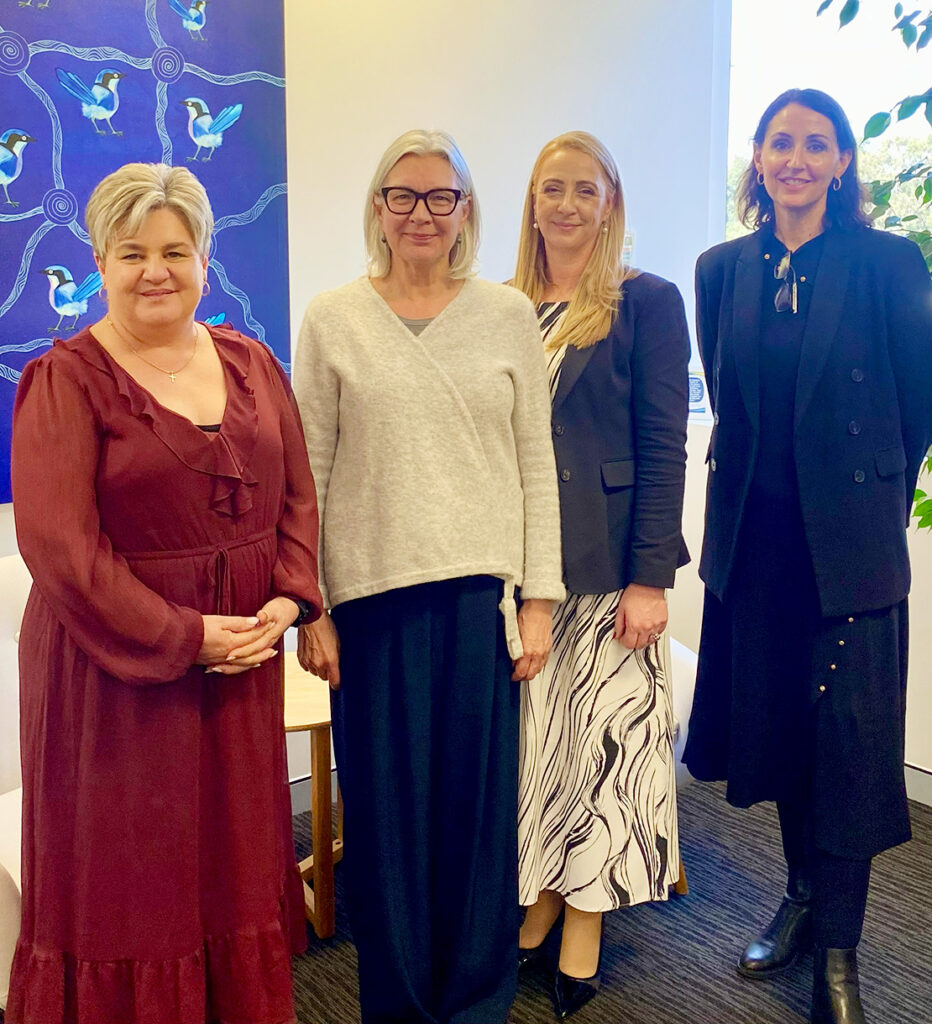
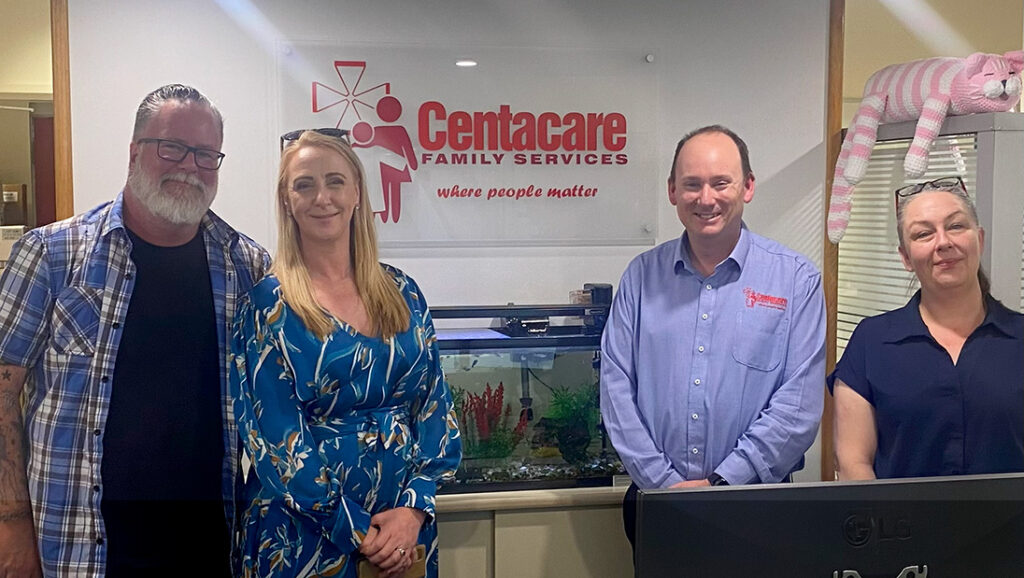
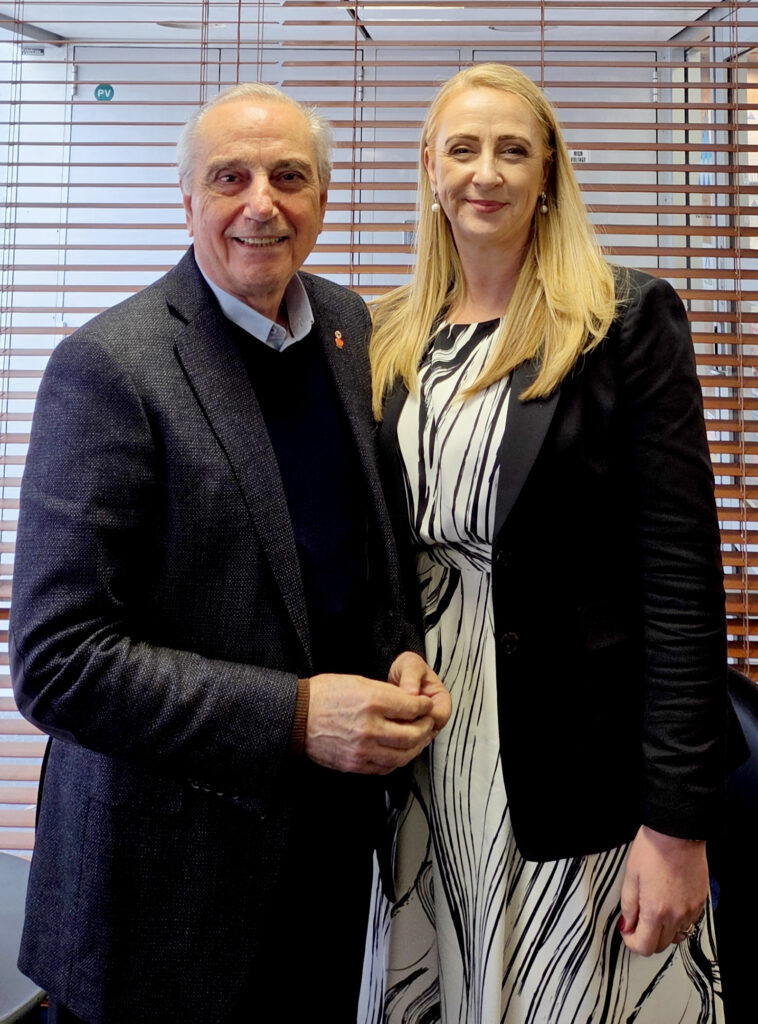
Over the last few days, I have had the opportunity to meet with a number of our members in WA. On this occasion I had the chance to meet with people in Centrecare Inc, Anglicare WA, Relationships Australia WA, Communicare, Ngala and Centacare Geraldton. Meeting and talking to our members provides a fountain of knowledge and wisdom.
I thrive on the life-giving energy that emerges out of these visits providing me with substantial insights into the work of our services and the people they work with in the places and communities where they operate.
In this eBulletin you will also notice that there is a new segment called ‘FRS Sector Insights’. I want to thank and acknowledge FRSA Board Director, Cheryl Orr for being the inaugural author of an article in this series. The idea for her article ‘Justice and Equity, what is it?’ emerged out of the FRSA Family Law Pre-Conference Workshop and discussion around the issue of property division in the FDRP context.
Just a reminder that National Child Protection Week is coming up 7-13 September. The steward of this Week, NAPCAN, has a strong focus on prevention and early intervention and provides a number of resources you might find useful in your own acknowledgement and recognition of this week. If you are holding events in National Child Protection Week, don’t forget to link into their social platforms – and it would be great if you were to tag us too @frsaorgau on Facebook and Family & Relationship Services Australia on LinkedIn.
Kind regards,
Jackie Brady
FRSA Executive Director



Strategic Leadership Forum 2025
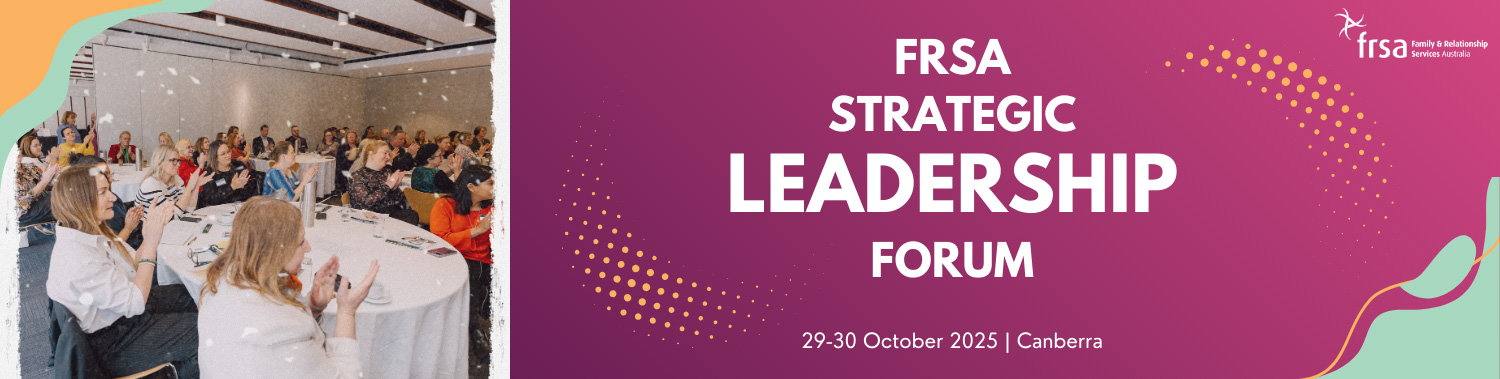
Registrations for the FRSA Strategic Leadership Forum 2025 are OPEN!
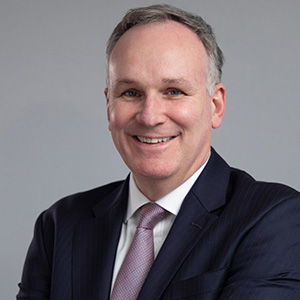
We are looking forward to welcoming the CEOs and Senior Leaders in the FRSA Membership to Canberra to participate in the Strategic Leadership Forum being held 29 October and 30 October 2025. We aim to design a program that is thought provoking and engaging providing delegates with access and exposure to high profile speakers and key government figures on Day 1 through an information presentation and exchange format at the National Portrait Gallery. On Day 2 – we shift into Parliamentary delegation mode and are looking forward to walking the corridors of Parliament House with our members this year. We are delighted to announce the first tranche of confirmed speakers who will be with us on Day 1. These are:
| Michael McQueen – Global Futurist and Change Strategist | Michael Lye – Secretary, Department of Social Services | David Spriggs – CEO, InfoXchange |
|---|---|---|
 |
 |
 |
Access to the event details including the event program, speaker information and accommodation will be available on the FRSA Members Only Event page.
Please contact events@frsa.org.au for the password to the FRSA Member’s Only Event page.
FRSA Member-only Family Law Communities of Practice – Expressions of interest extended to 5 September
FRSA will be delivering Family Law Communities of Practice (CoP) discussions exclusively for FRSA Members in 2025-26 and we are looking for participants!
FRSA invites program managers and senior practitioners from providers of the seven programs below, which are funded under the Attorney-General’s Department, to express their interest in joining the online Community of Practice (CoP) discussions:
- Family Relationship Centres (FRC)
- Family Dispute Resolution (FDR)
- Regional Family Dispute Resolution (RFDR)
- Family Law Counselling
- Supporting Children After Separation Program (SCASP)
- Parenting Orders Program (POP)
- Children’s Contact Services (CCS)
Three CoP discussions for each program areas will be held in the remainder of the 2025-26 year and will focus on program-wide or systems practice issues rather than therapeutic or support issues arising in the practitioner-client relationship.
For more information about how the Member-only Family Law CoPs work and what they will look like in 2025-26, read the information sheet.
To express your interest in participating in a Family Law CoP, please register via the link below.
If you are unsure if your organisation is a member of FRSA or you have any questions about the Family Law CoPs please contact Robyn Clough, Manager Policy & Research on 02 6162 1811 or FLProjects@frsa.org.au
Expressions of interest close COB Friday 5 September 2025.
A First Nations focus on family and relationship services webinar series
 FRSA is revisiting First Nations focused presentations from the FRSA National Conference 2025 via a lunchtime webinar series, from September to December.
The presentations we’re showcasing in this webinar series are delivered by or in partnership with First Nations peoples. The webinar series, ‘A First Nations focus on family and relationship services’, is open to members and non-members and will feature presentations that were from the Family Domestic Violence, Across the Lifecourse and Schooling years streams.
The first webinar, Supporting Aboriginal Ways of Knowing Being and Doing: Asset- and Place-Focused Service Development and Delivery will be held on Tuesday, 9 September 2025 and will be presented by Dr Jen Cleary & Jaylene Ware from Centacare Catholic Country SA.
The next webinar is scheduled for Wednesday, 1 October 2025 at 12:30pm and will feature how the Federal Circuit and Family Court of Australia is improving access to justice for Aboriginal and Torres Strait Islander families. Further information about the series is available here.

FRSA at Pacifica Congress 2025
FRSA was delighted to sponsor the Pacifica Congress Conference 2025, which was held in Adelaide 14-16 August.
Pacifica Congress is a multidisciplinary organisation of family law professionals in the pacific region. This year’s conference theme was A Child’s World in Family Law and the conference delivered a rich program of presentations from a diverse line-up of family law professionals and researchers. FRSA was particularly pleased to have the opportunity to attend a session delivered by members from the Relationships Australia Network. Our congratulations to Dr Genevieve Heard – Relationships Australia Victoria, Dr Jamie Lee – Relationships Australia SA and Michelle Ewington – Relationships Australia Tasmania for an excellent series of presentations.
The FRSA team enjoyed connecting with family law professionals in the court system – judges, lawyers and family report writers – and sharing the work of our sector with them. Thanks to all who dropped by the FRSA booth for a chat!
In exciting news, Pacifica Congress President the Honourable Stephen Strickland QC announced that next year’s conference will be held in Singapore.
Economic Reform Roundtable
The Albanese Government held its Economic Reform Roundtable on 19-21 August bringing together a mix of leaders from business, unions, civil society, government and other experts. The aim of the Roundtable was to build consensus on ways to improve productivity, enhance economic resilience and strengthen budget sustainability.
An early report on the Roundtable states that the Treasurer Jim Chalmers has identified the following ten consensus reform directions:
- Progress towards a single national market
- Simplifying trade and reforming tariffs
- Better regulations and cutting clutter
- Speeding up approvals in national priority areas
- Building more homes more quickly
- Making artificial intelligence a national priority
- Attracting capital and deploying investment
- Building a skilled and adaptable workforce
- A better tax system
- Modernising government services
ACOSS CEO Dr Cassandra Goldie attended the Roundtable on behalf of civil society organisations and has outlined her key takeaways from the Roundtable and the priorities ACOSS contributed to the discussions.
‘In Every Community: Delivering Services Outside Our Cities’ – new report
Anglicare Australia has released a new report – In Every Community: Delivering Services Outside Our Cities – that warns that people in regional and remote Australia are being left behind, with essential services stretched.
The report draws on the experience of Anglicare Australia members delivering services across the country. It finds that:
- Services in regional and remote areas are harder to access, and more likely to face underfunding, short-term contracts, and insecure staffing
- Funding is often allocated based on population, rather than community need or service gaps
- providers are struggling to recruit and retain staff, and are being forced to deliver more with less.
- community services are being asked to fill critical workforce shortages, with little or no government support.
This report is the sixth edition of Anglicare Australia’s Australia Fair series. Projects released as part of the Australia Fair series are grounded in evidence from the Anglicare Australia Network, reflect the voices of Anglicare Australia clients and communities, and are designed to set the policy agenda.
More information about Anglicare Australia’s Australia Fair series is available here.

Senate Inquiry – The quality and safety of Australia’s early childhood education and care system
The Senate Education and Employment References Committee commenced an inquiry into the quality and safety of Australia’s early childhood education and care system on 25 August.
The inquiry will look at the health and safety of children in childcare services across the country, employment practices, and the effectiveness of the regulatory system. The full terms of reference are available on the committee’s webpage. The committee is due to report on 10 March 2026.
Submissions close 3 October 2025.
The future of the NDIS and ‘Thriving Kids’
At a recent Press Club address, Mark Butler, the Minister for Disability and the National Disability Insurance Scheme (NDIS), announced changes to the NDIS.
These changes include diverting children under 9 years with mild to moderate developmental delays or autism to a new foundational support program called Thriving Kids. Children who are currently enrolled in the NDIS or enrol before Thriving Kids is launched (currently set for July 2026), will remain in the scheme.
Thriving Kids will be jointly funded by the federal government and state and territory governments and will leverage existing systems that many families engage with such as early learning centres and infant and maternal community health services.
A driver for the change is to return the scheme to its original purpose, providing support to those with significant and permanent care and support needs, and to ensure the NDIS is financially sustainable.
More detail will no doubt be made available over the coming weeks.
Reform of Working with Children Checks
On 15 August 2025, at the first meeting of the Standing Council of Attorneys-General (SCAG) of the 48th Parliament, Attorneys-General from across Australia agreed to drive action to deliver a national approach and address systemic gaps in Working with Children Checks (WWCCs) to improve the safety of children across Australia.
Attorneys-General agreed to work towards implementing mutual national recognition of negative WWCC decisions (including negative notices, suspensions and interim bars) by the end of 2025. This means a person rejected for a WWCC in one jurisdiction will be rejected in other jurisdictions.
The Commonwealth has also committed to progressing National Continuous Checking Capability, to provide continuous, near-real time monitoring of national changes to criminal history information of WWCC holders, building on a pilot underway by the Australian Criminal Intelligence Commission.
The Commonwealth Attorney-General’s full media release is available here. The Standing Council of Attorneys-General Communique is available here.
Ambassador for Gender Equality
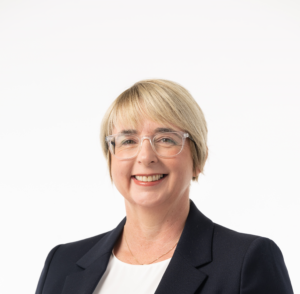 On 18 August 2025, the Australian Government announced the new Ambassador for Gender Equality, the Honourable Michelle O’Byrne.
The Ambassador will help drive Australia’s efforts to end gender-based violence, promote economic equality and inclusive trade, support women’s participation in climate and humanitarian action, and champion women’s leadership across the Indo-Pacific.
Michelle O’Byrne has worked throughout her life to advance women’s rights and gender equality, serving as the Member for Bass in the Tasmanian House of Assembly from 2006 to 2025 and as the Federal Member for Bass from 1998 to 2004.

Better Place Australia welcomes new CEO
On 12 August, Better Place Australia welcomed their new CEO, Kirstan Corben.
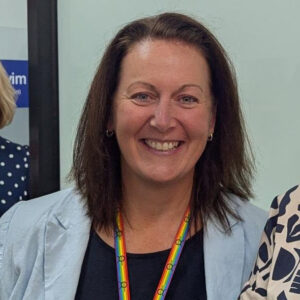
Kirstan has more than 20 years of leadership experience across health, community, sport, and government sectors, and brings a deep commitment to equity, wellbeing, and the power of community to create lasting change.
Her career has been shaped by a passion for improving lives—whether through leading public health campaigns, shaping policy in mental health and gender equity, or building partnerships that make services more accessible and inclusive. She has held senior roles at VicHealth, Alfred Health, the Danny Frawley Centre, and within the Victorian Government, always working to ensure people and communities are at the heart of decision-making.

The team also bid farewell to outgoing CEO, Serge Sardo on 8 August. After eight years as the head of the organisation, he announced his retirement in April. Serge had more than 10 years’ experience as a CEO and non-executive director for not-for-profit or government organisations including as a former FRSA Board Director. FRSA wishes Serge all the best for his retirement and looks forward to working with Kirstan in the future.
Accordwest interim CEO appointed
 Accordwest has appointed Eternity Hausen as their Interim CEO, following the departure of former CEO Evan Nunn who was CEO since 2020.
Eternity brings executive and clinical experience across multidisciplinary settings, including allied health and psychiatric service environments. Her career has focused on strategy, clinical governance, and service design, particularly in complex and regulated environments.
Eternity is a seasoned executive leader having previously served as CEO of a national mental health service and held board positions at not-for-profit organisations focused on allied health and service access. Eternity holds provisional registration as a psychologist and has served 19 years in the Australian Army, both full-time and as a reservist. She is currently serving part-time as an Intelligence Analyst.
FRSA looks forward to working with Eternity and wishes Evan all the best for the future.
Uniting receives $1.75M Community Housing Energy Performance grant
Uniting NSW.ACT has recently obtained a $1.75 million grant from the Australian and NSW Governments to upgrade the energy performance of 300 of their Community Housing units across NSW.
The grant will be used to install energy efficient hot water heat pumps, reverse cycle air conditioners and solar panel systems in their Community Housing units.
Uniting NSW.ACT’s Chief Executive Officer, Tracey Burton said, “We are delighted to be the recipient of this substantial grant, a grant that will make an enormous difference to the lives of the people living in our Community Housing Units.”
“This program will mean we can better support our clients, some of the most disadvantaged, to reduce their energy costs and improve their home’s livability by rolling out energy efficiency measures in their homes,” Tracey said.
Relationships Australia NSW launches campaign to demystify mediation for separating couples
Earlier this week Relationships Australia NSW launched a new campaign, “We’re Listening”, to raise awareness of its low-cost Family Dispute Resolution (FDR) services, offering separating couples a more affordable alternative to the legal route.
The centrepiece of the campaign is an emotive video depicting the chaos and uncertainty of modern co-parenting – from miscommunication to mounting pressure – before cutting to a calm, neutral setting with a mediator.
“Separation can feel overwhelming and emotionally charged – especially when parenting and financial decisions are left unresolved,” said Relationships Australia NSW CEO Elisabeth Shaw. “This campaign is about showing that support is available, and that we can be a steady, trusted presence through that process.”
From August to December, the campaign will run across transit ads and digital channels, offering helpful resources like timelines showing what happens in the FDR process, clear fee schedules, and how to prepare. Watch the campaign video below:
Sora Community Services are New England Business Awards finalists
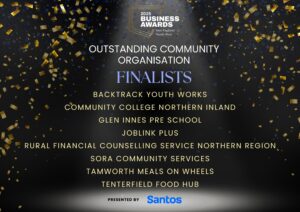 Sora Community Services has been announced as a finalist for the 2025 Business Awards New England North West.
Below are the categories they are finalists in:
- Outstanding Community Organisation- Sora Community Services
- Outstanding Business Leader – Lynda Townsend, Manager Homelessness and Domestic Violence Support
The Business Awards honour the ingenuity, resilience, and dedication demonstrated by businesses across New South Wales. Winners will be announced at the Gala Presentation night on Friday 19 September at Armidale Services Club.
Good luck Sora Community Services!

Justice and Equity, what is it?
By Cheryl Orr, Principal Solicitor, Cheryl Orr Family Law and FRSA Board Director
In light of the changing landscape for NGO’s providing mediation it is important for mediators within the sector to understand the principles governing Property Alteration particularly in light of the Federal Circuit and Family Court of Australia Rules (I note this does not apply to Western Australia) that provide at:
- Rule 4.01(2) – Unless exempt, financial/property proceedings cannot commence until parties have genuinely attempted dispute resolution (mediation, FDR, negotiation, conciliation, arbitration).
- Genuine Steps Certificate (Schedule 1) – Any initiating application for property/financial orders must be accompanied by a signed certificate confirming the mediation/pre‑action steps that have been taken or explaining any exemptions.
The requirement is statutory and enforced:
- Mandatory: Applications without compliance are subject to adjournment or a court-ordered stay until parties comply unless an exemption exists.
- Exemptions apply only in specific circumstances, such as:
- Allegations of family violence,
- Urgency,
- Risk of unfair prejudice,
- Previous proceedings in the last 12 months,
- Bankruptcy or child-support matters
During mediation it will be incumbent for mediators to understand section 79 of the Family Law Act, importantly as part of section 79 you should understand section 79 (2).
Family Law Act
Relevant Section: section 79 — Alteration of Property Interests
Section 79 is the key provision that allows the court to alter property interests between parties to a marriage (and mirrored in section 90SM for de facto relationships).
Section 79(2) requires you consider whether altering a legally held interest or entitlement to property is “Just and Equitable”.
This subsection establishes a threshold requirement that:
“The court shall not make an order under this section unless it is satisfied that, in all the circumstances, it is just and equitable to make the order.”
This means that before the court makes any adjustment to property interests, it must first decide whether it is “just and equitable” to do so — not merely whether it could under the guise what once considers in its ordinary meaning of being just/fair and equitable/financially viable.
The requirement of section 79 (2) is often misunderstood. This is a matter the High Court addressed in the decision of Stanford v Stanford (2012) and Bevan v Bevan (2013) whereby the Court emphasised that determining whether it is just and equitable to alter the parties’ interests in property is a threshold question — a court must first be satisfied that it is just and equitable to make any order that alters the existing ownership/legal entitlement before determining what alternation/adjustment should be made.
To assist you better understand how the principle of Justice and Equity is applied and evolved it is recommended that you read “The Assessment of Property Settlement Matters in Family Law” written by David Dura SC.
I wish to acknowledge and thank David Dura SC for his approval to share this article and to BenchTV for giving FRSA permission to share the publication.

Elder Abuse and Cognitive Impairment (EACI) Research Project
Monash University is conducting research into the experiences of older people with cognitive impairment who may have experienced harm or abuse. They are seeking input from professionals working in health, community services, aged care, family violence and legal sectors who have supported older people with cognitive impairment affected by elder abuse.
Participation involves a one-on-one interview or small focus group (via Zoom or phone), lasting 30–60 minutes. The discussion will focus on your professional insights into the challenges and responses in this area.
Your input will help strengthen the evidence base to improve policy, practice and support systems for older people with cognitive impairment. Participation is voluntary, and you can withdraw at any time. You will also have the option to review your responses following the interview, if requested.
If you’re interested or know someone who may be, email eaci.research@monash.edu or register here.
Two surveys have also been released and we encourage you to share them widely with your networks.
The first survey seeks the perspectives of practitioners who work with people living with cognitive impairment who have experienced elder abuse. It aims to better understand the unique factors shaping both the abuse experienced and the professional responses to it. Access the practitioner survey here.
The second survey invites friends and family members of people with cognitive impairment who have experienced elder abuse to share their insights. Participants will be asked to reflect on their loved one’s experiences and the abuse that occurred, to help build a deeper understanding of this complex issue. Access the friends and family survey here.
Families Australia Survey
Families Australia’s 2025 Annual National Policy Survey is now open.
Your feedback informs Families Australia’s advocacy efforts and advice to the Federal Government on ways to increase the wellbeing of families, especially those experiencing the greatest vulnerability and marginalisation. The survey is anonymous, takes 10–15 minutes, and closes Friday 5 September 2025.
National Child Protection week 2025
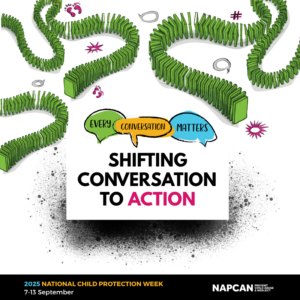 National Child Protection Week is from 7-13 September 2025. This year’s theme, ‘Every conversation matters: Shifting Conversation to Action,’ reminds us that while dialogue is essential when it comes to raising awareness, challenging harmful norms, and sparking new ideas, real change is only possible when we turn those conversations into meaningful action.
Find resources and how to get involved by visiting the NAPCAN website. They are also running a webinar series during the week, click here to find out more.
Intake- Foundations for Collecting Evidence – EOIs close 2 September
The Australian Institute of Family Studies (AIFS) is accepting Expressions of Interest for participants in joining the next ‘Foundations for Collecting Evidence’ course. ‘Foundations for Collecting Evidence’ is an online course for organisations funded under the Department of Social Services Families and Children Activity. It supports senior practitioners and program managers to:
- Strengthen knowledge and skills to develop programs that are informed by evidence.
- Develop program documentation to support monitoring and evaluation.
- Acquire knowledge, skills and confidence to plan for data collection and/or evaluation.
The online course will be conducted over 4 months — from September to December 2025. It is an introductory course suitable for practitioners and program managers with limited knowledge and/or emerging skills about how to collect evidence and undertake evaluation activities. Participants must be funded under DSS’ Families and Children Activity and have an existing or planned project/program to workshop in the course.
If you are interested please submit an Expression of Interest by 2 September 2025. Successful applicants will be notified in the second week of September.

CHC81015 Graduate Diploma of Relationship Counselling – June 2026, Online
CHC81115 Graduate Diploma of Family Dispute Resolution – July 2026, Online
Couples Counselling Course: A contemporary and client-focused approach

NSW
Program Manager – Family & Relationship Services | Interrelate
Counsellor | Relationships Australia NSW
Couple and Family Counsellor | Relationships Australia NSW
Case Manager Family Preservation | The Benevolent Society
NT
Financial Counsellor | Anglicare NT
If you have any events you’d like listed on the FRSA Events and Training Calendar or job vacancies you’d like listed on the FRSA Jobs Board, email Communications Officer, Vanessa Lam at communications@frsa.org.au. Please note that posting onto the FRSA website is reserved for FRSA Members only.

Supporting neurodivergent children and young people | Australian Institute of Family Studies
These three short resources offer practical guidance on using inclusive language, understanding sensory processing, and supporting neurocognitive functioning. By acknowledging the importance of affirming language and lived experience, they aim to improve neurodivergence literacy, promote inclusive practice, and support informed, respectful conversations. This work is funded by the Department of Social Services.
Supervision for children’s wellbeing | Emerging Minds
Incorporating child-focused supervision into organisational practice ensures children’s needs and experiences are understood. This suite of resources from Emerging Minds is suitable for practice leaders and supervisors working with practitioners in adult-focused service delivery and those working with children and their families.
Poverty and housing in South Australia | Centre for Equitable Housing
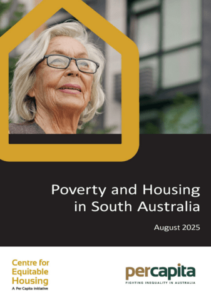 South Australia is experiencing rising levels of housing stress, poverty and homelessness. This briefing paper provides an overview of the current context, identifies key cohorts and regions most affected, and outlines opportunities for targeted, high-impact philanthropic investment. It finds that philanthropy can function as a catalyst to unlock further funding and buy-in from other sectors.
Suicidal thoughts and behaviours in adolescence | Australian Institute of Family Studies
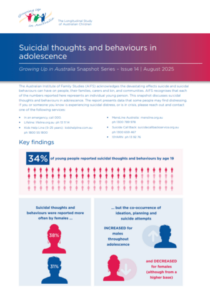 This snapshot discusses suicidal thoughts and behaviours in adolescence. It finds around one-third of Australian teenagers have experienced suicidal thoughts and behaviours in the last 12 months. The findings support the need for suicide prevention efforts to consider individual risk factors and key social determinants of suicidal thoughts and behaviours for young people.
Truth-telling resources hub | Reconciliation Australia
Developed through their Community Truth-telling Pathways program, these resources aim to promote practices that respect Aboriginal and Torres Strait Islander peoples and cultures and are informed by research, case studies, partnerships and other knowledge sharing opportunities undertaken with communities involved in local truth-telling processes.
These initial fact sheets and guides will support you to develop your foundational understanding of these processes by answering questions such as: What is truth-telling? What can it look like in practice? How can non-Indigenous people engage appropriately?
The state of the social economy in Australia | Centre for Social Impact
 A world where economies are measured by the extent to which they generate positive social and environmental outcomes is being shaped around the globe by the social economy. This first comprehensive research into Australia’s social economy explores key areas including funding, partnerships, impact measurement, legal and policy frameworks, and digital technologies.
With courage: South Australia’s vision beyond violence | Royal Commission into Domestic, Family and Sexual Violence
 The report is the culmination of a 12-month Royal Commission, including extensive engagement with South Australians impacted by domestic, family and sexual violence. It contains 136 recommendations which lay out a roadmap for the state in which domestic, family and sexual violence is no longer tolerated and no longer possible.
Cybercrime in Australia 2024 | Australian Institute of Criminology
 This report describes cybercrime victimisation, help-seeking and harms among Australian computer users. The report found that rates of victimisation remain high, formal help-seeking remains low, and a large proportion of victims are negatively impacted by cybercrime. Certain sections of the community were found to be more likely than others to fall victim to cybercrime.
The likely to be accessed test and the Children’s Online Privacy Code | Reset Tech Australia
The Children’s Online Privacy Code in Australia will establish a set of guidelines to improve children’s privacy. This policy briefing explores a discussion held by academia and civil society in July 2025 around how the ‘likely to be accessed’ (LTBA) standard might be operationalised in the Code.
Digital exclusion in Australia | Department of Infrastructure, Transport, Regional Development, Communications and the Arts
This research on digital exclusion shows internet in Australia is almost universal, but some – particularly vulnerable groups – are still missing out. The report takes a closer look at the 2% of Australians without internet access who face higher rates of digital exclusion. The research contributes to evidence to help inform policies that target digital connectedness.
Strengthening accountability for Aboriginal and Torres Strait Islander families | AbSec – NSW Child, Family and Community Peak Aboriginal Corporation
 This paper seeks to explore the nature and structure of accountability that will serve the rights, interests and wellbeing of Aboriginal and Torres Strait Islander children and young people, both within the child protection system, and more broadly. It presents two complementary accountability mechanisms for the New South Wales Government to address current shortcomings.
Want to submit something to the FRSA eBulletin?
If you have an news item or event that you would like to be featured in a future eBulletin please submit your announcement via the form below or email communications@frsa.org.au with the subject “FRSA eBulletin submission”.
Please note FRSA members receive priority for items posted in the eBulletin. And to keep information current, relevant and useful, submissions will not be repeated from week to week.
Subscribe
Subscribe to receive future eBulletin editions directly to your inbox!
