


No. 13, 2026 | 21 August 2026
Go to:
From FRSA's Executive Director
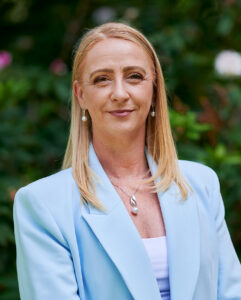
The family and relationship services sector actively engages in strengths based programs and supports that provide resilience and protective factors in children, adults and communities. These are important for building solid foundations. Sometimes, these foundations are required for weathering the storms that life can bring – both minor storms and life-changing events that may occur throughout the lifecourse. Family and relationship services are there to provide support and services to people at whatever point in life they are at.
Looking at issues that have been a focus of politics and society this week – gambling, changes to NDIS eligibility, sexual assault and family violence – we know that when the media spotlight falls away, the reality for those dealing with these and other issues is that it is family – those people individuals deem to be ‘family’ – who help pick up the pieces. Supporting families to manage this is essential.
We are fortunate to have a Commonwealth Government who values and invests in family and relationship services. We need to ensure there is an ongoing commitment to supporting children and adults across the lifecourse and that funding is keeping pace with the real costs of service delivery. Unfortunately – given that we are consistently being told by Government that pressure on funding is tight – the reality is that there is funding slippage occurring and as a consequence, reduced numbers of people that our sector can assist.
With FRSA’s Strategic Leadership Forum coming up in a few weeks, we look forward to again visiting Parliament House and the offices of MPs and Senators en masse. This is a great opportunity for leaders in our membership to share with our political leaders the incredibly valuable work they do, for all families.
Kind regards,
Jackie Brady
FRSA Executive Director



FRSA Presenting at AIFS Conference 2026
We are excited to be attending AIFS Conference 2026, Changing Families in Changing Times, which will be held in Melbourne from 9 to 11 September.
This year, FRSA Executive Director, Jackie Brady, and Manager Policy & Research, Robyn Clough will be presenting on day one of the conference on a member mapping study FRSA published in late 2025 – Mapping interventions for people using family violence: research and practice insights. Our mapping exercise shows that FRSA members successfully engage almost 6000 people using violence each year. We also identified several research and practice insights that warrant deeper exploration, to strengthen the national effort to reduce and ultimately end family and intimate partner violence. We look forward to bringing these insights to a broader audience.
As reciprocal sponsor of the conference, we’ll also have a sponsor booth, so please do come and say hello to the FRSA team at booth number 5!

CCSA 70th Anniversary Gala Dinner
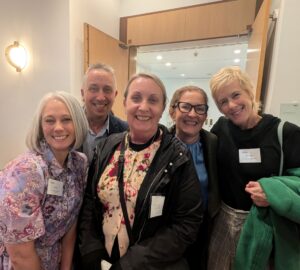
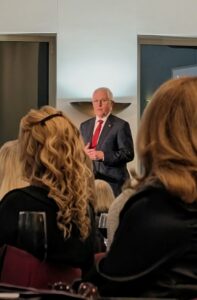
FRSA was delighted to join Catholic Social Services Australia (CSSA) and their sector leaders at the organisation’s 70th Anniversary Gala Dinner, held at Australian Parliament House in Canberra on 12 August.
The evening celebrated seven decades of CSSA’s contribution to supporting individuals, families, and communities across Australia, while recognising the partnerships that have strengthened the social services sector. With the theme Building for the Common Good, the event provided an opportunity to reflect on a shared commitment to building a more just, compassionate, and inclusive Australia.
FRSA valued the opportunity to connect with colleagues and hear from speakers including Assistant Minister for Social Services and Assistant Minister for the Prevention of Family Violence, the Hon Ged Kearney MP, and the former Prime Minister, the Hon Malcolm Turnbull AC who delivered the 2026 McCosker Oration.
National effort to address financial elder abuse
 The Australian Human Rights Commission is leading a new national initiative to combat financial elder abuse. The initiative brings together leaders from banking, superannuation, financial services, legal and community sectors to drive stronger protections for older Australians.
Funded by the Commonwealth Attorney-General’s Department, the Financial Elder Abuse Action Collaborative will raise awareness of financial abuse and deliver practical reforms to better prevent, identify and respond to abuse, in line with the National Plan to End the Abuse and Mistreatment of Older People 2026–2036.
The project is the second phase of the Financial Elder Abuse Project which was led by the Commission from 2024 – 2026.
You can read more about phase two here.
Additional headspace outreach programs funded
The Australian Government’s has committed $27 million to establish 20 additional headspace outreach programs across rural and remote Australia.
There are currently 175 headspace services operating nationally, including almost 100 in regional Australia.
The additional outreach programs will be governed by existing headspace centres and will be developed in consultation with the local communities to ensure they meet their needs.
The new outreach programs will be established in:
- Parkes, NSW
- Leeton, NSW
- Casino, NSW
- Maclean, NSW
- Big Rivers region, NT
- Gayndah, QLD
- Southern Moreton Bay Islands, QLD
- Balonne Shire, QLD
- Agnes Water, QLD
- Norfolk Island, QLD
- Lockyer Valley, QLD
- Yankalilla, SA
- Naracoorte, SA
- Ararat, VIC
- Robinvale, VIC
- Baw Baw, VIC
- Seymour, VIC
- Kerang, VIC
- Derby, WA
- Katanning, WA
headspace is the National Youth Mental Health Foundation providing early intervention mental health and wellbeing services to young people aged 12-25.
Interventions for migrant and refugee men who use domestic, family and sexual violence
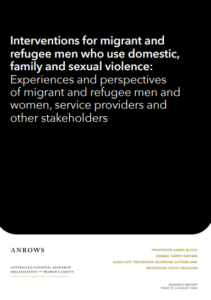 ANROWS has published a new research report – Interventions for migrant and refugee men who use domestic, family and sexual violence: Experiences and perspectives of migrant and refugee men and women, service providers and other stakeholders.
Commissioned under ANROWS’ 2023–27 research program focusing on people who use domestic, family and sexual violence, this study was conducted by a team at the University of Melbourne, led by Associate Professor Karen Block. It focuses on understanding how intervention programs – particularly men’s behaviour change programs (MBCPs) – can better meet the needs of migrant and refugee men and families while strengthening safety for women and children.
The report highlights strengths already present within migrant and refugee communities, including trusted multicultural organisations, bicultural workforces, strong community leadership and participants’ reported motivation to build safer family relationships.
The report provides a number of practice and policy recommendations.
You can download the report here.
A look into young Australians’ lives, five years on from COVID-19
The Monash Centre for Youth Policy and Education Practice (CYPEP) has released a new report – Young Australian Lives During Polycrisis: Five Years of Key Trends from the Australian Youth Barometer (2021-2025).
The research tracked the experiences of young Australians in the aftermath of the COVID-19 pandemic, across education, work, wellbeing, relationships, and civic participation.
Findings of the report show that there was an easing of pandemic-related impacts, but persistent economic pressures, shifting work patterns, and evolving attitudes toward education, mental health, and political engagement continue to need attention.
Key findings included:
- Young people identified the top priorities as:
- Affordable housing options (increasing from 60% in 2022 to 82% in 2025)
- Employment opportunities for young people (increasing from 48% in 2022 to 64% in 2025)
- Climate change (44% in 2025).
- The overwhelming majority of young Australians reported having at least one feeling of anxiety or pessimism (98% in 2022, 97% in 2023, 98% in 2024, & 99% in 2025).
- From 2021 to 2025, the proportion of young Australians who experienced financial difficulties to some extent in the last 12 months fluctuated between 82% and 90%, with the proportion reporting they did so often or very often fluctuated between 25% and 28%.
- The proportion of young Australians who think that it is likely or very likely that they will be able to purchase a property or house in the future fluctuated between 41% and 49% from 2021 to 2025.
The report is available here.
Senate inquiry into Social Housing
On 20 August 2026, the Senate referred the matter below to the Senate Economics References Committee for inquiry and report by 01 March 2027.
Terms of reference:
- the economic and social benefits of investment in social housing, including its impact on housing access, affordability, renting, homelessness and housing security
- historical levels of investment in social housing, and public housing in particular, including the reasons for its decline as a share of Australia’s housing stock
- the case for establishing a target for social housing as a proportion of Australia’s housing stock, including consideration of what an appropriate target may be
- the impact of current Commonwealth and state and territory government investment in social housing, including through the Housing Australia Future Fund and the Social Housing Accelerator, in view of the current scale of need
- the role of modern methods of design and construction in building more social homes and creating communities with a high quality of life
- the benefits of a steady pipeline of social housing investment for the development of Australia’s modern construction industry
- opportunities for further investment in public and community housing, including consideration of direct public spending along with different delivery and investment models in Australia and internationally
- appropriate governance and administrative arrangements to deliver social housing at a scale to meet current and future need
- the efficacy of rent to buy schemes
- any other related matters.
Submissions close 24 September 2026. Find out more here.
Consultation on Inclusive Communities Fund
The Department of Health, Disability and Ageing is currently consulting on the design of the Inclusive Communities Fund.
The Australian Government will provide $200 million over three years from 2026-27 to establish the Inclusive Communities Fund.
The Fund will create more opportunities for people with disability, including NDIS participants, to take part in social, recreational, arts, sporting, cultural and other community activities. The Fund will achieve this by providing funding for community organisations to strengthen their capability to offer more inclusive and accessible services. The Fund will not pay for the delivery of community activities.
The design of the Fund will be informed by consultation with the disability community. The first round of funding is expected to begin by June 2027.
The consultation closes on 31 August 2026. To make a submission visit consultations.health.gov.au
Working with Children Check laws now in place nationally
Commonwealth Attorney-General, Michelle Rowland, has announced that working with children check laws are now in place nationally.
This means if a person is rejected from holding a Working with Children Check (WWCC) in one jurisdiction, they are rejected in all – ‘banned in one, banned in all’. This important milestone follows the passage of Western Australia’s Working with Children (Screening) Amendment Act 2025, joining all other states and territories in mutual recognition of negative WWCC notices.
All governments are continuing to work together to deliver on the priority actions set out under the Standing Council of Attorneys-General Agreement to Deliver National Working with Children Check Reform, established in November 2025. This includes recent agreement on a national baseline of serious offences, minimum national standards for WWCC risk assessment processes, and the types of information to be shared with state and territory WWCC screening units.
Strengthening WWCC regimes forms part of the Government’s broader efforts to prevent harm and abuse, including through the development of a Second Action Plan under the National Strategy to Prevent and Respond to Child Sexual Abuse 2021–2030. Find out more at National Strategy Second Action Plan on the National Office for Child Safety website.

Interrelate's 100 year celebration
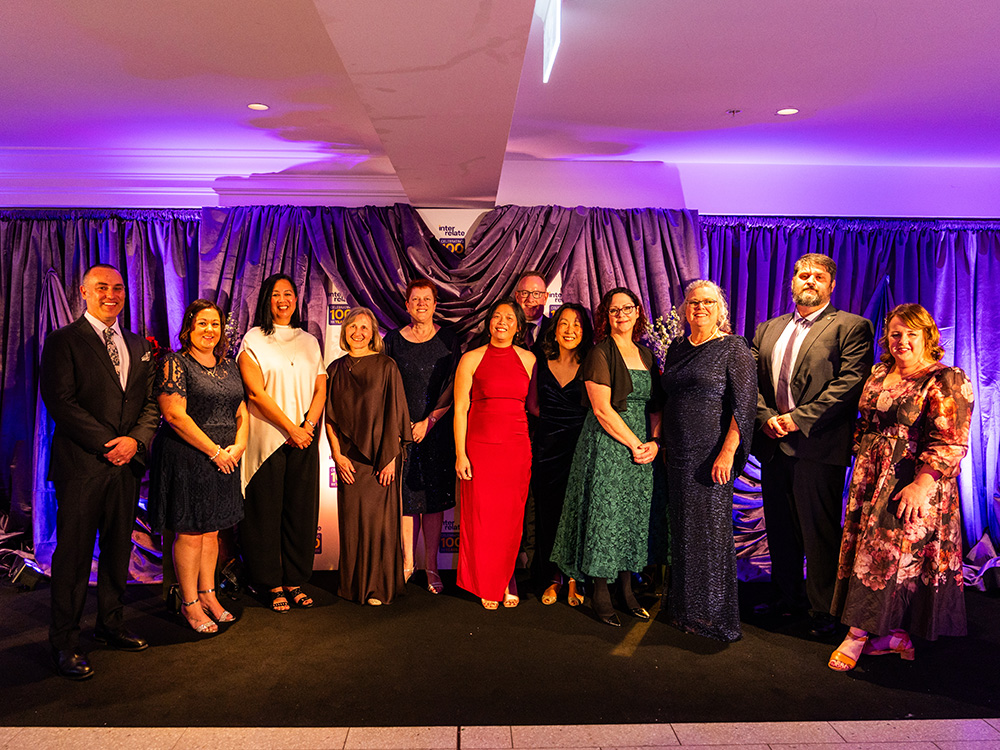
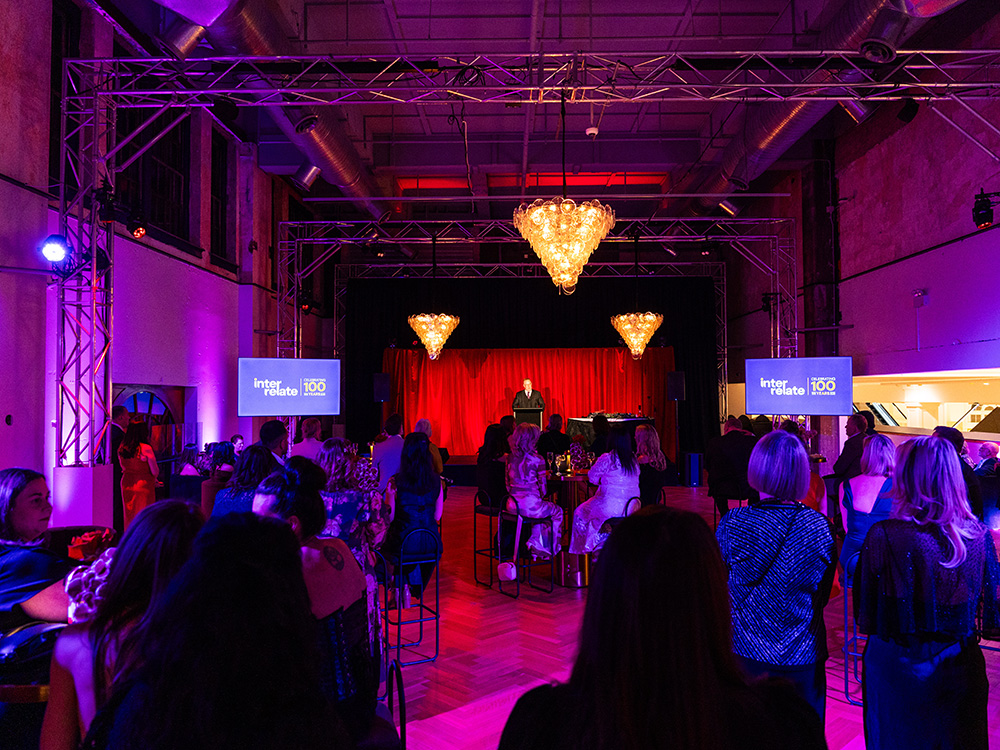
On 31 July 2026, Interrelate celebrated 100 years of supporting children, families and communities to build healthier relationships.
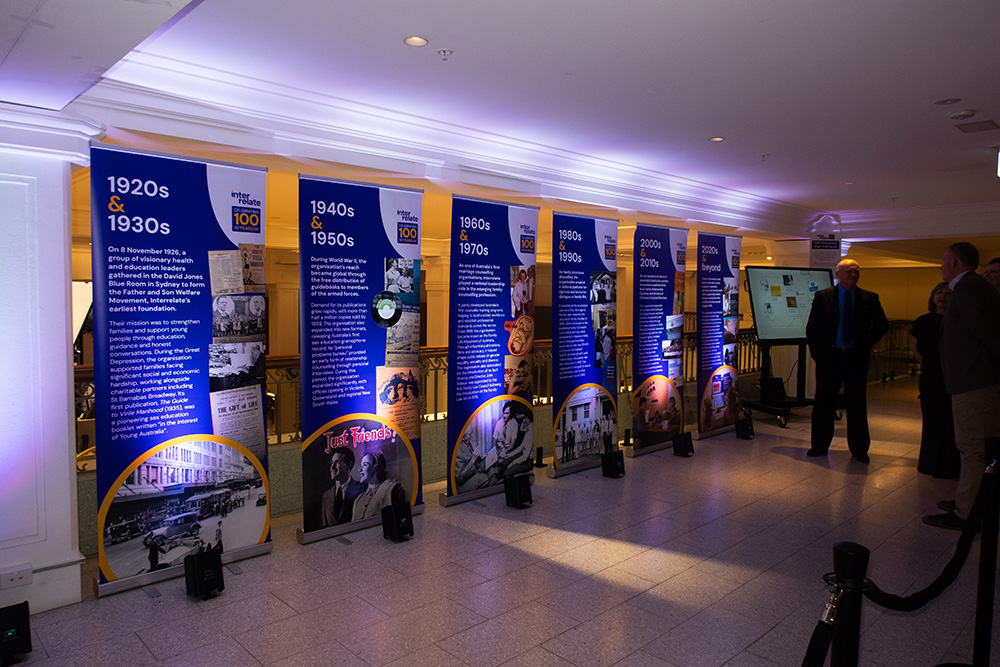
To mark this significant milestone, Interrelate held a centenary gala at David Jones in Sydney, returning to the place where its four founders established the Father and Son Welfare Movement in 1926. Members, past and present Board Directors, staff, sector and corporate partners, and government representatives came together to reflect on Interrelate’s history, recognise those who have shaped the organisation across generations and celebrate the organisation it is today.
Throughout a century of change, four enduring pillars have guided Interrelate’s work: having real conversations, embracing innovation, working together and putting kids first. These pillars will continue to underpin Interrelate as it enters its second century.
Elder Abuse Indicators research report
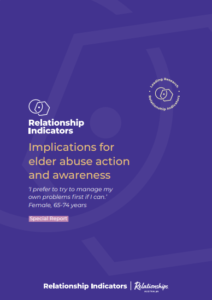 Last month Relationships Australia launched their new report, Relationship Indicators: Implications for Elder Abuse Action and Awareness, at the National Elder Abuse Conference.
Drawing on data from their Relationship Indicators study, the report offers new insights into the relationship experiences of older adults and the role that social connection, relationship distress and support services can play in preventing abuse and mistreatment.
Key findings:
- more than half of older adults manage relationship difficulties on their own
- one in six report distress in their most challenging relationship; and
- older adults experiencing relationship distress are significantly more likely to experience loneliness and poor mental health.
The report highlights the protective role that relationships and social connection can play in the lives of older adults and reinforces the importance of prevention and early intervention alongside responses to abuse and mistreatment.
These findings form part of Relationships Australia’s Relationship Indicators project, a nationally representative study examining the state of relationships in Australia. The project provides insights into relationships, social connection, wellbeing and support needs, helping to inform policy, service delivery
and community action.

Research Study – Always, Usually, Sometimes: Poverty Over Time in Australia
 Researchers at UNSW are seeking people who have experienced poverty within the past five years to take part in a long-term study exploring how poverty affects everyday life and how those experiences change over time.
By listening directly to people with experience of living in poverty, the research aims to build a deeper awareness of poverty and help reshape our understanding.
Participants will contribute to a study running until 2031, helping to document the realities, challenges and impacts of poverty over several years.
They are looking for people who:
- Are currently living in Australia;
- Are aged 18 years or older;
- Can participate in the study until 2031 and;
Have experienced poverty and disadvantage within the past five years*
Those who would like to be included in the research will participate in a 5-minute screening questionnaire, 3 online or phone interviews in 2026, 2028, and 2030, and will be asked to share a photograph of something from everyday life approximately once every six months (six photographs in total).
To thank participants for their time, they are offering gift cards after completing each interview and each photo activity. A full description of all research activities and other key details can be downloaded from the study website. Click here to participate or find out more.
Parenting Styles Survey
Health, education and social service professionals are invited to take part in a University of Melbourne research study exploring professional awareness and attitudes about parenting behaviours and their impact.
Who can take part?
Family counsellors, child protection workers, allied health professionals, early childhood and primary school educators, youth and family workers, and maternal and child health nurses.
What’s involved?
- An anonymous online survey – takes around 15 minutes
- Questions about parenting practices and how professionals talk with parents about parenting styles
- As a thank you: a $10 donation made on your behalf to UNICEF Australia, or entry into a prize draw for 1 of 5 $200 gift cards
Your insights as a practitioner are invaluable in helping understand how parenting knowledge and attitudes vary across professional groups in Australia. Findings will inform policies and programs that support Australian families.
Participation is voluntary and fully anonymous.
This study has ethics approval from the University of Melbourne (Ethics ID: 35704). Click here to complete the survey.
Mission Australia’s Youth Survey
 Mission Australia’s Youth Survey, now in its 25th year, is the largest survey of its kind in Australia, giving young people a platform to share their views on the issues that matter most to them.
The survey covers what’s important to young people, the challenges they face, and the changes they want to see in their lives and communities.
Responses feed directly into policy and program decisions, so governments, youth organisations and community groups can better shape services for young people.
EOIs open for 2026 National Workforce Survey
 The Emerging Minds 2026 National Workforce Survey for Child, Parent and Family Mental Health (NWS) opens on 7 September, giving you the opportunity to make sure those experiences help shape what’s next.
The survey, conducted by researchers from Emerging Minds and Monash University, explores the strengths and support needs of the workforce, offering a chance to reflect on your practice and influence future workforce supports.
Help ensure your sector, profession and region are represented. They are also looking for practitioners and organisations who can share the survey through their networks and communication channels to help build the most representative picture possible of Australia’s child, parent and family mental health workforce.
Register your interest before 7 September to be among the first to access the 2026 National Workforce Survey findings upon release. NWS participants can also opt in to enter the draw to win one of five iPads, with winners chosen across draws in mid-October and when the survey closes on 1 December. Click here to register your interest.

CHC81015 Graduate Diploma of Relationship Counselling – June 2026, Online
CHC81115 Graduate Diploma of Family Dispute Resolution – July 2026, Online
Couples Counselling Course: A contemporary and client-focused approach

ACT
Client Pathways Team Leader, Post Separation Services| Relationships Australia Canberra & Region
NSW
Support worker | CatholicCare Wilcannia-Forbes
Specialist Worker Children & Young People | CatholicCare Wilcannia-Forbes
CASE MANAGER, DOMESTIC & FAMILY VIOLENCE – MALE VICTIMS | Interrelate
FAMILY DISPUTE RESOLUTION PRACTITIONER – Singleton | Interrelate
If you have any events you’d like listed on the FRSA Events and Training Calendar or job vacancies you’d like listed on the FRSA Jobs Board, email Communications Officer, Vanessa Lam at communications@frsa.org.au. Please note that posting onto the FRSA website is reserved for FRSA Members only.

How self-reported alcohol use and masculinities are related to the reported use of intimate partner violence | Australian Institute of Family Studies
 This report uses data from Ten to Men: The Australian Longitudinal Study on Male Health to examine how alcohol use and self-reported masculinities are associated with the use of intimate partner violence (IPV) by Australian men. These factors were selected based on data availability, existing evidence gaps and policy relevance.
Policy sharing on digital inclusion for the elderly | APEC Telecommunications and Information Working Group
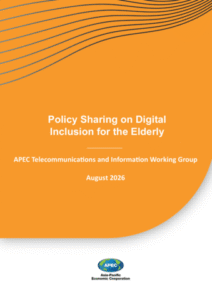 Digital technologies hold significant potential to promote inclusion among older adults by enhancing their access to services, social and economic participation. This report examines the policy approaches of the APEC economies to promote digital inclusion of older people and the measurement frameworks which support evidence-based policymaking.
Engaging students to prevent gender-based violence | Our Watch
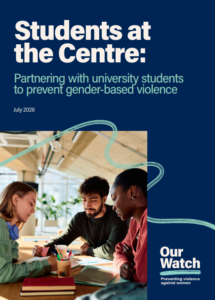 This new practice guide, Students at the Centre, supports people working in higher education to meaningfully involve students in preventing and responding to gender-based violence. It outlines eight practical principles for trauma-informed, inclusive and collaborative student engagement.
Seen safe supported: A new way to meet the needs of young victim survivors of family violence | Family Free from Family Violence
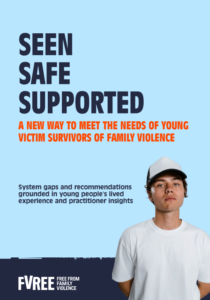 Seen, Safe, Supported is a youth-informed blueprint that calls for a shift in how systems respond to young people experiencing family violence. Developed with young people who have lived experience, the report highlights the importance of safe, accessible and flexible service responses that better meet young people’s needs
National Report Card 2025 | National Mental Health Commission
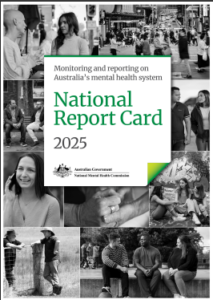 The National Mental Health Commission’s National Report Card 2025 tracks how Australia’s mental health system is performing. It is the third report to use this framework and shows how key measures are changing over time using the latest national survey and government data. This edition also includes an updated Domain 3: Mental Health System.
State of the ACCO sector: child protection and out-of-home care census final report | AbSec – NSW Child, Family and Community Peak Aboriginal Corporation
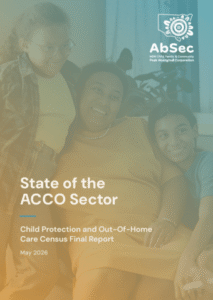 Aboriginal Community-Controlled Organisations (ACCOs) provide holistic, culturally responsive care for Aboriginal and Torres Strait Islander children and families in New South Wales and yet are under-resourced and excluded from decision making. This report calls for reforms to strengthen the role of ACCOs in the child protection system.
Lived experience advisory groups Report to the Economic Inclusion Advisory Committee | Brotherhood of St Laurence
 This report presents early insights from two lived experience advisory groups – on family payments reform and employment services reform – convened by BSL for the Economic Inclusion Advisory Committee (EIAC) across 2025–26. The Economic Inclusion Advisory Committee (EIAC) is an independent advisory body that provides advice to the Australian Government on poverty and economic disadvantage before each Federal Budget.
The groups bring together 12 lived experience advocates, EIAC members and government representatives in a collaborative approach intended to deepen participation, improve policy relevance of recommendations and strengthen the evidence base for economic inclusion reforms.
Mental health and economic conditions for younger Australians | The Australia Institute
Mental health among young Australians has declined considerably in recent years compared to the rest of the population. The decline has coincided with growing financial and economic stress. This paper proposes that clinical services alone cannot fix preventable economic stress; improving economic conditions is a more efficient and effective way to protect young people’s mental health.
An Unequal Foundation: Findings from the Mission Australia 2025 Youth Survey | Mission Australia
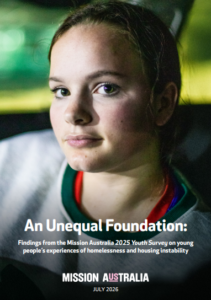 The Unequal Foundation report, drawing on data from the Mission Australia’s 2025 Youth Survey, explores the experiences of young people aged 14-19 who have faced homelessness or housing instability. Compared with their peers who had not experienced housing concerns, these young people were more likely to report financial hardship, poorer mental health and wellbeing, weaker support networks, and disruptions to education and employment. The challenges were most acute for young people who experienced homelessness on their own.
Despite this, many remained engaged in education, employment and extracurricular activities, and continued to hold positive aspirations for their future.
A practical new model for workplace equality and respect | Our Watch
Workplaces can help prevent gender-based violence by creating cultures of gender equality and respect. Our Watch’s Workplace Equality and Respect Model is a new national framework offering practical guidance for organisations of all sizes.
Understanding experiences of family violence and implications for women’s psychological wellbeing | First Nations Health and Wellbeing: The Lowitja Journal
This study, guided by longstanding Aboriginal governance and culturally safe research practices, explored the impact of family violence on Aboriginal and Torres Strait Islander women’s psychological wellbeing and experiences of motherhood. Findings from a representative South Australian cohort highlight how cultural identity, community connections, and supportive relationships can strengthen wellbeing and help mitigate the impacts of family violence.
Online safety and sexual development guidance | Office of the eSafety Commissioner
 This guidance is designed to help people who advise and support families to understand how the online experiences of children and young people can impact, and be impacted by, their relationships and sexual development. Unlike other resources, it explores sexual literacy and respectful relationships in relation to online safety.
Digital literacy and digital technologies to support the human services workforce | Anglicare Southern Queensland
 This essay explores key issues relating to digital literacy, adult education and the human services, providing an overview of digital technologies that can beneficially augment service delivery in aged care in Australia. Digital literacy has become a foundational capability for the twenty-first century’s future human services workforce.
Cost-of-living and the mental health of Australian caregivers and their children: Findings from a national cross-sectional survey | Children Australia
Financial hardship is a well-established determinant of mental health. From 2021 to 2025, Australian families faced sustained increases in cost of living, yet little evidence exists on how these pressures are perceived to affect families’ mental health. This study draws on data from the November–December 2024 wave of the nationally representative Royal Children’s Hospital National Child Health Poll, which has tracked the financial and mental health experiences of Australian families with children aged 0–17 years since 2020.
Want to submit something to the FRSA eBulletin?
If you have an news item or event that you would like to be featured in a future eBulletin please submit your announcement via the form below or email communications@frsa.org.au with the subject “FRSA eBulletin submission”.
Please note FRSA members receive priority for items posted in the eBulletin. And to keep information current, relevant and useful, submissions will not be repeated from week to week.
Subscribe
Subscribe to receive future eBulletin editions directly to your inbox!
