


No. 20, 2025 | 23 December 2025
Go to:
From FRSA's Executive Director

This week is a little like the calm after the storm, following a busy end of year in Canberra.
For the Prime Minister and others in leadership who have the important roles of upholding our values and protecting life and freedoms, responding to the horrific events at Bondi Beach week before last still dominates their workload and the newsfeeds. My heart goes out to the people and families impacted by this tragic act targeted at Jewish people at a community celebration of Hannukah. The ability to congregate, to celebrate, to speak, to represent, to live should be free from fear, persecution and discrimination. I have been struck by the immense impact this has had on so many people and grateful to the many organisations – including those in our membership – providing support to people and communities.
The Treasurer released the Mid Year Economic and Fiscal Outlook (MYEFO), or ‘mini-Budget’ on the 17th of December. We were advised by the Department of Social Services Community Sector Advisory Group Secretariat there was a measure in the papers providing a “tapered extension of the Government’s 2022-2023 October Budget measure ‘Support for Community Sector Organisations’”. The Government has allocated $63.4 million to this measure over two years, 2026-27 and 2027-28. tWhilst this sounds promising – the devil is always in the detail. And getting to the bottom of that detail is proving a tad difficult at this time of the year. So – we will pick that up again in 2026.
The Department of Social Services has released the report, “Evaluation of Family and Relationship Services and Specialised Family Violence Services” , documenting n the outcomes of work commissioned by the Department and conducted by Allen & Clarke Consulting. The evaluation re-affirms the strong efficiency, effectiveness and value of these programs and we do hope the Department takes the findings into account when putting the finishing touches on the design of the new Fac Activity Program. You can read our Media Release here.
We too have met our end of year milestones with notifications sent out to all those who submitted an abstract in the ‘Call for Abstracts’ today and yesterday advising them whether they were accepted or not. With a 50% increase on last year with 197 abstracts received, competition was tight and it was impossible to give everyone a speaking role (as much as we would like to). It is a little early to share the concurrent session program as we wait for offers to present to be accepted but we will aim to have that out by the end of January 2026. We have also landed on our branding for Conference which is big, bold and bright and represents strength, collaboration and partnership and the theme “Showcasing: practice, evidence, impact”. Registrations are open!
Whether you are limping or racing to the finish line as the end of 2025 looms large, I do hope you will have time over the holiday period to spend time with those you love and care for. Real time. In the busyness of life, I always love this time of year. The extra hours and days that can be spent catching up with people you never spend enough time with is something I cherish. Reading a book or two, going for walks and definitely squeezing in re-runs of Love Actually and Lord of the Rings, is always on the cards.
The FRSA office will be open until 24 December 2025. We will take a short break and re-open on Monday 5 January 2026.
Have a safe, happy and love-filled Christmas and New Year.
I trust you have a restful and refreshing time and return in 2026 ready for the busy year ahead.
Kind regards,
Jackie Brady
FRSA Executive Director

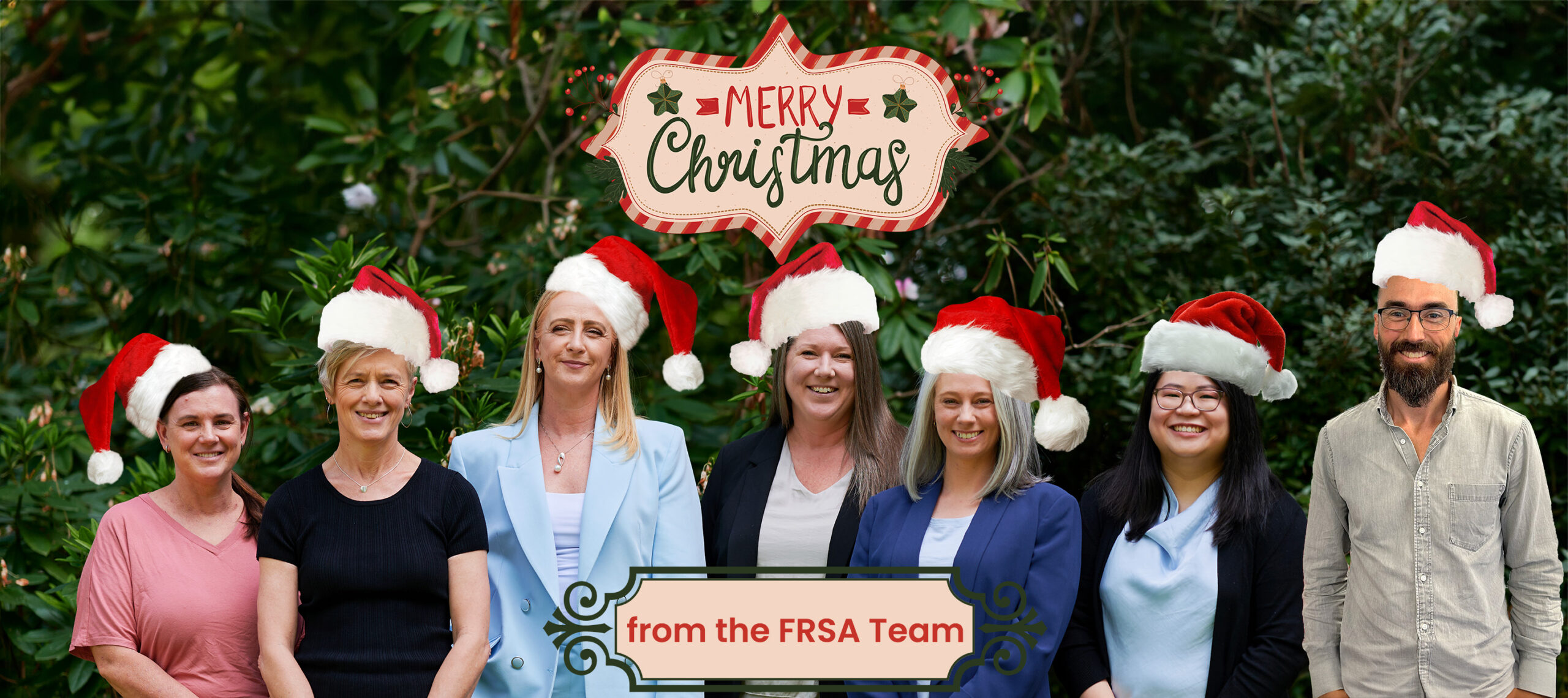



Conference branding released
FRSA is excited to share our official branding for the 2026 National Conference on 18-21 May 2026 at the Brisbane Convention & Exhibition Centre. The design reflects the Conference theme, Showcasing: Practice, Evidence, Impact. The interconnected forms symbolise the close relationship between practice and evidence, highlighting collaboration and continuous learning. Embedded structured elements reflect rigor and data-informed insight. The forward arrow signifies impact—momentum, action, and real-world change. Together, the design illustrates how strong practice, supported by evidence, leads to meaningful and lasting impact.
Stay tuned for more announcements in the lead up to the Conference including the Gala Dinner venue, Keynote speakers, panellists and more! In the meantime, don’t miss out on saving up to $200 per person with early bird registration rates ending Monday, 2 March 2026.
Welcome Sponsors!
We’re excited to welcome the following sponsors who will join us in Brisbane next year for the FRSA National Conference.
- CatholicCare Sydney as Silver Sponsor
- UnitingCare Queensland, Silver Sponsor and Coffee Cart Sponsor for Wednesday
- Interrelate as Wi-Fi Sponsor
There are still a number of sponsorship package options available, designed to maximise visibility to showcase the work and activity of your organisation/business. Or if you are interested in a more bespoke package for your organisation don’t hesitate to get in touch with the FRSA team on (02) 6162 1811 or events@frsa.org.au.

Evaluation of Family and Relationship Services and Specialised Family Violence Services – report released
 The Department of Social Services has just released the report – Evaluation of Family and Relationship Services and Specialised Family Violence Services.
The department commissioned Allen & Clarke Consulting to undertake the independent evaluation in mid-2024 and the final report was delivered to the department in September 2025. The evaluation assessed the efficiency, effectiveness, and appropriateness of Family and Relationships Services (FaRS) and Specialised Family Violence Services (SFVS) to inform ongoing service delivery, design, and future policy.
Both programs were found to deliver value for money and improved outcomes in personal and family safety, mental health and wellbeing and relationships for the children, young people and adults accessing those services. The flexibility of the program guidelines was found to be a key factor contributing to the effectiveness of FaRS and SFVS .
The evaluation also found that there is increasing complexity in service user presentations and needs. Service users are presenting with higher rates of family violence, mental ill health, neurodiversity and intersecting disadvantages. Increasing client complexity mean FaRS and SFVS services are often providing services across the intervention spectrum, including crisis response.
The report outlines eight opportunities that build on the success of these two programs:
- Enhance funding to ensure that providers can successfully deliver work across the intervention spectrum:
- expanding the early intervention and prevention focus, whilst also increasing funding to support case management and brokerage
- expanding capacity and capability to respond to family violence risk.
- Identify levers to encourage better coordination in local service systems
- Expand and enhance virtual service delivery to complement face-to-face service delivery
- Invest in upskilling of the FaRS and SFVS workforce to meet key trends in community and service user needs (e.g. family violence, working with people with disability, working with neurodivergent people, working with children)
- Increase services for children and young people through the expansion of the Child Specific Counselling program
- Consider how SFVS can further contribute to meeting the demand for programs to support behaviour change in men who use violence
- Fund more ACCOs to provide SFVS services to Aboriginal and Torres Strait Islander communities
- Improve data collection, reporting and monitoring (including collecting enhanced data on LGBTQIA+ status and improving consistency of data on CALD status).
The outcomes of the evaluation resonate with the findings of FRSA’s 2023 commissioned report – Family and Relationship Services Economic Evaluation – which showed a strong return on investment for these two programs, with positive outcomes in family functioning, personal/family safety and mental wellbeing.
Inquiry into the Thriving Kids Initiative – report released
On 22 December, the House of Representatives Standing Committee on Health, Aged Care and Disability released its report of the inquiry into the Thriving Kids Initiative.
The Committee’s 16 recommendations include:
- Inclusive co-design with families, carers, service providers, and advocacy groups to ensure the Thriving Kids initiative reflects lived experience.
- Phased implementation supported by an Advisory Council to guide progress and maintain transparency.
- Stronger protections for families and carers, including clear pathways for support and safeguards for children engaged in the Thriving Kids initiative.
- Equity of access, particularly for First Nations communities, culturally and linguistically diverse families, and those in regional and remote areas.
- A review of the Thriving Kids initiative after 24 months to ensure it remains effective and responsive to community needs.
The Committee’s findings in the report will assist the Australian Government and the Thriving Kids Advisory Group to design the Thriving Kids program.
You can read the report here. FRSA’s submission to this inquiry is on our website.
Understanding why some Autistic children use potentially harmful behaviours
The Australian Institute of Families Studies (AIFS) has released a new practice guide – Understanding why some Autistic children use potentially harmful behaviours.
The guide summarises the research evidence about the use of potentially harmful behaviours (PHB) by Autistic children. It also draws on practice wisdom and expertise to highlight examples of situations where Autistic children may use PHB to communicate unmet needs related to common types of neurodevelopmental differences.
This practice guide has been developed for, and in consultation with, practitioners working in Family Mental Health Support Services (FMHSS). FMHSS provide early intervention and non-clinical community mental health support for children and young people aged up to 18 years who are showing signs of, or are at risk of, developing mental illness.
This practice guide will also be useful to other practitioners working with children and young people, parents and families.
The release of this guide follows AIFS’ August 2025 release of a factsheet – What is neurodivergence?, which is one of the top ten most impactful resources in the Australian Policy Online (APO) repository for 2025. This factsheet is accompanied by two further factsheets: Strategies to support neurocognitive functioning for neurodivergent children and Supporting sensory processing for neurodivergent children.

Lutheran Care appoints new CEO
 Lutheran Care has appointed Ian Byrne as their new Chief Executive Officer, commencing 12 January 2026.
Ian joins Lutheran Care after more than a decade with AnglicareSA, where he most recently served as Executive General Manager, Disability and Wellbeing, overseeing all NDIS, Disability and Allied Health services. With over 25 years of senior and executive leadership experience across aged care, health, disability, community services, and financial services, Ian brings a deep understanding of complex human services environments and a demonstrated commitment to people and purpose. He also serves as a Board Member of Brain Injury SA.
Reflecting on stepping into the role following the passing of Lutheran Care’s former CEO Rohan Feegrade, Ian said, “Stepping into this role to lead Lutheran Care at this time in its history is a genuine privilege. Rohan was someone I deeply respected, and I feel immense gratitude to work alongside a team who profoundly change people’s lives every day.”
“I will strive to continue that legacy in a way that is authentic to who I am and is consistent with our values.” Read more.

ISPCAN 2026 Congress abstract submissions open
 Abstract submissions are now open for ISPCAN Congress in Melbourne, 24-27 August 2026.
Under the theme “Transforming approaches to safety and healing”, the event will explore new paths in out-of-home care, youth justice, community prevention, digital safety, culture and diversity, and public health approaches to child protection. This gathering of researchers, practitioners, advocates, policy makers and young people allow us to break down silos, challenge assumptions and co-create solutions that are bold and practical.
Submissions close 30 January 2026. Click here to find out more.
Heat in Homes Survey
 ACOSS, together with the First Nations Clean Energy Network (FNCEN) and the National Aboriginal and Torres Strait Islander Housing Association (NATSIHA), is running their Heat in Homes Survey again this year.
They’re collecting stories from people dealing with hot homes and high energy bills to advocate for government investment in housing upgrades. If you’ve struggled with summer heat at home, please take their survey (it takes about 10 minutes).
The survey closes on 28 January 2026. They’re particularly keen to hear from renters, people on low incomes, First Nations people, people with disability, and anyone whose home doesn’t keep them safe from the heat. Your experience helps build the evidence for change. Click here to complete the survey here.
SAFE-COMMS project
The University of Melbourne is conducting a research project on how children’s emotional wellbeing can be supported and protected, funded by the National Health and Medical Research Council.
They are seeking:
- Adults who grew up in families where a parent or caregiver often acted in ways that were emotionally hurtful or upsetting
- Professionals (e.g. youth and family workers, family counsellors, child protection officers, allied health professionals, early childhood educators, maternal and child health nurses) who work with families where a child’s emotional wellbeing or safety may be a concern
What participation involves
- A confidential, one-on-one online interview (up to 1 hour)
- The interview will explore what emotionally harmful experiences can look like, why they may occur, and how families, services, and communities can respond and provide support
- You will receive a copy of your transcript to review, and a $75 gift card for your time
Click here to find out more or contact Dr Annemarie Wright at wright@unimelb.edu.au

CHC81015 Graduate Diploma of Relationship Counselling – June 2026, Online
CHC81115 Graduate Diploma of Family Dispute Resolution – July 2026, Online
Couples Counselling Course: A contemporary and client-focused approach

NSW
Relationship Counsellor | Interrelate
ACT
Family Dispute Resolution Practitioner | Relationships Australia Canberra & Region
If you have any events you’d like listed on the FRSA Events and Training Calendar or job vacancies you’d like listed on the FRSA Jobs Board, email Communications Officer, Vanessa Lam at communications@frsa.org.au. Please note that posting onto the FRSA website is reserved for FRSA Members only.

More than a phone call: using everyday interactions to detect and respond to loneliness | Queensland University of Technology
 This white paper offers a new approach to addressing the public health issue of loneliness. It uncovers the untapped potential of contact centres as frontline responders in the loneliness crisis. It highlights how organisations can rethink everyday digital services to detect and respond to loneliness in ways that are practical, scalable and human-centred.
Beyond shelter: integrating mental health support in temporary supported accommodation | Anglicare Southern Queensland
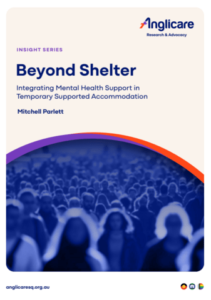 Mental health and homelessness are deeply interconnected, yet temporary supported accommodation (TSA) services struggle to address this intersectionality. This paper critically analyses TSA services, exploring the question: ‘How can TSA be improved to better support individuals experiencing homelessness and mental health concerns?’ It explores how integrating psychologically informed environments within TSA could enhance their capacity.
The relationship between pornography use and sexual violence in Australian men | Australian Institute of Criminology
Concerns have been raised regarding pornography’s influence on sexual violence, particularly among men. Questions remain regarding the strength of this association, including among Australian men, and its underlying mechanisms. The study provides valuable information to inform measures to prevent and counteract any potential negative impacts of violent pornography on sexual behaviour.
Last Resort, Not First Response: Protecting young people in our justice system | Digital Media Research Centre
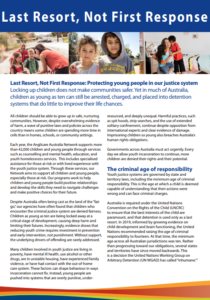 Last Resort, Not First Response paper argues that locking up children, some as young as ten, causes serious harm, breaches human rights, and fails to make communities safer. The report shows that children in the youth justice system are often experiencing poverty, trauma, mental ill health, unstable housing, or out-of-home care, with First Nations children disproportionately affected. Despite strong evidence that “tough on crime” approaches do not work, recent laws across Australia have expanded detention and punitive practices. Anglicare Australia calls for raising the age of criminal responsibility to 14 and investing in prevention, early intervention, and therapeutic, community-based supports that address the root causes of offending.
Risk and protective factors for child abuse and neglect | Australian Institute of Family Studies
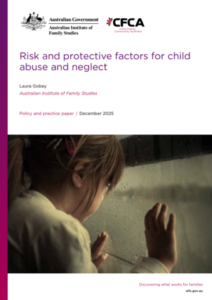 Child abuse and neglect is a major problem in Australia. This policy and practice paper provides an overview of recent research evidence on the risk and protective factors for child abuse and neglect in families. It also discusses how knowledge of risk and protective factors can inform practice for practitioners and other professionals working with children and families.
Measuring specialist family violence service demand and capacity | Safe and Equal
 This report provides analysis and insights on data collected through Safe and Equal’s 2025 Demand and Capacity survey for Victoria. The data collection is focused on gathering an overall picture of demand for specialist family violence services and case management support. The report finds services are operating and directing resources mostly towards crisis response.
Translating and interpreting services: case for change | Department of Home Affairs
 New analysis highlights the significant and growing cost of sub-optimal interpreting services in Australia, with earlier research estimating annual economic and social costs of $326 million to $892 million in 2023 alone. Building on this work, the report warns that ongoing workforce shortages, declining service quality, and limited recognition of language professionals pose serious risks if left unaddressed. Inadequate pay and poor career pathways (relative to other occupations) are driving an accelerated decline in the interpreting workforce, even as demand continues to rise. Without action, the combined impact of reduced supply and growing need could cost Australia up to $2 billion a year by 2035. The report concludes that improving pay and conditions is critical to stabilising the workforce and will require coordinated government action using both procurement and non-procurement levers, beyond reliance on the national award.
Prevention knowledge report: Lessons and successes from 10 years of working with media | Our Watch
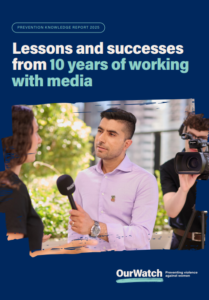 Media is a powerful driver of social change, with a significant role in shaping community attitudes towards violence and gender inequality. The media industry is also a substantial employer and influential cultural institution with a responsibility to its employees to create safe, equitable workplaces. It’s a critical setting for work to prevent violence against women and their children.
This report shares the insights and what’s possible when prevention is embedded in the way media organisations run – in their editorial policies, industry guidelines and newsroom culture.
A tool for action: developing the Workplace Gender Equality Agency’s Action Planning Tool | Department of the Prime Minister and Cabinet
 The Action Planning Tool supports Australian organisations to reduce their gender pay gap. It uses organisational data to identify gender pay gap ‘hot spots’ and provide a targeted action plan specific to the organisation. This evaluation assesses the effectiveness of the tool in building confidence, lifting knowledge and supporting organisations to take action.
Practice guide: parenting through adversity | Foundations: What Works Centre for Children & Families (UK)
This practice guide focuses on parenting support for families experiencing adversities who have at least one child or young person aged 11 to 18 years old. The guide sets out key principles and recommendations for evidence-based parenting support in the United Kingdom. It recommends evidence-based parenting programs across two types: family therapy interventions and parent support programs.
Considerations when working with interpreters | Queensland Centre for Domestic and Family Violence Research
 Engaging and working with interpreters effectively is a critical part of working with victim-survivors whose first language is not English. This practice paper emphasizes the importance of using qualified, trained interpreters when working with victim-survivors. It highlights the risks of re-traumatization, the inappropriateness of using friends or family as interpreters and the need to assess language comprehension carefully, with consideration for the impact of trauma on communication.
Breaking Point: A national survey of housing stress, energy hardship and insecurity | Working with Women Alliance
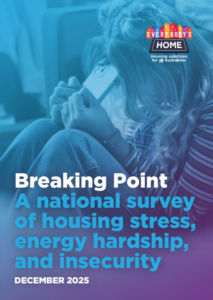 A 2025 supporter survey highlights that Australia’s housing crisis is now affecting people across all housing types, not just those on the margins. The findings show housing insecurity is deeply intertwined with low incomes, rising energy costs and poor housing quality, forcing many people to make harmful trade-offs to stay housed. Half of respondents cut back on heating or cooling, more than four in ten avoided medical care, and many skipped meals, relied on credit, or sought charity support. Sixty per cent reported housing stress or insecurity, and around half said poor housing conditions had made someone in their household sick or potentially sick. The report calls for urgent reforms, including stronger rental standards, limits on rent increases, and significant reinvestment in social housing.
Want to submit something to the FRSA eBulletin?
If you have an news item or event that you would like to be featured in a future eBulletin please submit your announcement via the form below or email communications@frsa.org.au with the subject “FRSA eBulletin submission”.
Please note FRSA members receive priority for items posted in the eBulletin. And to keep information current, relevant and useful, submissions will not be repeated from week to week.
Subscribe
Subscribe to receive future eBulletin editions directly to your inbox!
