


No. 4, 2025 | 28 March 2025
Go to:
From FRSA's Executive Director
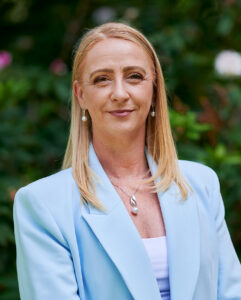
As I come to the end of my state and territory member visits I feel invigorated and inspired by all the wonderful members I have been meeting with over the last few weeks. Starting in Darwin on the 7th of March and finishing up in Canberra on the 28th of March the conversations have been rich, informative and energising and I can’t wait to put to use what I have learnt and what has been shared with me in FRSA’s advocacy work with Government and to inform research and evaluation projects on the horizon.
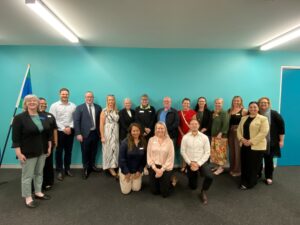 If you were to speak to our Communications Officer, Vanessa, she consistently laments the fact that I am possibly the worst at capturing these meetings, or indeed any manner of engagement, for social media purposes. True to form, out of the seven visits I remembered to take a pic at one – I include a photo of our Sydney member forum.
Over the last few days FRSA had a presence at the Australian Children’s Contact Services Association Forum held in Hobart. The ACCSA Board did a great job of delivering a great program attracting around 170 people from across Australia and we felt privileged to be included as delegates, sponsors and as panel discussants across the two days.
On Tuesday night, there was a small thing called the Federal Budget released and we did put out a FRSA Federal Budget briefing to our members on the night. The majority of budget measures had already been out in the marketplace through the raft of pre-election announcements that have been regularly released since late last year/early this year. There was a ‘tax cut for all’ announcement that was new news.
Back in Canberra this morning, as a local I have heard the salute of cannons marking the proroguing of Parliament as instructed by the Governor General, the Hon Sam Mostyn making official the start of the Federal Election period. Australians will go to the polls on Saturday 3 May.
Just a reminder that the FRSA Conference is coming up in mid-May with registrations coming in strongly. Don’t forget to check out the pre-Conference workshop offerings that are available on Monday the 19th of May. We have recently added a LGBTIQA+ workshop to the program, which will be delivered by Drummond Street Services. We know that the numbers of LGBTIQA+ children, young people, men and women our services are working with is on the increase and how important it is to be able to tailor this work appropriately. The workshop being delivered by the Australian Institute of Family Studies has a new focus this year looking at supporting the sector to design surveys and analyse the data. So too does the Workshop with an Aboriginal and Torres Strait Islander theme. I can’t wait to bring Stuart McMinn’s organisation, Gawura Cultural Immersion, and their work into the FRSA network. I think it will be amazing. And of course, we can’t wait to get our CfC FP and Family Law networks together. No shortage of things to be talking about!
Kind regards,
Jackie Brady
FRSA Executive Director



REGISTER TODAY!
Heralded as one of the most anticipated events in the Family and Relationship Services network, the FRSA National Conference brings together a diverse group of practitioners, academics, and policymakers dedicated to supporting children, families, and communities. As one of the largest annual gatherings of its kind, this conference offers invaluable opportunities for learning, networking, and collaboration.
Join us in Sydney for the FRSA National Conference 2025 – an event you won’t want to miss. Register today and be part of this exciting gathering!
Standard Registration Fee From 18 March 2025
| Member Rates | Non-Member Rates | |
| Complete Conference Experience – Including dinner | $1,295.00 | $1,595.00 |
| Conference Only – No dinner | $1,220.00 | $1,520.00 |
Pre-Conference Workshops
| Rates | |
| Aboriginal & Torres Strait Islander Workshop: Cultural Frameworks and Embedding Them into Professional Practice (Full Day)* | $175.00 (FRSA Member Only) |
| Family Law Workshop (Full Day) | $175.00 (FRSA Member Only) |
| Communities for Children Facilitating Partners (CfC FP) Workshop (Full Day) | $175.00 (FRSA Member Only) |
| Survey success: Simplifying data collection for maximum impact (Half Day) | $130.00 (FRSA Member Only) |
| Beyond the Rainbow: supporting LGBTIQA+ families, children and young people (Full Day) | $175.00 (FRSA Member)//$300 (Non-FRSA Member) |
*Please note if not pre-registered for the Aboriginal & Torres Strait Islander Workshop you will NOT be able to register or attend on the day – due to limited spaces
You can purchase a workshop-only day tickets for the Pre-Conference Workshop day, without the need to also buy a Conference registration.
Bursary Program – applications closing today!
Two bursaries are available for Aboriginal and Torres Strait Islander people who are registered for or would like to attend the 2025 Family & Relationship Services Australia National Conference.
Bursaries are provided to assist with covering the cost of conference registration, and travel & accommodation. To be eligible you must be an employee of a fully financial FRSA member organisation. Each package includes:
- 1 x Complimentary full registration to the Conference (including dinner)
- $500 towards travel and accommodation
Applications closes on FRIDAY, 28 March 2025.
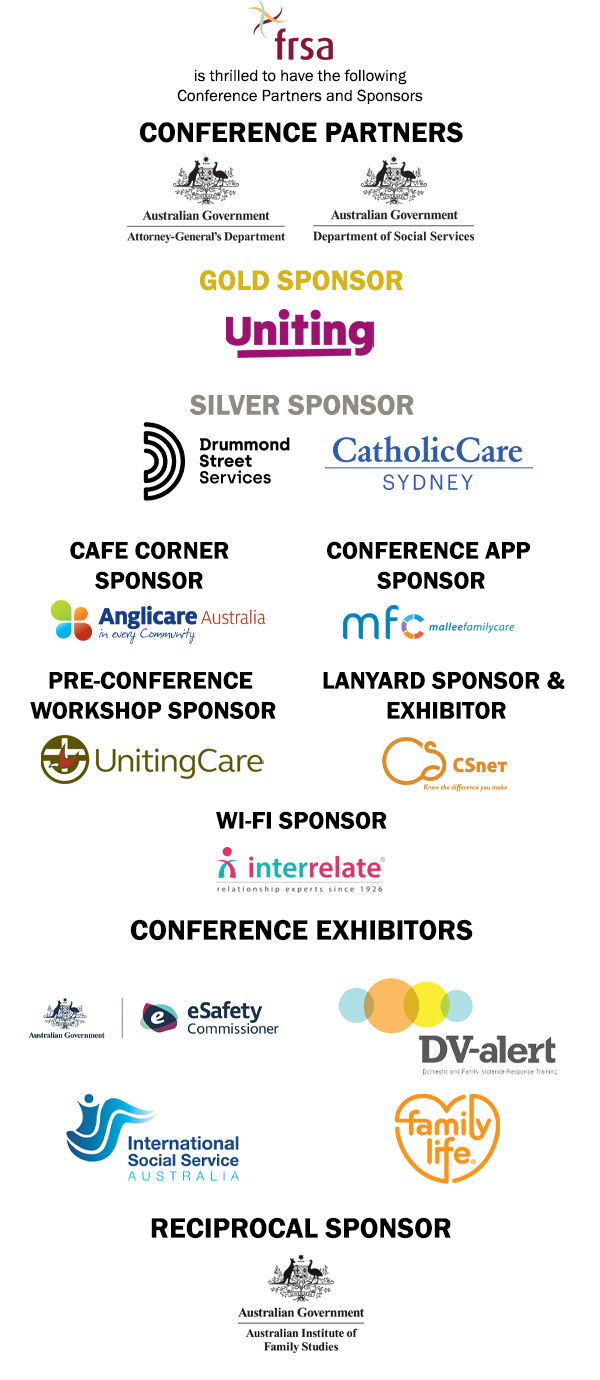
Welcome sponsors!
We’re thrilled to welcome the following sponsors who will join us in Sydney for this year’s National Conference.
- Attorney-General’s Department as a Partner
- Department of Social Services as a Partner
- Uniting Counselling and Mediation as a Gold Sponsor
- Drummond Street Services as a Silver Sponsor
- CatholicCare Sydney as a Silver Sponsor
- Anglicare Australia as Café Corner
- Mallee Family Care as Conference App Sponsor
- UnitingCare as the Family Law Pre-Conference Workshop Sponsor
- CSnet as the Lanyard Sponsor and Exhibitor
- Interrelate as the Wi-Fi Sponsor
- Parenting Calendar + as an Exhibitor
- eSafety Commissioner as an Exhibitor
- DV-alert as an Exhibitor
- International Social Service Australia as an Exhibitor
- Family Life as an Exhibitor
- Australian Institute of Family Studies as our Reciprocal Sponsor
There are still a number of sponsorship package options available, designed to maximise visibility to showcase the work and activity of your organisation/business. Or if you are interested in a more bespoke package for your organisation don’t hesitate to get in touch with the FRSA team on (02) 6162 1811 or events@frsa.org.au.
Building Stronger Communities Together: Reflections from Our Communities of Practice

As we approach the final sessions for 2024-2025 this April and May, it’s the perfect time to reflect on the incredible work and progress achieved through our Communities of Practice (CoP) over the past year.
FRSA has been running the Community of Practice groups for programs funded under the Department of Social Services Families and Children Activity since 2022-2023.
So far, 2024-2025 has been a year of rich discussion, collective learning, and sharing innovative and practical strategies aimed at strengthening the impact of our work. Together, we have explored key themes that continue to shape the way we support families and communities, including:
- Enhancing Communication and Service Delivery – Improving referral processes, fostering open dialogue, and ensuring services are culturally responsive and client-centred.
- Demonstrating Impact – Strengthening data collection and storytelling to showcase the value of initiatives.
- Community-Led Strategic Planning – Prioritising flexible, place-based approaches driven by real community needs.
- Strengthening Workforce Capability and Service Quality – Supporting frontline staff with training, and strategies for continuous improvement.
A heartfelt thank you to those who have been a part of this year’s journey. Your insights, dedication, and collaboration are the driving force behind this CoP’s success. Your contributions have strengthened our collective impact, and we look forward to celebrating our achievements in the final session this April and May.
For more information, contact Lisa Curtis at 02 6162 1811 or projects@frsa.org.au.
The Community of Practice Project is funded by the Australian Institute of Family Studies and supported by DSS.
ACCSA 2025 Forum
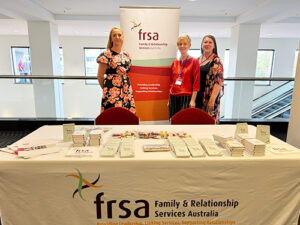 FRSA was delighted to participate in the ACCSA 2025 Forum – Creating a Safer, Stronger Sector in the Best Interests of the Child. This two-day event was held in beautiful Hobart on 25 and 26 March.
ACCSA (Australian Children’s Contact Services Association) is a voluntary association of Children’s Contact Services – both government funded services delivered by not-for-profit organisations and private sector providers. Children’s Contact Services (CCSs) enable children of separated parents to have safe contact with the family they do not live with in circumstances where parties are unable to manage their own contact arrangements.
The Forum delivered a great mix of presentations including from professionals such as independent children’s lawyers whose work intersects with the work of CCSs, and practice insights from practitioners working directly with children and parents in CCS centres.
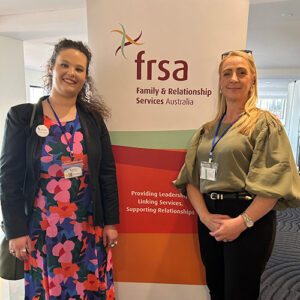
FRSA Executive Director, Jackie Brady, participated in a panel discussion – Family Law Amendments, Innovations, and the Future, and FRSA Manager Policy & Research, Robyn Clough, joined the panel discussion on CCS Accreditation.
We were pleased to provide the lucky door prize – a complementary full registration to the FRSA National Conference 2025 – Safe, Strong & Thriving – which will be held in Sydney 19-22 May. Nikki Venter – Practice Lead CCS, Relationships Australia SA, was the lucky winner.
FRSA congratulates the ACCSA Board on delivering a thoroughly engaging and energising event.

Community Sector Grants Engagement Framework
On 5 March 2025 the Albanese Government announced the release of the Community Sector Grants Engagement Framework, which aims to improve community sector grant design and processes to provide more flexibility and certainty of funding, and reduce administrative burden, for grantees.
The framework was developed in consultation with the community sector and aims to:
- help deliver grants that better serve the sustainability of community sector organisations
- ensure better outcomes are achieved in delivering government policy.
The framework encompasses the following sector priorities:
- Grants reflecting the cost of delivering quality services
- Improved timeliness and transparency of indexation payments
- Longer-term grant agreements for community service organisations
- Earlier notification of renewal or cessation of grants
- Enhanced flexibility in grants management.
As a part of the Framework, a Ways of Working Statement, which is the Government’s commitment to work effectively with the community sector, has been developed. The Statement comprises four principles of engagement:
- Collaborative
- Open and transparent
- Innovative
- Outcomes focused.
The Community Sector Grants engagement Framework and the Ways of Working Statement are available on the Department of Social Services website.
Economic Inclusion Advisory Committee Report 2025
The Australian Government Economic Inclusion Advisory Committee has released its 2025 report to inform the Government’s decision-making for the 2025-26 Federal Budget.
The Committee’s role is to provide non-binding advice prior to each Federal Budget on how the Government can increase economic inclusion and reduce disadvantage. Its advice encompasses policy settings, systems and structures, as well as the adequacy, effectiveness and sustainability of income support payments.
The report provides 10 recommendations to enhance economic inclusion and focuses on the following issues:
- Improving the adequacy of JobSeeker and related payments as the number one priority
- Increasing Commonwealth Rent Assistance
- Substantially increasing the Remote Area Allowance, noting the high costs of good and services in remote locations and the fact that the allowance has only been increased once since its introduction in 1984
- Evidence on the extent to which social security arrangements for victim-survivors of family and domestic violence may be unintentionally discouraging victim-survivors from leaving or not returning to violent relationships
- Adopting an official measure of poverty
- Systemic changes in Australia’s employment services and early childhood development services.
You can find out more about the Economic Inclusion Advisory Committee, including current members, here. The Economic Inclusion Advisory Committee Report 2025 is available here.
Heat In Homes Survey Report
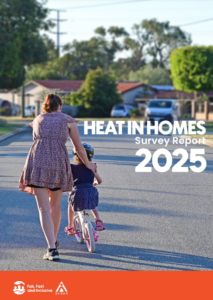 The Australian Council of Social Service (ACOSS) has just released a survey report that tracks the intersection between housing, energy costs, heat, and people experiencing financial and social disadvantage.
The survey of 1,011 people across Australia found half of respondents are going without food, medication and other essentials to try to pay their energy bills. Others are selling belongings or turning to buy now, pay later schemes.
ACOSS conducted the public, online Heat Survey over the summer months in partnership with the First Nations Clean Energy Network and National Aboriginal and Torres Strait Islander Housing Association, from December 2024 to January 2025.
Key findings:
- 87% of people said their home gets too hot
- 54% of people said they struggle to cool their homes, mainly due the poor energy performance of housing and cost of energy bills:
- 92% reported negative impacts as a result of their home being too hot
- 14% sought medical attention for heat stress (21% on income support, 29% of First Nations respondents)
- 64% reported struggling to pay energy bills
- 67% of respondents have tried to reduce energy usage, 26% can’t reduce usage any further
- 50% of people are skipping meals to pay energy bills, 34% are selling belongings for cash to pay energy bills
- 92% said they were worried about summers getting hotter, and younger respondents were more worried than older respondents
- Around 9 in 10 agreed the federal government should fund the installation of home energy upgrades, providing the most support for low-income housing, and require landlords to improve the energy performance of rental properties.
The full report is available here.
Family Dispute Resolution Practitioners Regulations 2025 – soon to commence
The Family Law (Family Dispute Resolution Practitioners) Regulations 2025 will commence on 1 April 2025.
The regulations include changes that will impact accredited FDR practitioners, higher education providers, and organisations that provide a complaints mechanism. Most of the changes come into force immediately. Others, like the need for a complaints body to seek approval from the department to continue to perform that service, allow a transitional period. A summary of the key changes is now available on the Attorney-General’s Department website.
The Attorney-General’s Department and the Family Law Pathways Network are holding a webinar on Wednesday 2 April 2025, 1:00pm (AEDT) to provide information on the changes and how they will impact FDR practitioners. For more information and to register for the webinar click here or download the flyer.
Family Law (Superannuation) (Methods and Factors for Valuing Particular Superannuation Interests) Approval 2025
Following the making of the Family Law (Superannuation) Regulations 2025, the supporting Family Law (Superannuation) (Methods and Factors for Valuing Particular Superannuation Interests) Approval has been remade. This instrument contains ‘scheme specific’ methods and factors approved by the Attorney-General, used to value certain superannuation interests for family law purposes.
The Attorney-General’s Department has advised that:
- The 2025 Approval Instrument includes updates which are minor in nature and aim to preserve the operation of the existing 2003 Approval Instrument. The values produced by the approved methods and factors themselves will not change. This includes where methods cross reference methods or factors in the 2001 Regulations.
- The 2025 Regulations and Approval Instrument also introduce the use of a transition factor. From 1 April 2025, a transition factor will be applied when calculating a non-member spouse’s entitlement. It is designed to ensure that, for existing superannuation agreements or orders, neither the member spouse nor the non-member spouse will be inadvertently disadvantaged due to a change in valuation methods or factors. Further information about the transition factor can be found in the Explanatory Statements to both the 2025 Regulations and the 2025 Approval Instrument.
- At this stage, a transition factor of 1 has been approved for all interests in the 2025 Approval Instrument, which has no substantive effect, but ensures the methods in Part 7 of the 2025 Regulations continue to function. The department will provide further advice to trustees as they work to review their approved methods and factors and consider a specific transition factor for interests in their schemes.
Funding Announcements
Justice responses to sexual violence- support for victims and survivors
The Albanese Government has tabled the Australian Law Reform Commission’s (ALRC) inquiry into justice responses to sexual violence report and announced a $21.4 million package to strengthen support for victims and survivors.
The report: Safe, Informed, Supported: Reforming Justice Responses to Sexual Violence, found there are systemic barriers to reporting sexual violence and engaging with the justice system. When victims and survivors do engage in the justice system it often causes further harm or re-traumatisation.
The Government will invest $21.4 million over three years from 2025-26 to address barriers to access to justice for victims and survivors of sexual violence. You can read more here.
Funding for homelessness peak bodies
The Government has announced $6.2 million over three years to support homelessness peak bodies.
These peak bodies play a crucial role in advocating for vulnerable communities, including low-income Australians facing housing pressures. They provide expert advice on policy and lead research efforts that drive real change, helping improve the lives of Australians at risk of or experiencing homelessness.
Youth Empowerment Grants
The Australian Government will provide $28.3 million to 35 organisations across Australia to support at-risk youth through the Youth Empowerment Program.
You can read more here.

Amity Health's new CEO
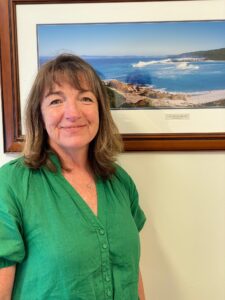 In December 2024, Amity Health welcomed new CEO Pam Bubrzycki after bidding farewell to outgoing CEO Robin Surridge, who was with the organsation since 2012.
“I am deeply honoured to join Amity Health. Having worked extensively in the NGO sector, I have long admired Amity’s reputation for service excellence and the dedication of its skilled workforce. The breadth of services Amity Health provides plays a vital role in supporting communities across regional Western Australia, where access to health and allied services can be challenging,” Pam said.
FRSA congratulates Pam on her new appointment and wishes Robin all the best for the future.
Welcome new FRSA Members!
The FRSA Board approved the following orgnisations as new members at the recent Board Meetings in December and February. Welcome to:
 Children have been, and always are at the centre of everything that Barnardos Australia do.
At Barnardos, they hope to end child abuse and neglect by supporting families to keep children and young people safe at home. Barnardos help children and young people who have experienced trauma, to recover and thrive and where there is a risk of abuse they find safe homes for them through foster care and open adoption.
Barnardos connect children, young people and families to the community to ensure they never feel isolated or alone. They give children, young people and families the tools to cope with life’s challenges and improve their wellbeing. Barnardos motivate children, young people and their families to embrace learning and education so they can reach their brightest future.
 Regional Development Australia Pilbara, comes under the Australian Government’s vision for regional Australia, which is one of strong connected regions that shape economic growth and wellbeing; are resilient and responsive to economic shocks; and are inclusive, vibrant and diverse. They are regions that our First Nations people have every opportunity to engage in and shape, and where people, business and investments thrive.
The Regional Development Australia (RDA) Program is critical in the delivery of this vision and the successful implementation of the Regional Investment Framework: the Australian Government’s approach to supporting strong and sustainable regions, which drives a coordinated approach to regional development, underpinned by local engagement.
Regional Development Australia Pilbara is the facilitating partner for the West Pilbara CfC (WPC4C) Initiative, and funds local community partners to deliver programs that are aimed at creating child-friendly communities, healthy young families, supporting family and parents, early learning and school transition and engagement.
- Chitra Lekha (Ayesha) Beejadhur
Ayesha has studied Bachelor and Diploma of Community Services. Through her studies she became a member of Community Work Australia.
Ayesha works for Yura Yungi Medical Services as a NDIS Evidence Access Request Coordinator. Her areas of interest are to gain more knowledge about Family Domestic Violence, so that she can better assist the indigenous families in remote communities. Due to an increase number of FDV incidents that occurred in the remote area.
International Women's Day 2025
International Women’s Day (IWD) was on 8 March. This year’s theme was ‘March Forward’.
See how FRSA members all around the country celebrated the day:
- Mercy Community honoured their staff, who are over 80% women.
- Ngala staff shared their thoughts on what IWD means to them, why they think gender equality is important and the inspiring women in their lives.
- Centacare Geraldton spotlighted their staff and team of 44 women.
- The Smith Family celebrated one of their alumna, Alexandra. She was a student in their Learning for Life program and went on to earn a PhD in plant ecology. Today, she’s a research fellow working on community-based reforestation projects and also volunteers at a Learning Club and sponsors a student, ensuring others have the same opportunities she did.
- Lutheran Care shared some inspirational stories from five incredible women they have working at the organisation.
- CatholicCare Sydney held a HOPE x International Women’s Day event on Friday, 7 March.
- Mallee Family Care created a video asking their staff to share their personal stories and reflections on IWD, along with a special woman who has impacted their lives.
- Amity Health interviewed their Allied Health Clinical Lead, Kelly Martin. They also created a video of their staff, including new CEO Pam Bubrzycki, sharing their thoughts on IWD.
- Uniting Communities asked what bold female leadership looks like and celebrated how bold women lead in many ways.
- Anglicare Victoria acknowledged and recognised that as an organisation with a predominately female workforce and one that provides many services to women within the community, the contribution and impact women have made – to the organisation and to the child, youth and the wider human service sector.
- The Salvation Army recognised the incredible women in their Emergency Services teams across New South Wales and Queensland.
- ac.care celebrated by leading an IWD march in Mount Gambier on Friday, 7 March.
- Lifeline Darling Downs & South West QLD shared a video of Kylie Hutchinson- Macgowan, their Strategic Lead – Programs & Community. She shared how Lifeline Darling Downs & South West QLD is working to eliminate violence, abuse, and discrimination against women and girls.
- The Australian Institute of Family Studies celebrated with an inspiring panel of AIFS staff reflecting on what IWD means to them.
- Anglicare SA shared how their staff Reem and Jayde make change with another IWD theme Accelerate Action.
- PRONIA hosted a special morning tea for staff to honour the incredible women in their organisation and community. They asked their staff what the theme March Forward for ALL women and girls means to them.
- Anglicare NSW South, NSW West & ACT celebrated the theme ‘March Forward’.
- yourtown shared a message from their CEO, Tracy Adams about recognising that the young women and girls they work with face unique challenges that require tailored understanding, approaches, and solutions.
- Anglicare Sydney shared the story of Wilma, an Anglicare resident and retired nurse who was a midwife in Papua New Guinea.

Calling for written submissions on 3 out-of-home care projects
The Australia Institute of Family Studies are seeking written submissions for the following projects on out-of-home care:
- Foster, kinship and permanent carers payments review
- Transition to Independent Living Allowance review
- National Out-of-Home Care Standards refresh – in partnership with SNAICC
If you are an organisation or professional working in:
- Out-of-home care
- Home based care (foster, kinship, or permanent/guardian carers)
- Young people transitioning from out-of-home care (care leavers)
…they want to hear from you! Click the links above to access the discussion paper and online submission form. Written submissions close Monday 14 April 2025, 11:59 PM AEST.
Carer Wellbeing Survey 2025 now open
 Carers Australia, in partnership with the University of Canberra and the Department of Social Services, is conducting a national survey to understand the experiences and wellbeing of carers and their support services. Your feedback will help improve support services and shape future policies.
The survey closes 18 April 2025 and can be completed online or via a paper copy by calling 1800 981 499.
For more information carers can contact Carer Gateway on 1800 422 737 Monday to Friday between 8am and 5pm or visit CarerGateway.gov.au.
Share your thoughts on the national set of principles for regulating assistance animals
Consultation is now open on the proposed Assistance Animal National Principles.
Assistance animals play a vital role in supporting people across various settings, but the lack of nationally consistent regulations has created uncertainty. In 2021, the Australian Government gathered feedback on these challenges, which has helped shape a draft set of national principles.
Now, the Government wants to hear from you again. Share your thoughts to help refine these principles and ensure they meet community needs.
For more information and to provide feedback, visit engage.dss.gov.au.
Neighbour Day
 Neighbour Day 2025 is coming up on 30 March. Neighbour Day is Relationship Australia’s annual call to action, inviting everyone to celebrate and strengthen community connections. This initiative fosters stronger, more resilient and more connected communities, which in turn support the wellbeing of children and families. Explore the Neighbours Every Day website to learn more or download resources.

CHC81015 Graduate Diploma of Relationship Counselling – June 2026, Online
CHC81115 Graduate Diploma of Family Dispute Resolution – July 2026, Online
Couples Counselling Course: A contemporary and client-focused approach

WA
Aboriginal Family Support Worker | Anglicare WA
QLD
Team Leader – Client Contact Team | CatholicCare Central Queensland
Domestic and Family Violence Practitioner – Rockhampton | CatholicCare Central Queensland
NT
Financial Capability Worker | Anglicare NT
VIC
Policy & Advocacy Assistant | Better Place Australia
Home Interaction Program for Parents and Youngsters (HIPPY) Leader | Meli
NSW
FAMILY WORKER (TEI) | CatholicCare Wilcannia-Forbes
Family worker (FamilyCare) | CatholicCare Wilcannia-Forbes
If you have any events you’d like listed on the FRSA Events and Training Calendar or job vacancies you’d like listed on the FRSA Jobs Board, email Communications Officer, Vanessa Lam at communications@frsa.org.au. Please note that posting onto the FRSA website is reserved for FRSA Members only.

Social and Emotional Wellbeing: a Review | Lowitja Institute
 The paper introduces the social and emotional wellbeing (SEWB) model and provides an overview of its key features, including Aboriginal and Torres Strait Islander selfhood, SEWB domains, determinants of health, and expressions and experiences of SEWB. It presents the challenges in effective implementation of the model across research, policy and practice. The paper provides some recommended best practice approaches.
The cost of domestic violence to women’s employment and education | University of Technology Sydney
 The data used in this report enables the authors, for the first time, to quantify the economic impact of domestic violence on Australian women. The report sets out in detail how large numbers of women have not attained a degree, have left the labour force, have reduced their working hours, or have taken time off work– all because of domestic violence.
When parents live apart | Australian Institute of Family Studies
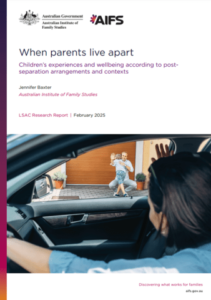 This research report explores the contexts, care arrangements and co-parenting experiences of children whose parents live apart, using data from the Longitudinal Study of Australian Children. It finds that socio-economic disadvantage is faced by children with parents living apart and recommends that policy and family services account for and address it.
Collateral Damage: What the untold stories from the COVID-19 pandemic reveal about human rights in Australia | Australian Human Rights Commission
 This report by the Australian Human Rights Commission tells the stories of Australians who were impacted by Australia’s COVID-19 pandemic response measures and asks how human rights can be better safeguarded during future emergencies. It followed consistent public requests to examine infringements on human rights that arose from the pandemic and ensuing emergency response.
This report summarises extensive engagement undertaken by the Commission between 2024 and 2025. Beginning with a desktop review of relevant literature (including academic articles, reports, Commission materials, relevant inquiry reports and newspaper articles), this project was a multi-phase study which engaged thousands of Australians from around the country.
Supporting disability inclusion with children and families | Child Family Community Australia
This short article describes family and professional experiences of disability inclusion in early years settings, as well as the key enablers of inclusive practice. It also aims to provide guidance as to how professionals and programs/services can promote and implement disability inclusion in child and family programs.
Digital social connection 101 | Swinburne University of Technology
 Social media, messaging apps and other digital platforms are reshaping how we build and maintain relationships. This primer aims to help professionals and practitioners working with communities navigate this evolving landscape of digital communication.
Improving coordination of data and actors for disaster-responsive housing and safer communities | Australian Housing and Urban Research Institute
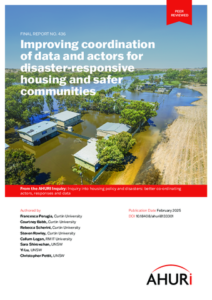 This research examines how governments and organisations involved in planning and delivering housing use data to assess risks associated with flooding, bushfires and cyclones. It explores ways to use and share data better in order to reduce the impact of disasters. Having access to quality data plays a crucial tool in managing and mitigating natural hazard risks. It enables authorities to make efficient and informed decisions regarding what land is used for housing and development. Good data is essential to inform strategies for reducing risks and enhancing preparedness for disasters. It can also improve coordination of disaster response and post-disaster recovery activities.
Process Evaluation: an introductory guide to collecting evidence about program quality and implementation | Australian Institute of Family Studies
The Evidence and Evaluation Support (EES) team at the Australian Institute of Family Studies (AIFS) has developed a new practice guide to support Families and Children Activity (FaC) providers in collecting, using, and communicating evidence. Developed through consultations with FaC provider representatives in late 2023, the guide addresses a key gap—evaluating program processes and implementation, which is often overlooked in favor of outcome measurement.
Australia’s youth justice and incarceration system | Senate Standing Committee on Legal and Constitutional Affairs
This interim report summarises evidence and identifies key issues from an inquiry into Australia’s youth justice and incarceration system. Evidence highlighted that Australia’s youth justice system is in crisis and vulnerable children and young people are being held in detention without adequate and appropriate supports. The report makes two recommendations.
Gambling in Australia’s cost-of-living crisis | Alliance for Gambling Reform & Wesley Mission
 Gambling is a critical but ignored cost-of-living pressure for families. This report examines what has happened to expenditure on gambling during Australia’s cost-of-living crisis. It finds that gambling losses are a bigger drain on household budgets than the cost of electricity and gas. It calls for all 31 recommendations of the parliamentary report into online gambling to be implemented.
Sexual offending in Australia 2022–23 | Australian Institute of Criminology
This statistical report describes the 9,101 alleged sexual offenders proceeded against by police in New South Wales, Victoria, Queensland, Western Australia, the Northern Territory and the Australian Capital Territory in 2022–23. The offenders were proceeded against for offences involving a total of 8,873 identified victims.
Employer gender pay gaps report | Workplace Gender Equality Agency
 A report on the 2023-24 gender pay gaps of 7,800 private sector employers and 1,700 corporate groups. It sets a benchmark from which employers can drive change and assists with making comparisons across employers and industries. The report finds for every $1 a man earns, women earn 78 cents on average but progress is being made.
Prevalence and characteristics of online child sexual victimization: Findings from the Australian Child Maltreatment Study | eSafety Commissioner, Australian Institute of Criminology & QUT
Researchers examined the Australian Child Maltreatment Study data to reveal how many children and young people experience online sexual victimisation. Of the 3,500 Australians aged 16 to 24 years old, 17.7% had experienced online sexual solicitation by an adult and 7.6% had experienced the sharing of a sexual image of themselves without consent.
Safe, informed, supported: reforming justice responses to sexual violence | Australian Law Reform Commission
 This report examines a range of issues with the aim of strengthening and harmonising sexual assault and consent laws in Australia and considers ways to promote just outcomes for people who have experienced sexual violence, including minimising re-traumatisation. The report’s 64 recommendations seek to ensure that more people who have experienced sexual violence can access the justice system, meaningfully engage with it and reach a just outcome.
Want to submit something to the FRSA eBulletin?
If you have an news item or event that you would like to be featured in a future eBulletin please submit your announcement via the form below or email communications@frsa.org.au with the subject “FRSA eBulletin submission”.
Please note FRSA members receive priority for items posted in the eBulletin. And to keep information current, relevant and useful, submissions will not be repeated from week to week.
Subscribe
Subscribe to receive future eBulletin editions directly to your inbox!
