


No. 15, 2025 | 10 October 2025
Go to:
From FRSA's Acting Executive Director
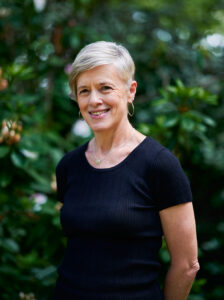
FRSA events are front of mind in the FRSA office this fortnight. Last week we were excited to open the call for abstracts for FRSA National Conference 2026. There is so much incredible work going on in our sector and we encourage all FRSA members and friends to consider sharing the work you do by submitting an abstract to present at the Conference. Early Bird registrations for the Conference are now open too.
FRSA’s Strategic Leadership Forum is just a few weeks away. This FRSA-Member only event is designed for CEOs and senior managers and provides an opportunity to connect with peers as well as meet with politicians and advisers. If you haven’t already, we encourage you to register now!
Speaking of events, FRSA Policy and Project Officer, Lisa Curtis, and I had the privilege of attending the SNAICC’25 National Conference this week in Meanjin/Brisbane. It was a vibrant and inspiring event celebrating the strength, resilience, and richness of Aboriginal and Torres Strait Islander cultures. Lisa and I returned to Canberra energised, full of ideas, and grateful for the opportunity to listen and learn.
Next week is Anti-Poverty Week (12-18 October), which aims to help Australians understand poverty and to take action to end it. More than 3.24 million people live below the poverty line in Australia, including close to 774,000 children. First Nations Australians are over-represented in lower household income distributions, which in turn can have a direct impact on quality of life. I know that our members work daily with families struggling to make ends meet – many without secure housing. If you haven’t already, please do take a look at the Anti-Poverty Week website to find out more about the action you can take to help end poverty.
National Carers Week is also coming up (12-18 October) and provides a time to recognise, celebrate and raise awareness about the 3 million Australians who provide unpaid care to family members and friends who have a disability, mental health condition, chronic condition, terminal illness, an alcohol or other drug issue or who are frail aged. Many people in our sector provide unpaid care to family and friends as well as working in their paid roles providing supportive and therapeutic interventions to children and adults. You are amazing!
We are looking forward to having our Executive Director Jackie back in the office next week and we also look forward to connecting with many of you in the weeks ahead – at the FRSA Strategic Leadership Forum, through Conference abstract submissions, and in our online and face-to-face travels.
Kind regards,
Dr Robyn Clough
FRSA Acting Executive Director



FRSA National Conference 2026 - Call for Abstracts now OPEN!
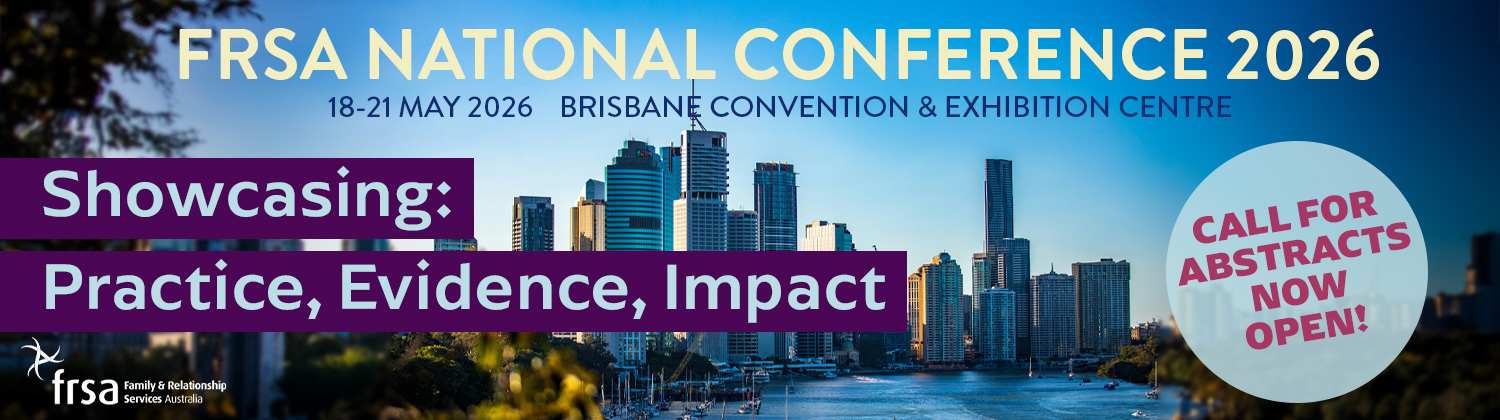
FRSA invites you to submit an abstract to present at the FRSA National Conference 2026, which will be held at the Brisbane Convention & Exhibition Centre, 18-21 May.
The theme for the FRSA National Conference 2026, Showcasing: Practice, Evidence, Impact, recognises the breadth of work undertaken across the sector and its measurable impact on families, children, and communities.
With the federal government contemplating changes to the commissioning of community services, they have expressed a commitment to evidence-based decision making. It is therefore timely to reflect on what is working in our sector, why it works, and to share the outcomes of these interventions.
The Conference will provide an opportunity for the sector to share:
- the ways you are working to meet the needs of children, adults, families and communities
- the evidence underpinning and emerging from practice
- the impact that different practices and approaches generate for the people accessing services – and for your local communities.
The FRSA National Conference 2026 provides a platform to showcase and learn from on the ground practice, policy, and research. The Conference is a highlight event for the family and relationship services network and will, as always, deliver a prime opportunity to share the impressive work of the sector.
We welcome abstracts that speak to the conference theme – Showcasing: Practice, Evidence, Impact.
In preparing and making your submission, you are asked to select and position your abstract within one of the five following streams:
- The early years
(e.g. preconception to birth, the birth of a child, impact on family relationships and transitions into parenting, early child development, and school readiness). - Children and young people at the centre
(e.g. child-focused and child-inclusive practice, supporting children and young people’s participation in policy development, service design and evaluation, school transitions, the safety and wellbeing of children and young people). - Relationship breakdown and re-partnering
(e.g. family legal services, family dispute resolution, parenting after separation and sustaining the best interests and wellbeing of children, sole-parenting, tensions in extended family relationships). - Family Domestic Violence
(e.g. identifying and managing family violence risk, child maltreatment, perpetrator interventions, adolescents using violence in the home, elder abuse). - Across the lifecourse
(e.g. diverse and changing family structures, developing and maintaining respectful relationships, social connection, intersectionality and inclusion).
We are a rich and diverse society, and FRSA encourages presentations that show our sector’s work with different cohorts and communities – First Nations peoples, culturally and linguistically diverse peoples, people with disability and LGBTIQA+ people – and other cohorts who may face particular challenges in accessing safe and appropriate services.
The Call for Abstracts closes 11:59pm AEDT Wednesday, 5 November 2025. For more information, or to submit your Abstract, please visit the FRSA National Conference website here.
Early bird registration rates now available!
Early Bird registrations are also now open! Don’t miss out on saving up to $200 per person with rates ending Monday, 2 March 2026.
Early Bird Registration Fee* Until 2 March 2026
| Member Rates | Non-Member Rates | |
| Complete Conference Experience – Including dinner | $1,125.00 | $1,425.00 |
| Conference Only – No dinner | $1,050.00 | $1,350.00 |
* To be entitled to the early bird registration fee you must have registered and paid by 9 March 2026.
Group Registrations
FRSA is pleased to offer FRSA Members the opportunity to register five (5) participants and receive the sixth registration complimentary. To be eligible for the complimentary registration, you must register your five (5) participants using the link below. Instructions on how to register your complimentary registration will be provided on the confirmation email. Interested in becoming an FRSA Member? Visit our Membership page.
Please note: When registering the 6 for 5, to receive the 6th registration free the same registration type must be purchased for the entire group.
FRSA's new Family Law Communities of Practice Project Officer, Rhys Jaconley
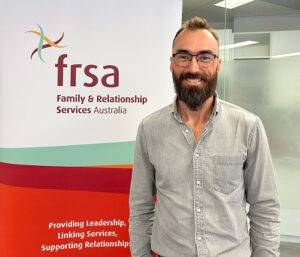 I am living on Bundjalung country (Nth NSW) raising my young family, learning how to steward land and on the lookout for new ways to navigate the meaning crisis. I’m stoked to join the team at FRSA and contribute to sector development for the community family law sector.
The Community of Practice (CoP) sessions are for Attorney-General’s Department (AGD) funded Family Relationship Services Program (FRSP) providers.
The objectives of this project are to:
- enable sharing of information, experience and practice knowledge amongst providers to develop their knowledge, skills and capabilities.
- encourage innovative thinking that arises through shared experience and learning.
- identify challenges common across providers that may require external input/support.
- provide a foundation for the formation of longer-term collaboration between providers to build capability in the sector.
What excites me about this project is the capacity to identify new or emerging issues from experienced practitioners and managers, learn from the group, and play a role in feeding relevant insights and tensions back to decision-makers. My background is in restorative justice, mediation, training and continuous improvement, and I see this project as an opportunity to continue my love of group facilitation and improving systems.
When not on this project I’ll most likely be parenting, improving soil health or pursuing opportunities to contribute to and develop my local community. I’m also a reckless blue-belt in jiu jitsu and hope to compete for my first time in November. If you see me sporting a neck-brace online, you’ll know why!
To find out more about the family law Communities of Practice, you can contact me at flprojects@frsa.org.au
FRSA Webinar: Improving Access to Justice for First Nations Families in the Family Courts
If you missed the second webinar in our First Nations focus on Family and Relationship services series, Improving Access to Justice for First Nations Families in the Family Courts presented by Tracy Flintoff & Daryl Hayes from Federal Circuit and Family Court of Australia, you can watch the recording now:
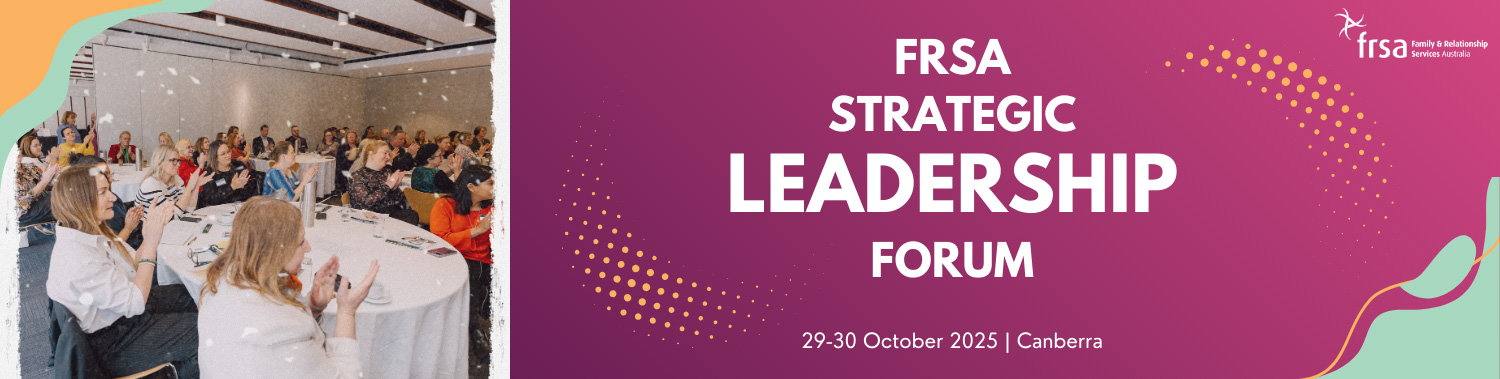
Three weeks until the FRSA Strategic Leadership Forum 2025! Secure your spot today.
We are looking forward to welcoming the CEOs and Senior Leaders in the FRSA Membership to Canberra to participate in the Strategic Leadership Forum being held 29 October and 30 October 2025. We can promise a strong line-up of presentations on Day 1, and we are working hard preparing the schedule of meetings for Day 2.
Note: We will endeavour to arrange meetings with MPs and Senators from your electorate and/or State/Territory for your Parliamentary visits on Day 2!
Access to the event details including the event program, speaker information and accommodation will be available on the FRSA Members Only Event page.
Please contact events@frsa.org.au for the password to the FRSA Member’s Only Event page.
Register for the third FRSA First Nations webinar!
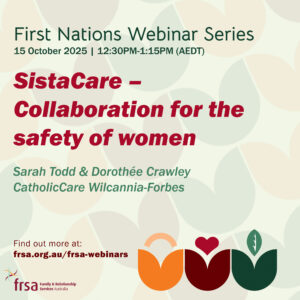 Register for the third webinar in our First Nations focus on Family and Relationship services series, SistaCare – Collaboration for the safety of women presented by Sarah Todd & Dorothée Crawley from CatholicCare Wilcannia-Forbes next week on Wednesday, 15 October 2025.
With increasing national concern over violence against women and children, the SistaCare program offers a powerful, community-driven response. This webinar will explore how SistaCare creates a safe, supportive space for women to connect, share, and heal. Delivered in partnership across CatholicCare Wilcannia-Forbes services in Western and Orana Far West NSW, SistaCare combines peer support, education, and culturally respectful yarning sessions to empower women impacted by domestic and family violence. Learn how this innovative model fosters connection, builds resilience, and supports women to create change in their lives and communities.
View the full webinar schedule below:
| Date and Time | Webinar | Presenter |
|---|---|---|
| Wednesday, 5 November 2025
12:30PM-1:15PM AEDT |
Better Together | Anne-Marie Mioche, CatholicCare Wilcannia-Forbes and Alister Ferguson, Maranguka |
| Tuesday, 25 November 2025
12:30PM-1:15PM AEDT |
Growing Up Strong from early childhood: Stories and other findings from Footprints in Time: The Longitudinal Study of Indigenous Children | Stuart Ekberg and Tirritpa Ritchie, Flinders University and Kristin Laurens, Queensland University of Technology |
FRSA attends the belated ACT NAIDOC event
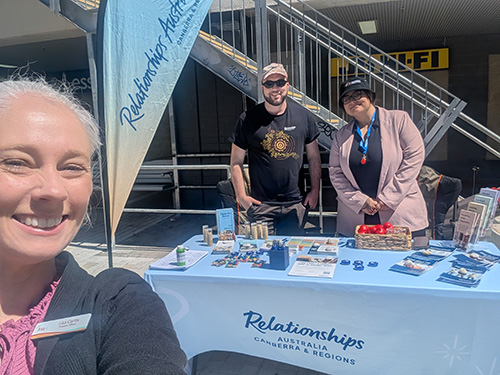
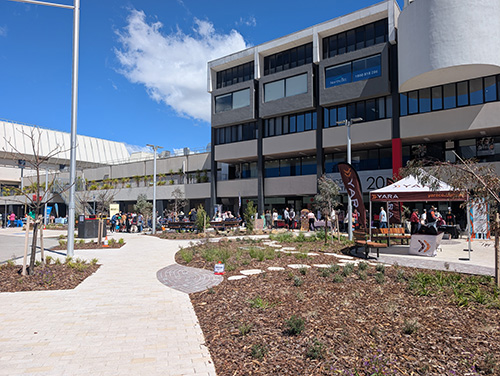
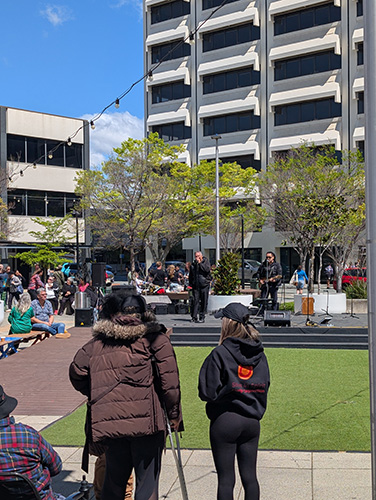
FRSA attended the ACT NAIDOC Community Sector Event on Wednesday, 1 October at the Woden Town Square.
Joining in on the celebrations of Aboriginal and Torres Strait Islander culture, resilience and achievements, this was a valuable opportunity to deepen relationships with some of our members and reflect on the importance of continuing to walk alongside First Nations peoples in our work.

Celebrating Culture and Connection at the SNAICC’ 25 National Conference
Held in Meanjin/Brisbane on the lands of the Turrbal and Yuggera peoples, this year’s SNAICC conference theme, Our Culture, Keep It Strong, We Belong, reflected a shared commitment to nurturing children within their culture, ensuring they feel safe, connected, and proud of their identity.
The conference once again highlighted the importance of community control and self-determination as the foundation for strong outcomes for Aboriginal and Torres Strait Islander children and families. The conference was also a powerful reminder of the importance of relationships between people, place, and culture, and how these connections shape inclusive and responsive services.
It was wonderful to see so many FRSA members and friends across the three days, contributing to discussions, sharing experiences, and reconnecting with peers across the sector. The event featured outstanding presentations, engaging exhibitions, and moving expressions of culture through art, song, and dance, each a reminder of the deep connections between people, place, and culture, providing moments of reflection, joy and pride.
SNAICC is the national voice for Aboriginal and Torres Strait Isalnder children and has the following focus areas: Early child development, Child & Family Wellbeing, and Closing the Gap.
New National Children's Commissioner
 FRSA warmly welcomes the appointment of Deb Tsorbaris as the new National Children’s Commissioner.
Deb will succeed Anne Hollonds, who concludes her five-year term on 1 November. We extend our heartfelt thanks to Anne for her dedication and impactful work over the past five years.
Deb is currently the Chief Executive Officer of the Centre for Excellence in Child and Family Welfare, the peak body for over 200 child and family services in Victoria and Tasmania.
We look forward to working closely with Deb in her new role as she continues to champion the wellbeing of children and families across Australia. Deb commences on 17 November.
Footprints in time: the Longitudinal Study of Indigenous Children early childhood report
 The Queensland University of Technology (QUT) has released a new study of Aboriginal and Torres Strait Islander children, which has revealed that early cultural connections to Country, language and Mob are just as critical as preschool and playgroups in shaping wellbeing and success throughout school and into adolescence.
The report, The Footprints in Time: Longitudinal Study of Indigenous Children (LSIC) Early Childhood Report, led by QUT researchers and commissioned by the Australian Government Department of Social Services, draws on 14 years of data from more than 1700 children and families.
The report uses qualitative and quantitative data to explore early childhood experiences and the ways these experiences relate to later outcomes (during middle childhood and adolescence) for Aboriginal and Torres Strait Islander children and their families.
Key findings
- Where children grow up (geographic location) shapes their developmental experiences during early childhood and the years beyond.
- Early connections to culture, Country, language, feeling proud and strong in identity, and belonging to Mob are important for childrens’ wellbeing as they get older.
- When parents feel good and have support, their children grow up stronger.
- Going to pre-school or playgroup, and time spent interacting with family helps children learn important early skills like talking (language), writing and drawing, and paying attention. These early skills help children do better in school as they grow.
- Good relationships with teachers and feeling confident about classroom learning in the early school years helps children stay connected and interested in school, right through primary school and into high school.
- Having safe, early access to technology and the internet at home helps children feel confident and skilled with technology as they get older.
Some of the report’s research team will be presenting a webinar on the report, Growing Up Strong from early childhood: Stories and other findings from Footprints in Time: The Longitudinal Study of Indigenous Children on Tuesday, 25 November. as part of FRSA’s First Nations focus on Family and Relationship services series,
Gambling Participation in Australia 2025
Researchers from the Australian National University (ANU) have released findings from the latest national gambling survey.
The number of Australians gambling at risky levels is at its highest level in six years with 19.4 per cent (almost one in 20) of Australian adults reporting gambling at risky levels in the past year. While overall gambling participation has steadily decreased over the past 15 years, the recent increase in people gambling at harmful levels is concerning.
Online gambling increased substantially, with more than half (56.1%) of individuals who gambled mainly participating online in the past 12 months. Sports and race betting were the most heavily online-based activities, while online engagement in electronic gaming machines and casino table games also grew despite legal restrictions. Online gambling was associated with male gender, younger age, higher income, frequent play, psychological distress, and loneliness. Approximately 5.9% of adults reported being harmed by another person’s gambling in the past 12 months.
Findings highlight intensifying harm despite declining participation, highlighting a critical need for regulatory and public health responses targeting online gambling.
The report – Gambling Participation in Australia 2025 – is co-authored by Associate Professor Aino Suomi, Dr Markus Hahn and Professor Nicholas Biddle.
How life events affect older Australian women report
 A new report commissioned by the Super Members Council has found that single women and renters are amongst the older women most at risk of retirement poverty.
The report by Impact Economics and Policy found that women today retire with 25% less super than men. The median super balance of women aged 60–64 is $51,000 lower than for men, and women are around 10% more likely to have no super at all.
Historically, the gender super gap was seen to have been driven largely by inequalities in women’s workforce participation and pay, particularly when caring for children earlier in life.
The report shows that many common later-in-life events such as separation, unpaid caregiving for older relatives, and family violence are significantly more likely to force women into early retirement or part-time work. Those life events dramatically erode women’s ability to save for retirement, and could mean up to $95,000 less in super.
Rising numbers of single older women are now also renting, with nearly 60% of older female renters already living below the poverty line.
The report shows policies allowing women to withdraw super early for house deposits would make women significantly poorer in retirement, with less income to live on. Previous research shows it would also worsen housing affordability.
However, despite some progress, men’s super will continue to outpace women’s as life events and a lack of targeted policy interventions continue to prevent greater female workforce participation. Read the full report
Funding to foster community connections
On 25 September, Minister for Social Services Tanya Plibersek announced that the Government was investing an additional $12 million to strengthen and empower Australian communities.
The Strong and Resilient Communities (SARC) Inclusive Communities Activity program will fund 40 projects, benefiting up to 6,000 people from communities around the country. Each project is geared towards supporting a particular group of people facing barriers to community participation, including at-risk young people and women, people with disability, and unemployed people.
Newly funded initiatives include women’s leadership programs, creative workshops, peer mentoring, and resume writing and job interview classes.
Regulatory reform – reducing red tape and improving access to services
On 8 October the Government introduced new legislation to Parliament that aims to improve and reduce regulation, while making it easier for people to access government services.
The Regulatory Reform Omnibus Bill 2025 will support a ‘tell us once’ approach within Services Australia, reducing the number of times Australians must provide the same information when accessing everyday services like Medicare rebates, Centrelink, and Child Support.
The Bill also aims to facilitate better information sharing between government agencies and regulators, delivering better outcomes for people and businesses engaging with government, including:
- Increasing information sharing between healthcare providers to ensure patients receive the highest quality care,
- Improving the regulation of Medicare to clamp down on fraudulent claims,
- Providing the public with better information about the rollout of the NBN, and
- Granting fuel companies greater flexibility to respond to fuel supply disruptions.
The Bill includes 60 measures and will amend 28 Acts, repeal two redundant Acts, and improve the operations of 13 government agencies. The Bill is an outcome of the Government’s Economic Reform Roundtable, which was held earlier this year.

Webinar: A review of models of child participation in family mediation
Relationships Australia Victoria is hosting a free webinar on Tuesday, 21 October at 12pm (AEDT), featuring Dr Genevieve Heard (Manager Research) who will discuss the outcomes of a literature review that identified and mapped international models of children’s participation in family mediation.
This webinar will provide a broad view of child-inclusive mediation models, to help practitioners, clinical teams and service providers consider how best to involve children, and ultimately support enhanced use of child-inclusive practices.
Enrolments Open for AISR’S 2026 Nationally Recognised Qualifications
 Enrolments are now open for the Australian Institute of Social Relations’ (AISR) nationally recognised qualifications commencing in February 2026!
As the registered training organisation of Relationships Australia South Australia, AISR delivers practical, industry-informed education that prepares learners for meaningful careers in the community services sector.
2026 qualifications offer pathways into high-demand areas, including:
- Graduate Diploma of Family Dispute Resolution (CHC81115) – blended delivery in Adelaide, also available in Western Australia and Tasmania through our partnerships with Relationships Australia WA and Relationships Australia Tasmania
- Diploma of Financial Counselling (CHC51122) – delivered fully online and open to students across Australia
- Certificate IV in Mental Health Peer Work (CHC43515) – blended delivery in Adelaide.
- Diploma of Community Services (CHC52021) – blended delivery in Adelaide, Port Augusta and Berri (SA)
- Certificate IV in Community Services (CHC42021) – blended delivery in Adelaide, Port Augusta and Berri (SA)
AISR provides a supportive learning environment with flexible study options to suit your lifestyle and commitments. Their expert educators bring real-world experience into the classroom, empowering students to create lasting social impact.
Join a community of passionate learners and take the next step in your career with South Australia’s leading provider of community services training.
Learn more and enrol today on their website socialrelations.edu.au or contact at (08) 8245 8100 or admin@aisr.edu.au
RTO 102358
Capital Region Community Services celebrates 50 years
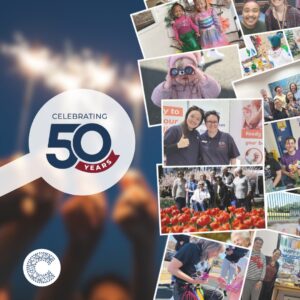 Friday, 3 October marked Capital Region Community Services 50th birthday.
Capital Region Community Services, formerly Belconnen Community Service (BCS), was formed in 1970 by local church groups and doctors to support residents. Early programs included the “Welcome Wagon” visiting service, bereavement counselling, and family assistance. In 1975, BCS was officially incorporated and in 1987, the Belconnen Community Centre opened, becoming a hub for local services. In 2020 to expand beyond the ACT, BCS became a Company Limited by Guarantee and changed its name to Capital Region Community Services (CRCS), reaching into regional NSW.
Today CRCS delivers programs that create inclusive, connected communities. From early childhood education and playgroups, to youth initiatives like Friday Night Dinners and Bungee, to Living Well social groups, therapeutic services, and family support and education, CRCS supports people at every stage of life.
Ngala launching a podcast
Ngala is launching a new podcast series, Parenting With Ngala, next week on Wednesday, 15 October.
The 8-part series is designed to support parents through the early days of parenting – with relaxed, honest conversations and expert insights from the Ngala team. New episodes will be released each week on a Wednesday.
Hosted by two of their experienced Parenting Line Practitioners each episode will dive into the topics that matter most in those first few months.
The podcast will be accessible on all major podcast platforms.

Drummond Street Services farewells Jemma Mead
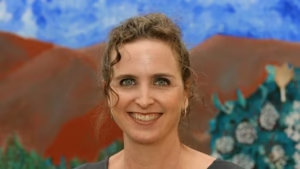 Drummond Street Services is saying farewell to their Director of Services, Jemma Mead after seven years with the organisation.
Jemma concludes her role on 17 October and will be taking up the role of Chief Executive Office at Good Samaritan Inn.
Drummond Street Services has begun recruitment and Karen Field, CEO, will be overseeing the services and programs until a new Director is appointed.
We wish Jemma all the best for the future in her new role.
Centacare Catholic Country SA announces new CEO
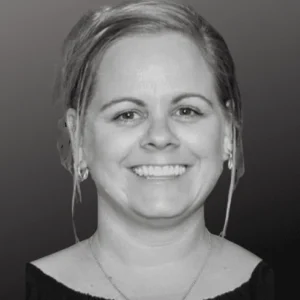 Centacare Catholic Country SA has announced the appointment of Michele Wachla as the next Chief Executive Officer of the organisation, commencing January 2026.
Michele is a highly respected leader with extensive experience in the social services sector and a strong commitment to social justice. Her background in both Social Work and Business, combined with her passion for regional, rural, and remote communities, makes her ideally placed to lead Centacare into its next chapter.
Michele will succeed outgoing CEO Dr Jen Cleary who is retiring in 2026.
FRSA congratulates Michele on the new role and wish Jen all the best for the future.

Family Law 4 Kids toolkit launch
 ‘Family Law 4 Kids’, an online toolkit to support children and young people to understand and exercise their right to participate in family law processes when their parents separate, will be launched on Thursday 23 October 2025 at 5.30pm (AEDT) / 4.30pm (AEST) by Australia’s National Children’s Commissioner, Anne Hollonds.
Family Law 4 Kids has been co-designed with 41 children and young people, aged 10 to 19 years from across Queensland, NSW and Victoria, whose parents separated and accessed the family law system. Hear from children and young people involved in the project and find out how you can access the toolkit. Click here to register.
National Carers Week 2025
 This year, National Carers Week will be celebrated on the 12th-18th of October.
Each year the week recognises and celebrates the incredible contribution of 3 million family and friend carers across Australia. Carers provide essential care but often do so without support, recognition or respite.
National Carers Week is also a powerful opportunity to recognise carers in your workforce. 1 in 9 employees are a family or friend carer; your support for National Carers Week sends a clear message that you value and support your staff who are in caring roles.
There are many ways to get involved – from hosting a Carers Week event to sharing stories on your platforms, promoting carer-friendly workplace initiatives or simply sharing some Carers week artwork on your socials. Find out how to get involved or download resources from the National Carers Week website.

CHC81015 Graduate Diploma of Relationship Counselling – June 2026, Online
CHC81115 Graduate Diploma of Family Dispute Resolution – July 2026, Online
Couples Counselling Course: A contemporary and client-focused approach

SA
Family Dispute Resolution Practitioner | Uniting Communities
NSW
Manager headspace Batemans Bay | Relationships Australia Canberra & Region
Couple and Family Counsellor | Relationships Australia NSW
NT
Financial Counsellor | Anglicare NT
VIC
Regional Family Dispute Resolution Practitioner (RFDRP) | Mallee Family Care
If you have any events you’d like listed on the FRSA Events and Training Calendar or job vacancies you’d like listed on the FRSA Jobs Board, email Communications Officer, Vanessa Lam at communications@frsa.org.au. Please note that posting onto the FRSA website is reserved for FRSA Members only.

Alternative skills mix use in specialised homeless residential aged care services | Department of Health, Disability and Ageing
 This evaluation examined the service model and staffing mix of specialised homeless residential aged care homes across Australia. Drawing on literature, datasets, and consultations with providers, staff, residents and stakeholders, the report identified that these services adopt a trauma-informed, person-centred approach, with staff working in broader and more flexible roles than in mainstream aged care. Findings show specialised services generally exceed care minute targets and have higher daily expenditure per resident, reflecting the complexity of residents’ needs, including mental health, substance use and behavioural challenges. The report makes eight recommendations to strengthen models of care, skills mix, and monitoring to ensure the ongoing delivery of high-quality care.
Housing insecurity index 2025 | Council to Homeless Persons
 The second edition of the Victorian Housing Insecurity Index tracks worsening trends in housing affordability, social housing access, and homelessness across the state. New metrics highlight the strong link between family violence and homelessness, alongside data showing rising rents, a growing waitlist, and below-average per person spending on housing and homelessness services. The report calls for urgent action, including greater investment in prevention and early intervention, a social housing building program, and increased support for crisis services.
Managing the ethical risks of artificial intelligence | Queensland Audit Office
 AI offers operational efficiencies and improved decision-making for government, but ethical risks must be carefully managed to align with public sector values. The audit found that while the Queensland Department of Customer Services has effective AI ethics policies, guidance and understanding of AI use across the public sector could be improved. The report recommends department-specific actions and a whole-of-government approach to implement structured ethical risk assessments for all AI systems.
Policy brief: gender gaps in paid and unpaid work persist | Organisation for Economic Co-operation and Development (OECD)
 This policy brief highlights persistent gender gaps in paid and unpaid work, showing that women work fewer paid hours, are more likely to work part-time, and spend more time on unpaid work compared to men. These disparities stem from gender norms and stereotypes interacting with social, economic, and institutional factors that disadvantage women in the labour market. Addressing these gaps requires governments to strengthen work-life balance policies, equal pay, and pay transparency, alongside broader gender-equality measures.
Policy, practice, and futures: a report on the priorities arising from the second Digital Childhoods Summit | ARC Centre of Excellence for the Digital Child
 The Digital Childhoods Summit, held in Canberra in June 2025, brought together stakeholders to identify practice and policy priorities for improving digital childhoods in Australia. Discussions focused on four themes—inclusion and communities, digital literacy and families, privacy and security, and leadership and action. Key priorities included involving children’s voices, strengthening digital inclusion, adopting rights-based and co-designed policy approaches, improving communication and evidence-sharing, and setting stronger standards for privacy, safety, and child-focused online spaces.
APS conflict of interest management framework: better practice model | Australian Public Service Commission
 Understanding how to identify and manage conflicts of interest is essential to maintaining public trust and upholding the integrity of the Australian Public Service (APS). This framework provides clear guidance for agencies to develop or improve their conflict of interest policies. It outlines three levels of practice, so agencies can tailor their settings based on risks and responsibilities.
Climate anxiety toolkit | Climate Council

Research shows more than three quarters of Australians are worried about climate change. Climate anxiety is a term for feelings of worry, stress or sadness about climate change and its impacts. Experts stress that climate anxiety – sometimes called eco-anxiety or climate distress – is not a mental health condition, but a rational response to the reality we’re all facing.
This guide provides five tools for managing climate anxiety. They are designed to help channel climate anxiety into action, find emotional balance and maintain a sense of purpose. There is an additional section on helping kids with climate anxiety.
How financial incentives shape fertility in Australia | e61 Institute
Australia, like many developed countries, is experiencing a significant decline in its total fertility rate. The First Child Tax Refund and the Baby Bonus policies aimed to reduce the financial cost of childbearing, with the Baby Bonus designed to encourage higher fertility. This note examines the effects of these financial incentives on fertility outcomes.
The child sexual abuse language guide | National Centre for Action on Child Sexual Abuse
 This guide reflects the perspectives of more than 100 victims and survivors of child sexual abuse, who identified terms that reduce harm and support recovery and those that should be avoided. It is designed for anyone working in child protection, policy, practice, education, healthcare, research, justice or communications.
Our Gen AI transition: final release | Jobs and Skills Australia
 This final analysis paper examines how generative AI affects workers differently across occupations, industries, and cohorts, highlighting uneven exposure and adoption. It finds that Gen AI’s impact on labour market outcomes depends on how the technology is used, how productivity gains are shared, and whether existing inequities are addressed or deepened. The report stresses the importance of strengthening digital and AI skills through system-wide training and short-form learning to ensure all Australians can adapt to the rapid pace of technological change.
The great NDIS divide: analysing geographic disparities in NDIS participation rates | Menzies Research Centre
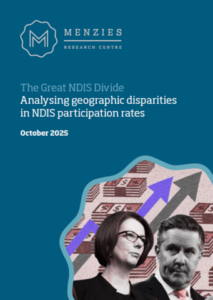 This report analyses NDIS participation across Greater Sydney, using ABS population data to estimate the proportion of people with different disabilities accessing the scheme.
Findings show participation rates vary dramatically across Greater Sydney, with Western, North West, and South West areas having much higher rates than Northern and Eastern areas, differences not explained by income or age. The report stresses the need for data-driven policy responses to ensure the NDIS remains viable, equitable, and capable of serving its most vulnerable participants.
Facebook and the news media: how Australians engage with news and misinformation online | La Trobe University
 This report explores the evolving relationship between Australian news organisations, social media (Facebook) and online audiences. The study analyses more than three million posts from 25 Australian news publishers to gain insights into how news content is distributed, how audiences engage with news topics, and the nature of misinformation and disinformation spread.
The declining wellbeing of sole parents in Australia in the 21st century | Life Course Centre
 Sole parent families, primarily headed by women, experience considerable social and economic disadvantage. Despite this, there is limited research that shows the specifics of this disadvantage. This research fills this gap through a detailed examination of several indicators measuring social and economic wellbeing for sole parents for the last 25 to 30 years in Australia.
Welcoming Our Little Ones: A guide for families to raise strong and deadly Aboriginal and Torres Strait Islander children | Emerging Minds and Nunkuwarrin Yunti
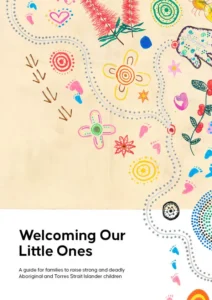 A two-in-one guide created for parents and carers of Aboriginal and Torres Strait Islander children. Based on the wisdom of Aboriginal and Torres Strait Islander families, Welcoming Our Little Ones shares stories of building culture, starting in the womb and continuing to age five years. You’ll read about parenting considerations from birthing on Country to building kinship and Community. The guide explores ways of connecting children to culture, special places, animals, plants and Country, such as through storytelling and song.
Want to submit something to the FRSA eBulletin?
If you have an news item or event that you would like to be featured in a future eBulletin please submit your announcement via the form below or email communications@frsa.org.au with the subject “FRSA eBulletin submission”.
Please note FRSA members receive priority for items posted in the eBulletin. And to keep information current, relevant and useful, submissions will not be repeated from week to week.
Subscribe
Subscribe to receive future eBulletin editions directly to your inbox!
