


No. 3, 2026 | 6 March 2026
Go to:
From FRSA's Executive Director
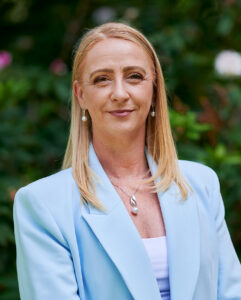
There has been a lot of activity going on in the FRSA membership with the current round of Communities of Practice – both AGD and DSS funded programs – drawing to a close this week. It is exciting to hear from project officers, Lisa Curtis and Rhys Jaconley, about the topics discussed and the energy and interest people bring to the table. Special thanks to those out there in our membership who have been involved. It is a window into the work of the sector in real time, and we are privileged to be part of these enriching conversations.
We are also very excited to let you know that FRSA’s Workforce Development project is underway! We have gone out with a Request for Proposal and can’t wait to be back in touch with the sector to get you involved! Watch this space!

Last week I attended the Federal Circuit and Family Court of Australia’s (FCFCOA) 2nd Family Violence Symposium. It was a veritable ‘who’s who’ in the room when it comes to leaders in addressing Family Violence in Australia. We were fortunate to have the Hon. Tanya Plibersek, Minister for Social Services, in attendance who spoke with passion and commitment to the Government’s focus on addressing the scourge of Family Violence in Australia. Commissioner for Family, Domestic and Sexual Violence, Micaela Cronin and the Chief Justice of the FCFCOA, the Hon William Alstergren also played key roles in the day’s activities and were in the room for the entire conversation. Given the prevalence of family, domestic and sexual violence in the family law system, these are extremely important conversations to be involved in.
For those of you looking to attend the FRSA Conference in Brisbane, 18-21 May, you have about 72 hours to secure Early Bird tickets. Our early bird registration rates are open until this MONDAY, 9 March. So, be quick!
I am very proud to work in the family and relationship services sector and walk that journey with so many amazing people and admire their commitment and dedication to the children, adults and communities they work with. On the cusp of International Women’s Day it would be remiss of me not to acknowledge our predominantly female workforce and all the amazing women in our sector. Thank you to all the women who have worked hard to shatter glass ceilings leading with skill, intellect and compassion and paving the way for generations to come. Happy International Women’s Day!
Kind regards,
Jackie Brady
FRSA Executive Director



Last chance for Early bird rates!
Last chance to snag Early Bird with rates ending on Monday, 9 March 2026! open! Don’t miss out on saving up to $200 per person!
Early Bird Registration Fee* Until 9 March 2026
| Member Rates | Non-Member Rates | |
| Complete Conference Experience – Including dinner | $1,125.00 | $1,425.00 |
| Conference Only – No dinner | $1,050.00 | $1,350.00 |
* To be entitled to the early bird registration fee you must have registered and paid by 9 March 2026.
Group Registrations
FRSA is pleased to offer FRSA Members the opportunity to register five (5) participants and receive the sixth registration complimentary. To be eligible for the complimentary registration, you must register your five (5) participants using the link below. Instructions on how to register your complimentary registration will be provided on the confirmation email. Interested in becoming an FRSA Member? Visit our Membership page.
Please note: When registering the 6 for 5, to receive the 6th registration free the same registration type must be purchased for the entire group.
Pre-Conference Workshops
Pre-Conference Workshops will be held on Monday, 18 May 2026. This year’s National Conference will comprise four engaging workshops. We’re highlighting two of the workshops below. Stay tuned for more details on the remaining two workshops! Please note all Pre-Conference Workshops are for FRSA Members only.
Embedding practice improvement and monitoring, evaluation & learning (MEL) for evidence-informed child and family services
Presenters: Australian Institute of Family Studies
This full-day workshop is designed for practitioners in the child and family service sector seeking to strengthen their applied skills in structured approaches to practice improvement. Participants will be introduced to a newly developed framework integrated with a Monitoring, Evaluation and Learning (MEL) approach. Together, these tools support reflective practice, enhance service delivery, and promote alignment with evidence-informed program design.
Child and family services operate in complex environments, where practitioners must balance immediate client needs with long-term goals and sector reforms. Embedding a practice improvement approach—grounded in continuous learning and adaptation—enables teams to reflect on what works, for whom, and under what conditions. When combined with MEL principles, this approach supports monitoring fidelity, tracking outcomes, and generating insights to inform both frontline practice and strategic decisions.
The workshop will explore how this integrated approach can be applied in real-world settings, using case examples and interactive sessions. Participants will build confidence in identifying priority areas for improvement, developing indicators, collecting data, and using findings to guide iterative changes to practice.
By the end of the day, attendees will be equipped to:
- Reflect on and strengthen their own practice;
- Monitor service delivery and client outcomes;
- Align with evidence-informed approaches;
- Gather evidence to help demonstrate impact to funders, partners, and communities.
This workshop is ideal for practitioners, team leaders, and service managers across the Families and Children Activity who are committed to improving outcomes for children and families. It offers a hands-on opportunity to build capability and connect with peers navigating similar challenges.
Intersectionality in Practice
Presenters: Lola-Mae Pink & Daisy Berry, Drummond Street Services
Build skills to work inclusively, safely and effectively with diverse and marginalised communities
This interactive workshop is designed to support practitioners, senior leaders and policy makers to understand intersectionality and its application to practice across family and relationship services.
Throughout this workshop, we will look at why intersectionality matters and we will explore how we can apply an intersectional lens to better support the needs of marginalised communities. We will introduce you to Drummond Street’s Seven Elements of Intersectional Practice Framework and we will use case studies and a range of activities to get you out of your comfort zones, out of your seats and thinking about how you can apply an intersectional lens to your work.
Learning outcomes
By the end of this training you will have:
- Gained a better understanding what intersectionality is and why intersectional practice is important
- Identified how marginalisation can occur on multiple levels at once, for those occupying multiple marginalised identities
- Reflected on your own power and privilege, including where it sits within different contexts
- Considered ways to share power
- Explored best practices for engaging intersectionally, focusing on developing inclusive practice, creating safety and questioning assumptions
- Explored reflexive practice and how this can support working with an intersectional lens.
- Utilised case studies to put intersectional theory into practice.
- Considered the importance of protective factors and resilience, both individually and collectively for those from marginalised backgrounds.
- Considered the role in structures and systems in discriminating against marginalised groups and consider your role in advocacy. Intersectional practice is inherently political!
Gold Sponsor: Centacare Brisbane
 Holistic family support across the lifespan: Lessons from collaborative practice
In today’s environment, families are navigating complex pressures, from early parenting challenges to high-conflict separations. Centacare’s Family and Relationship Service addresses these needs across the lifespan, providing integrated, evidence-based support for individuals, parents, couples and children.
Support begins early, with parenting programs and family interventions designed to strengthen attachment, communication and emotional resilience. These early interventions help families build practical skills before challenges escalate, setting the foundation for healthier relationships and child development.
As relationships evolve, Centacare offers counselling and education for couples and parents, helping families navigate conflict, co-parenting and family transitions. Children and young people receive targeted support through the Supporting Children After Separation Program (SCaSP) and child inclusive models, ensuring their voices inform parental reflection and decision-making.
The service’s collaborative approach is particularly critical during separation. A recent case study illustrates this: a high-conflict family with a history of domestic and mental health challenges accessed a coordinated suite of supports, including Family Dispute Resolution (FDR), Parenting Orders Program (POP), Specialist Family Violence Services (SFVS) and SCaSP. Sequential and parallel engagement ensured the mother, father and child each received tailored interventions, while internal case coordination maintained safety and consistency. This integrated model not only supported the family effectively but also demonstrated a more efficient and impactful use of service resources than traditional external referrals.
Centacare’s experience highlights that family separation can often intersect with domestic violence, mental health and child safety concerns. A coordinated, collaborative practice model ensures that high-risk families can access holistic, wrap-around support, maintaining safety while promoting long-term relational and emotional wellbeing.
By embedding collaborative practice across every stage of the lifespan – from early parenting supports through relationship and family counselling, to separation support – Centacare exemplifies how the sector can respond to complex family needs with flexibility, evidence and care.
Welcome Sponsors
We’re excited to welcome the following sponsors who will join us in Brisbane for the FRSA National Conference.
- Relationships Australia as Ochre Sponsor
- Suicide Programs as an Exhibitor
- YFS as an Exhibitor
- Family Life an Exhibitor
We still have a range of other sponsorship options available, designed to maximise visibility to showcase the work and activity of your organisation/business. Or if you are interested in a more bespoke package for your organisation don’t hesitate to get in touch with the FRSA team on (02) 6162 1811 or events@frsa.org.au.
Bursary Program
We have four bursaries available for Aboriginal and Torres Strait Islander people who are registered for or would like to attend the 2026 Family & Relationship Services Australia National Conference.
Bursaries are provided to assist with covering the cost of conference registration, and travel & accommodation. To be eligible you must be an employee of a fully financial FRSA member organisation. Each package includes:
- 1 x complimentary full registration to the Conference (including dinner)
- $500 towards travel and accommodation
Applications close on FRIDAY, 27 March 2026. Please note, this Bursary Program is open to people who are yet to register and those who are already registered.

Gender Pay Gap – New data released
 The Workplace Gender Equality Agency (WGEA) has just published gender pay gap results for 10,500 Australian employers.
Nearly 5.9 million Australian workers can use WGEA’s Data Explorer to access their employer’s gender pay gap. The gender composition and average pay of high earners and low earners in their workplace is also available.
For the first time, Commonwealth public sector employer gender pay gaps have been released at the same time as the private sector.
in the past year, broad collective action by employers has seen the size of employer gender pay gaps reduce. WGEA’s analysis shows half of employers have an average total remuneration gender pay gap smaller than 11.2% (down 0.9pp)
The results show that:
- more employers have a gender pay gap in the target range of +/-5% (22.5%, up from 21.4% in 2023-24)
- there are more women in high-paid roles (up 1pp), but men are still 1.8x more likely than women to be in the upper quartile of earners on an average salary of $221,000. On the other hand, women are 1.4x more likely than men to be in the lowest quartile of earners (down 1pp) on an average salary of about $60,000 a year
- more employers each year are conducting a gender pay gap analysis and consulting their employees on gender equality to inform their decisions around improving performance.
Read the full report and find the full list of employer results on the WGEA website.
New insights for addressing childhood disadvantage
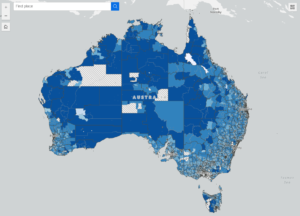 The Australian Bureau of Statistics as published new insights on childhood disadvantage as part of the Life Course Data Initiative (LCDI).
The LCDI is creating an evidence base, by bringing together cross-jurisdictional data from a range of early childhood, health and community services, to generate insights that can better inform long term policy responses to address disadvantage, particularly for children aged 0-14 years.
The Service Accessibility Explorer is an interactive map and dashboard showing how far people needed to travel to reach the closest key services like childcare, schools, hospitals and GPs in 2021.
The latest update also includes an article on children’s distance to services, and new insights about household and area level disadvantage in 2021.
Justice Tom Altobelli announced as President AFCC
 At the AFCC annual conference in Seattle in May 2026, the Hon Justice Thomas Altobelli AM will become the President of the Association of Family and Conciliation Courts (AFCC).
AFCC is an international association of professionals dedicated to the resolution of family conflict.
Justice Altobelli said, “I am honoured to follow in the footsteps of Presidents Nicholson and Boshier, building on AFCC’s tradition of rigorous, interdisciplinary leadership and the Pacific region’s long-standing connection to AFCC. So much of our interdisciplinary foundation and professional exchange has been shaped by AFCC’s standards and international collegiality.”
“I will be the first Australian to serve as AFCC President since the Hon. Alastair Nicholson (1997–1998), who was Chief Justice of the Family Court of Australia at the time and who spoke often of the common nature of the problems that we all face in the area of the family law. I recall his advice that “…cultures and attitudes may differ but we are all searching for solutions to the same problems.””

Funding for family, domestic, and sexual violence workforce
The Albanese Government has announced further funding of $291.7 million for the next phase of the 500 workers initiative.
This announcement builds on the $169.4 million the Government invested in the 2022-23 budget to deliver 500 frontline family, domestic, and sexual violence workers in every state and territory.
The initiative is delivered through the states and territories and will roll out from 1 July through the Family, Domestic and Sexual Violence Federation Funding Agreement.
Treasury Consultation - Family violence and superannuation
The Treasury has opened a public consultation on policy options to stop people who have committed family and domestic violence from receiving the superannuation death benefits of victims. The aim is to protect victim-survivors’ interests and support fair, timely payment of death benefits.
In some circumstances, current laws can result in superannuation death benefits being paid to a person who perpetrated family or domestic violence against the deceased.
The consultation is looking at changes to superannuation laws to:
- prevent perpetrators from receiving victims’ super death benefits
- make the distribution of benefits in cases of family and domestic violence fairer and more consistent
- ensure payments are made without unnecessary delay.
A consultation paper and details on how to make a submission are on the Treasury website. Submissions close 15 April 2026.
Standing Council of Attorneys-General
The Standing Council of Attorneys-General convened on 27 February in Sydney, chaired by the Hon Michelle Rowland MP, Commonwealth Attorney-General, and subsequently released a communique outlining the main areas of discussion.
Discussion items included:
- Responses to antisemitism and Islamophobia
- Child safety – working with children check reform
- Closing the Gap
- Good character at sentencing.
You can read about high-level progress against these items in the communique.
Government response to National Redress Scheme Report
The Government has published its response to the Joint Standing Committee on Implementation of the National Redress Scheme inquiry report – Redress: Journey to Justice – November 2024.
The National Redress Scheme, which was established in 2018 and is due to end in 2028, provides money and support to people who experienced child sexual abuse in Australian institutions. The inquiry looked at a range of implementation factors including people’s experiences of accessing the scheme, data and trends relating to redress applications and the effectiveness of redress support services.
The committee made a number of recommendations, including extending the scheme beyond 2028. The Government has noted this recommendation but did not commit to an extension. The Government also noted the Parliamentary Committee’s current inquiry into the continued operation of the scheme, which commenced in October 2025, and has indicated its support for this inquiry.
Support for Australian Charities
The Albanese Government has announced that the distribution rate for giving funds will be increased as well as an expansion of the number of organisations that can seek endorsement under the community charities deductible gift recipient category.
Public giving funds were established in tax law in 1963, and private giving funds were introduced into the tax law in 2000. Both kinds of giving funds play a role in Australian philanthropy.
The government will set the minimum annual distribution rate for both private and public giving funds at 6 per cent of net assets. The aim is that more benefits flow to charities now to help them to provide their services, while still allowing giving funds to invest and provide benefits into the future.
The new rate will apply from the first financial year following amendments to the giving fund guidelines, and existing giving funds will not need to meet the new distribution rate for two years.

Uniting Families Report Roundtable
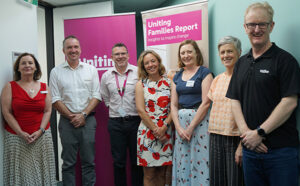
FRSA’s Manager of Policy and Research, Robyn Clough, recently joined leaders from across the human services sector to help shape the upcoming 2027 Uniting Families Report.
This report—created through a partnership between Uniting NSW.ACT and the UNSW Social Policy Research Centre—celebrates the rich diversity of families across Australia. The third report in the long-term partnership will explore aspects of how families make investments, use economic resources and make economic decisions as they raise their children.
“It was a privilege to contribute to this discussion,” Robyn said. “The insights shared will anchor the research in real policy contexts and everyday practice.”
You can read more about the research partnership and view the first two reports here.
Welcome New FRSA Members
The FRSA Board approved the following organisations as new members. Welcome to:
 Wanslea has been supporting children, young people and families for over 80 years. They work with infants, children, young people and their families who are experiencing vulnerability, developmental concerns, disability, complex family circumstances and mental health challenges.
Wanslea has a strong presence throughout WA, supporting communities within metropolitan Perth, Peel region and regional communities across the Great Southern, South West, Goldfields, Wheatbelt and Pilbara.
 Suicide Programs are a provider of suicide prevention training, helping communities save lives through conversation and education. Their programs aim to reduce suicide and its impact by empowering individuals to recognize and support those in need. Created by experts in suicide prevention, mental health, and counselling, our training blends the latest research with lived experience to help you facilitate safe, meaningful conversations.
Evaluation of a child voice tool in Children's Contact Services
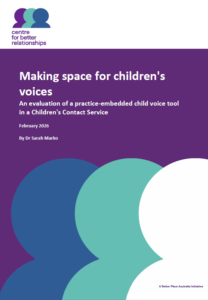 Better Place Australia has released a report, Making space for children’s voices: An evaluation of a practice-embedded child voice tool in a Children’s Contact Service, which presents the findings of an evaluation of a practice‑embedded child voice tool implemented within their Children’s Contact Service (CCS).
The tool includes six cartoon faces that children can select from to reflect how they are feeling. It was introduced to create structured, child‑friendly opportunities for children to express how they were feeling before and after supervised visits with their non-residential parent.
The evaluation focused on children’s engagement with the tool and how it was used in practice. It found that some children used it regularly; others chose not to. When children chose to engage, they expressed a range of feelings (both positive and negative).
Child voice tools like this give children a way to express themselves, and staff another way to understand children’s experiences of the service.

Connecting Communities: Share your story
 The Department of Social Services (DSS) is inviting funded service providers to share stories about the positive impact they are making in communities across Australia.
Through the Connecting Communities initiative, DSS aims to highlight the achievements, challenges and successes of organisations delivering vital services. Sharing a story helps demonstrate what is working on the ground, recognises the efforts of staff and volunteers, and inspires others across the sector.
How to participate
Service providers can submit their stories in one of two ways:
- Complete the story template
Use their Connecting Communities: Share your story template to help you tell your story clearly and confidently. The template includes simple prompts to guide you through what to write. - Share something you’ve already created
Organisations can also submit previously developed content, such as articles, case studies, videos or newsletter pieces. A brief summary and any relevant links or attachments should be included.
Before submitting, contributors should review the accompanying guide for advice on storytelling, consent requirements and the appropriate use of images or personal information. If you’d like some advice or to share feedback about the Connecting Communities pilot, contact CommunityCaseStudies@dss.gov.au.
Webinar: Listen to children when they are children
Listen to children when they are children is the fifth instalment of ANROWS webinar series unpacking the ways of working and ways of knowing set out in The Australian National Research Agenda to End Violence against Women and Children (ANRA) 2023–2028.
The webinar will be held on 31 March 2026 at 12:00 pm – 1:00 pm AEDT.
It’s a way of working that focuses on the importance of engaging children and young people in research who are victim-survivors of domestic family violence (DFV).
Children and young people are victim-survivors in their own right, and including their voices can bring added depth and insight into research.
While there are challenges and additional considerations in safely engaging children and young people in research, they do not outweigh the positive and validating benefits children and young people get in having their voices and opinions heard.
Panellists will:
- Highlight the importance and benefits of engaging with children and young people as part of the research process
- Discuss the process issues that researchers encounter and how to overcome them
- Discuss their experiences of working with children, young people and researchers
- Recommend practical tips and advice on how to communicate and establish positive working relationships with children and young people for research
The panel discussion will be followed with a live Q&A. Register here
Nominations open for HESTA Excellance Awards
 The HESTA Excellence Awards recognise exceptional achievements in a range of settings across aged care, allied health, community services and disability services. Thousands of people across Australia spend their working lives helping others. They do extraordinary things, day in, day out.
Nominations are now open for the HESTA Awards Program, to recognise and reward the life changing work of people across the country. Click here to nominate an exceptional individual or team or to find out more.
National Directory of Services for people who use violence
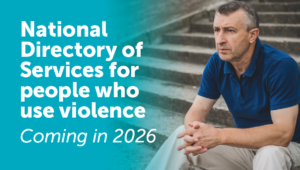 No To Violence (NTV) has been funded by the Australian Government Department of Social Services to design and build an online National Directory of Services for people who use violence. NTV acknowledges that the majority of people using violence are men (against women and children). However, to develop a truly comprehensive directory, the project is seeking to catalogue services for all people who use violence, including all genders, ages, sexuality, cultural backgrounds, languages and abilities, across a range of service categories including those that address co-occurring issues.
The aim of the National Directory is to increase referrals to and service uptake by those who use or are at risk of using violence. It will support this by improving the findability of and supporting connection to available services.
If you are interested in having your service listed in the National Directory or know a service you think should be listed on the National Directory, head to the project webpage. In addition to providing a project outline, the site houses information on listing eligibility criteria, how to submit an expression of interest to list a service(s), as well as tools to support your cross-promotion of the directory.
If you have any questions, concerns or feedback, please get in touch with the project team at mrsdirectory@ntv.org.au.
Carer Wellbeing Survey 2026
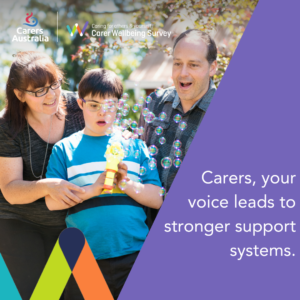 It is estimated that across Australia 3 million people provide care for friends or family members who are ill, have a disability, mental illness, an addiction, or who are frail. Each year, the Carer Wellbeing Survey asks current and past carers to tell us about their experiences of being a carer. You can read the results from our previous surveys at: https://www.carersaustralia.com.au/carer-wellbeing-survey/
The survey is open to all current and past carers. Your insights help inform improvements to services, policies and systems that carers use, and every response strengthens the case for better support where it’s needed.
All survey participants aged 14 or older who complete the survey before 4 May 2026 can enter the prize draw to win one of 13 prizes worth a total of $5,000, including a first prize of a $1,500 gift card.
The survey is voluntary, confidential and results are kept anonymous, and closes on 4 May 2026, at 11.59pm. Click here to complete the survey online.

CHC81015 Graduate Diploma of Relationship Counselling – June 2026, Online
CHC81115 Graduate Diploma of Family Dispute Resolution – July 2026, Online
Couples Counselling Course: A contemporary and client-focused approach

ACT
Team Leader Client Pathways | Relationships Australia Canberra & Region
VIC
Family Dispute Resolution Practitioner | Mallee Family Care
Family Dispute Resolution Practitioner | Relationships Australia Victoria
Family Dispute Resolution Practitioner | Each
Senior Financial Counsellor | Mallee Family Care
SA
Family Dispute Resolution Practitioner (Qualified or Trainee) | Centacare Catholic Country SA
NSW
Peer Support Worker LGBTQIA+ headspace Batemans Bay | Relationships Australia Canberra & Region
NT
Senior Manager Counselling & Mediation | Anglicare NT
Financial Counsellor | Anglicare NT
If you have any events you’d like listed on the FRSA Events and Training Calendar or job vacancies you’d like listed on the FRSA Jobs Board, email Communications Officer, Vanessa Lam at communications@frsa.org.au. Please note that posting onto the FRSA website is reserved for FRSA Members only.

Inclusion@Work index 2025–2026 | Diversity Council Australia
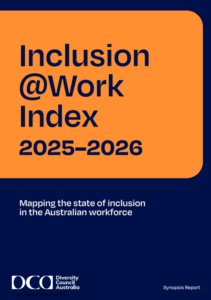 A biennial survey that maps and tracks the state of inclusion in the Australian workforce. The index tracks progress, or the lack thereof, over time, and explores how inclusive workplaces are for a diversity of workers. It also highlights how workplace inclusion and exclusion impact both employees and business performance.
A framework for the future of Aboriginal and Torres Strait Islander housing in Australia | Australian Housing and Urban Research Institute
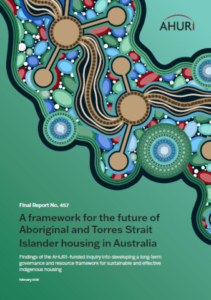 The final report from an inquiry into developing a long-term governance and resource framework for sustainable and effective Indigenous housing. It provides an overview of the inquiry and its findings, a vision for the future of Indigenous housing, recommendations for a National Aboriginal and Torres Strait Islander Housing Strategy framework, and a pathway to system reform.
Understanding self-determination 2026 | ANTAR
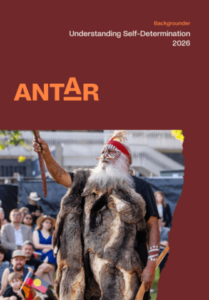 This report from Australians for Native Title and Reconciliation (ANTAR) provides a comprehensive overview of First Nations self-determination as a foundational human right and a practical framework for justice, better governance and stronger community outcomes in Australia. The paper explains what self-determination means, why it matters, and how it is being pursued in practice. It explores key mechanisms for advancing self-determination.
Closing the Gap toolkit for local government | Local Government NSW
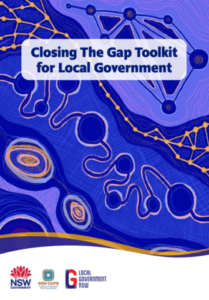 The toolkit provides local councils in New South Wales with information, ideas and examples of what services and functions they provide that align with the aims and objectives of Closing the Gap. It offers practical examples, tools, templates and self-assessment tools for councils to measure how they align and where they can evolve.
Family Violence Sexual Violence (FVSV) Knowledge Hub | Centre for Excellence in Child and Family Welfare, Safe+Equal, SASVic, No to Violence.
The FVSV Knowledge Hub is a project collaboration between the Centre for Excellence in Child and Family Welfare, Safe+Equal, SASVic and No to Violence. Designed for all professionals working with children, young people and families affected by family and/or sexual violence, it brings together the latest research, evaluations and training opportunities in one easy-to-access place. Subscribe to the monthly FVSV Newsletter to stay informed and connected.
Supporting children and young people experiencing domestic, family and sexual violence | Australia’s National Research Organisation for Women’s Safety (ANROWS)
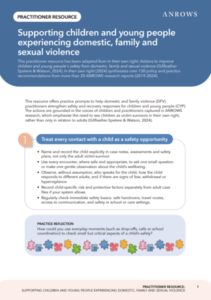 This resource supports frontline workers to strengthen safety and recovery responses for children and young people experiencing domestic, family and sexual violence. Focused on translating evidence into everyday practice, the resource is particularly relevant for practitioners working in regional and rural contexts, where service gaps, confidentiality risks and workforce pressures shape how support is delivered.
Perceived risk of victimisation by artificial intelligence enabled crimes | Australian Institute of Criminology
In the past 10 years, there has been a rapid proliferation of publicly available tools and applications using artificial intelligence (AI). Using Australian data, this report measured the perceived frequency of AI-enabled crimes and which specific technologies pose the greatest perceived risk of victimisation. The findings highlight priority areas for industry safeguards and public education.
Record-keeping tool | ACNC
ACNC’s record-keeping tool can help charities reflect on their current practices and identify areas for improvement. Make notes of any discussion or action items and consider them at your charity’s next board or committee meeting.
Culturally safe and healthy Aboriginal housing: Business case | Wilya Janta and Aboriginal Housing NT
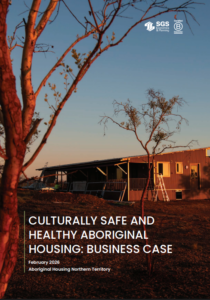 A new joint report by Wilya Janta and Aboriginal Housing NT (AHNT) has found that investing in climate-ready, culturally appropriate housing in remote communities delivers substantial long-term economic, social and health benefits.
The reportshows that housing designed specifically for remote Northern Territory conditions can reduce government expenditure, improve health outcomes, and strengthen community wellbeing.
Hours, not dollars: rethinking the cost-of-living debate | Centre for Independent Studies
 This paper proposes that public debate about the cost of living is based on a misunderstanding of how living standards should be measured. The paper contrasts movements in consumer prices with movements in wages. It identifies sectors where affordability has deteriorated in wage-adjusted terms, arguing that these outcomes are not arbitrary.
Want to submit something to the FRSA eBulletin?
If you have an news item or event that you would like to be featured in a future eBulletin please submit your announcement via the form below or email communications@frsa.org.au with the subject “FRSA eBulletin submission”.
Please note FRSA members receive priority for items posted in the eBulletin. And to keep information current, relevant and useful, submissions will not be repeated from week to week.
Subscribe
Subscribe to receive future eBulletin editions directly to your inbox!
