


No. 2, 2026 | 16 February 2026
Go to:
From FRSA's Executive Director
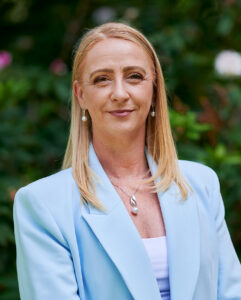
I have the privilege this week of releasing the FRSA Conference concurrent session program for 2026! Showcasing the work of our members and others in the sector more broadly is something that FRSA takes significant pride in. My thanks to everyone who submitted an abstract, our Board and Conference Reference Committee and the FRSA staff for bringing this program to life! Once again – another amazing cross section of presentations will feature in our Conference 2026 Program, themed “Showcasing: Practice, Evidence, Impact”, at the Brisbane Convention & Exhibition Centre from 18-21 May 2026.
It is no mistake that Conference is held on these dates as it also signifies our contribution to National Families Week celebrations. (Technically we are one date late – but out intentions are solid!). More information below on how you can get involved in celebrating National Families Week.
We are hoping FRSA Conference 2026 will break all records! We had just shy of 200 abstracts submitted and at this point in time we have 231 registrations – a 100% increase on numbers at this time last year. We look forward to welcoming many more and encourage you to get the best deal by registering before the close of early bird rates – 2 March 2026.
Whilst a lot of commentary on Canberra over the last fortnight has had a heavy party-political focus, it has also been a significant week for Aboriginal and Torres Strait Islander peoples. We saw the establishment of the National Commission for Aboriginal and Torres Strait Islander Children and Young People legislation tabled; the release of a first standalone National Aboriginal and Torres Strait Islander plan to end family, domestic and sexual violence; significant events and announcements marking the 16th anniversary of the National Apology to Stolen Generations; and the tabling of the annual Closing the Gap report 2025 which demonstrates that we still have so far to progress across a number of socio-economic targets for First Nations peoples.
We know that many in the sector are awaiting announcements from Government following on from the DSS Consultation process “A new approach to programs for families and children”. Aside from learning that GrantConnect will release a “Forecast Opportunity” ahead of the Grant Opportunity release itself, we have no further information to share at this time, but it is of course clearly on our radar.
Kind regards,
Jackie Brady
FRSA Executive Director



Concurrent Session Program LIVE!
The concurrent session program for FRSA National Conference 2026 is here! This year’s program focuses on the theme “Showcasing: Practice, Evidence, Impact” and the three day event is set to share and reflect on what is working in our sector, why it works, and to share the outcomes.
We have 65 half hour sessions and five 90 minute symposiums. Again the standard of abstracts submitted for this year’s conference was extremely high. We have been working hard to ensure the program fulfils the expectations of FRSA Conference attendees. We have also left plenty of time for networking and we are putting together the final details for our Conference Gala Dinner that will certainly deliver an unforgettable experience in Brisbane.
Stay tuned for more details on the Pre-Conference workshops and our keynote speaker and panelist announcements in the next few weeks.
Click below to view or download the PDF program. Click on the session titles for more details.
Bursary Program
We have four bursaries available for Aboriginal and Torres Strait Islander people who are registered for or would like to attend the 2026 Family & Relationship Services Australia National Conference.
Bursaries are provided to assist with covering the cost of conference registration, and travel & accommodation. To be eligible you must be an employee of a fully financial FRSA member organisation. Each package includes:
- 1 x complimentary full registration to the Conference (including dinner)
- $500 towards travel and accommodation
Applications close on FRIDAY, 27 March 2026. Please note, this Bursary Program is open to people who are yet to register and those who are already registered.
Early bird registration rates available!
Reminder that Early Bird registrations are open! Don’t miss out on saving up to $200 per person with rates ending Monday, 2 March 2026.
Early Bird Registration Fee* Until 2 March 2026
| Member Rates | Non-Member Rates | |
| Complete Conference Experience – Including dinner | $1,125.00 | $1,425.00 |
| Conference Only – No dinner | $1,050.00 | $1,350.00 |
* To be entitled to the early bird registration fee you must have registered and paid by 9 March 2026.
Group Registrations
FRSA is pleased to offer FRSA Members the opportunity to register five (5) participants and receive the sixth registration complimentary. To be eligible for the complimentary registration, you must register your five (5) participants using the link below. Instructions on how to register your complimentary registration will be provided on the confirmation email. Interested in becoming an FRSA Member? Visit our Membership page.
Please note: When registering the 6 for 5, to receive the 6th registration free the same registration type must be purchased for the entire group.
Welcome Sponsors
We’re excited to welcome the following sponsors who will join us in Brisbane for the FRSA National Conference.
- No to Violence as a Gold Sponsor
- CSnet as Lanyard Sponsor and Exhibitor
- Parenting Research Centre as an Exhibitor
We only have four exhibition booths left! But we still have a range of other sponsorship options available, designed to maximise visibility to showcase the work and activity of your organisation/business. Or if you are interested in a more bespoke package for your organisation don’t hesitate to get in touch with the FRSA team on (02) 6162 1811 or events@frsa.org.au.

National Aboriginal and Torres Strait Islander Plan to End Family, Domestic and Sexual Violence
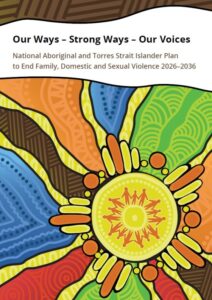 On 10 February 2026 the Albanese Government released Australia’s first standalone National Aboriginal and Torres Strait Islander plan to end family, domestic and sexual violence.
Developed in partnership with Aboriginal and Torres Strait Islander peoples and state and territory governments, Our Ways – Strong Ways – Our Voices: National Aboriginal and Torres Strait Islander Plan to End Family, Domestic and Sexual Violence 2026– 2036 will address the high and disproportionate rates of violence against Aboriginal and Torres Strait Islander women and children. It sits alongside the National Plan to End Violence against Women and Children 2022–2032.
Our Ways – Strong Ways – Our Voices is underpinned by $218.3 million in new funding over four years. As an immediate step, the funding will invest in a national network of up to 40 Aboriginal Community Controlled Organisations (ACCOs) to deliver community-led specialist support services that help Aboriginal and Torres Strait Islander women and families who are experiencing family, domestic, and sexual violence.
The new funding will support programs like:
- Crisis responses, like mobile teams in remote areas to work with families after a violent incident, or safe transport and emergency accommodation.
- Planning to help victims leave violence safely and continued support once they have.
- Therapeutic supports, like community playgroups where mums and bubs can connect with Elders, receive parenting support, and be linked to early help and healing.
- Behaviour change and education, like outreach programs for men and boys.
Our Ways – Strong Ways – Our Voices has been endorsed by all states and territories.
Thriving Kids Advisory Group's report released
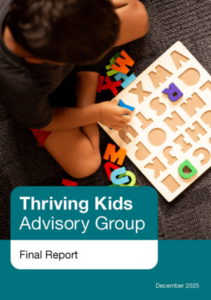 On 3 February the Minister for Health and Ageing, the Hon Mark Butler MP, announced the release of the Thriving Kids Advisory Group’s final report.
The Advisory Group was established to provide advice to inform deliberations of all governments on a national model for Thriving Kids. The final report sets out the Advisory Group’s proposed National Model. It is underpinned by service principles to guide commissioning:
- identifying children with developmental delay as early as possible
- connecting children and families with supports, matched to their level of need, to best support their child’s early development
- offering supports that are child and family centred, informed by evidence and focused on outcomes
- supports are delivered in everyday settings, where they live, learn and play
- supports are empowering, connected to service systems families already trust and are easy to navigate
- acknowledging that children’s needs are not linear and can change over time.
National Cabinet has agreed to the final design of Thriving Kids, which considered the report’s advice alongside other inputs, including from the recently concluded House Standing Committee on Health, Aged Care and Disability inquiry into Thriving Kids.
Thriving Kids will be rolled out from 1 October 2026, with full implementation by 1 January 2028. You can find out more about Thriving Kids here.
National Commission for Aboriginal and Torres Strait Islander Children and Young People Bill 2026
On 5 February, the National Commission for Aboriginal and Torres Strait Islander Children and Young People Bill 2026 was introduced into the Australian Parliament. The bill will establish the Commission as a separate entity with functions and powers that are independent of the Government. The agency is being led by the National Commissioner for Aboriginal and Torres Strait Islander Children and Young People Sue-Anne Hunter.
The legislation will give the National Commissioner functions and powers that are needed to drive greater coordination, accountability and influence systemic issues which are disadvantaging Aboriginal and Torres Strait Islander children and young people.
The new powers will be similar to other Commissioners, Guardians and Advocates including conducting inquiries, making recommendations to government, public advocacy, research, and education. However, this role is the only one at the national level with a sole focus on Aboriginal and Torres Strait Islander children and young people.
On 13 February 2024, in the annual Closing the Gap speech, the Prime Minister announced the establishment of a National Commissioner for Aboriginal and Torres Strait Islander Children and Young People. The Commission subsequently commenced operations under the auspices of the Department of Social Services.
You can read about the bill in this Parliamentary Library Bills Digest and the Minister for Social Services media release.
How to embed learning systems in social services
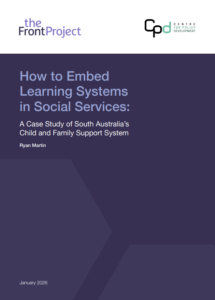 A new report from the Centre for Policy Development – How to embed learning systems in social services: A case study of South Australia’s Child and Family Support System – offers practical lessons for policymakers on how to embed continuous learning into the design and delivery of social services, drawing on the success of South Australia’s Child and Family Support System (CFSS). The report was developed in partnership with The Front Project
Based on interviews with staff from South Australia’s Department of Human Services, service providers and lived experience advisers, the report shows how the CFSS continually adapts and responds to the needs of both families and the organisations that support them.
The report identifies six key lessons that governments can apply across their social service systems to improve outcomes for children and families.
- Actively steward learning: Invest early in data infrastructure and analytical capability. Be clear about what matters, measure it well, and use evidence to guide improvement.
- Use contracting to enable learning: Move away from control-based contracting towards trust-based relationships that prioritise improvement. Long-term funding, mutually agreed performance measures and regular communication are essential.
- Build a culture of learning: Strong leadership that values collaboration, transparency and evidence literacy is critical. Learning must be safe, supported and encouraged across the system.
- Generate learning from multiple sources: Combine data insights with lived experience, practitioner knowledge and First Nations knowledge. This approach helps identify problems earlier and ensures effective practice is shared across the system.
- Engage lived experience properly: System advisors with lived experience should be recognised as experts, supported appropriately, and given genuine influence over decisions that shape the system.
- Invest in and resource for the long-term: Learning systems cannot be built through short-term projects. Governments must invest in the structures that sustain learning over time, including IT systems, research capability, learning forums and paid lived experience roles.
A full report and a summary report are available here.
Select Committee on Productivity in Australia – submissions closing soon
Submissions to the Select Committee on Productivity in Australia will close on 20 February 2026.
The committee was established on 4 November 2025 and is due to report 30 September 2026.
The committee has released a discussion paper to guide submitters and the terms of reference are available on the committee webpage.
Report on Government Services 2026 – final releases
The Productivity Commission has released the remainder of the 2026 Report on Government Services.
The report provides data directly from all Australian governments on the equity, efficiency and effectiveness of the services they provide. These services include schools; police, courts and corrective services; health services; aged care and disability services; and housing and homelessness services. Government expenditure on these services was approximately $412 billion for 2023-24 – around 70% of government recurrent expenditure.
Since our last eBulletin the following were released:
- Tuesday 3 February 2026 – Justice (part C) and Emergency management (part D)
- Thursday 5 February 2026 – Health (part E)
- Tuesday 10 February 2026 – Child care, education and training (part B)
For further information on this year’s edition, please visit the report page.
Submissions reopened for inquiry into link between domestic, family and sexual violence and suicide
The House of Representatives Standing Committee on Social Policy and Legal Affairs has reopened submissions until Friday, 13 March 2026 for its inquiry into the relationship between domestic, family and sexual violence (DFSV) and suicide.
The inquiry is looking at the extent to which DFSV victimisation contributes to suicide risk and incidence, opportunities for improved data collection and reporting, responses to suicide in the context of DFVS and opportunities to enhance prevention and early intervention efforts. The full Terms of Reference are here.
Public hearings for the inquiry will commence in February 2026. Further information about the inquiry, including the full terms of reference, is available on the inquiry page.
Parenting Orders: What You Need to know – 2nd edition
The Attorney-General’s Department has just published the updated ‘Parenting Orders: What You Need to Know (2nd ed)’ handbook on their website: Parenting orders – what you need to know | Attorney-General’s Department. This second edition of the handbook reflects the changes to the law following the commencement of the Family Law Amendment Act 2023 (Cth) on 6 May 2024 and amendments made to the Family Court Act 1996 (WA) on 10 February 2025.

Uniting NSW.ACT CEO announces retirement
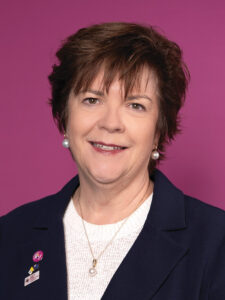 Last week Uniting NSW.ACT announced that their Chief Executive Officer Tracey Burton will retire from her role later this year, concluding eight years of exceptional and deeply impactful leadership.
Since joining Uniting in 2018, Tracey has led the organisation through a period of significant transformation, growth and complexity, while remaining steadfastly grounded in the mission and values of the Uniting Church. Her tenure has been defined by moral clarity, courage in advocacy and a relentless focus on improving the lives of people and communities experiencing disadvantage.
Mrs Burton said it had been an enormous privilege to lead Uniting.
“People are at the heart of everything we do at Uniting. I am incredibly grateful for our leaders, employees and volunteers — thanks to their dedication, we have been able to support hundreds of thousands of clients across metropolitan, regional and rural NSW and the ACT.”
“I feel incredibly proud of what we have achieved together and deeply grateful to the people and communities who make Uniting what it is. I believe the time is right to enable new leadership to guide the next phase of our strategy.”
Uniting’s Board will commence a recruitment process with an external, national search for Uniting’s next Chief Executive. Tracey will remain in her role until a successor is appointed, ensuring continuity and a smooth transition. Read more.
Tony Pietropiccolo honoured in Italy for lifelong service to community
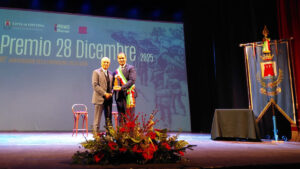
Centrecare Inc Director, Tony Pietropiccolo AM, has been honoured in his birthplace of Ortona, Italy, receiving the prestigious Premio 28 Dicembre Award in recognition of his lifelong commitment to community service and bringing distinction to the city on the international stage.
The award was presented on 28 December 2025 during a formal civic ceremony at the F.P. Tosti Theatre in Ortona.
“For me receiving this award is like a dream,” Mr Pietropiccolo said during his acceptance speech.
“It is something I never could have imagined. It is an incredible honour to be recognised in this way by this wonderful city.”
The Premio 28 Dicembre commemorates the end of the Battle of Ortona in December 1943 and honours individuals whose lives reflect the values of resilience, service and social responsibility forged in the city’s post-war recovery.
Mr Pietropiccolo, who left Ortona as a child migrant and has spent more than four decades working in Australia’s social services sector, was recognised for his leadership in supporting vulnerable individuals and families, and for maintaining a strong connection to his hometown while contributing at an international level. Read more

Families Week 2026
 The National Families Week 2026 website is now live.
Families Week is a time to recognise the vital role families play in our lives and our communities. Led by Families Australia, it runs every May to align with the United Nations International Day of Families on 15 May.
Across Australia, Families Week is marked by events that bring people together. From picnics, morning teas and school activities, to community gatherings and creative projects. Visit the website
Invitation to participate: Family Law Reform Study
Industry Professor Jess Hill (UTS) is seeking practitioners who regularly work with victim-survivors going through the family law system to contribute to a national study examining whether recent reforms to the family law system – including amendments to the Family Law Act and the introduction of mandatory family violence training – are making it safer for victim-survivor parents and children.
While interviews are now fully booked, they are still inviting practitioners to complete an online survey (15–30 minutes).
The study is gathering insights from victim-survivors, caseworkers, legal practitioners, judicial officers and court advocates about the impact of these reforms. It aims to identify what has improved, what gaps remain, and how responses to domestic violence and child maltreatment can be strengthened across the family law system.
The survey closes 28 February 2026. Click here to complete the survey. For full details, see the Participant Information Sheet.
AIFS on-demand webinar program
The Australian Institute of Families Studies has launched their new on-demand webinar program. The program will run from February to June 2026 and feature 6 webinars from the past 2 years. These webinars were co-produced with Emerging Minds in a series focusing on children’s mental health. Each will be available for a set 3 weeks. Registrations are now open:
- Relationships Matter: Walking alongside Aboriginal and Torres Strait Islander Parents | 2 February – 23 February 2026
- Supporting cultural needs: Working with culturally and linguistically diverse children in out-of-home care | 24 February – 17 March 2026
- How to support parents with intellectual disability to meet their parenting goals | 18 March – 8 April 2026
- Supporting non-offending parents after child sexual abuse | 9 April – 30 April 2026
- Supporting infants’ and toddlers’ resilience during daily transitions | 1 May – 22 May 2026
- Navigating cultural differences and ethical dilemmas when working with culturally diverse families | 23 May – 13 June 2026
The Parenthood National Parent Survey
The Parenthood is strengthening its national advocacy agenda in 2026, with a focus on paid parental leave, early childhood education and care, and flexible work.
To inform this work, The Parenthood is inviting parents and carers to share their lived experiences, particularly where families face barriers to accessing affordable, high-quality education and care, parental leave, or workplace flexibility. These insights play a critical role in shaping evidence-based campaigns and policy reform.
The Parenthood is an independent, not-for-profit organisation working to make Australia the best place in the world to be a parent. Its growing community of more than 80,000 mums, dads and carers spans every state and territory, strengthening the collective voice for change. Click here to complete the survey

CHC81015 Graduate Diploma of Relationship Counselling – June 2026, Online
CHC81115 Graduate Diploma of Family Dispute Resolution – July 2026, Online
Couples Counselling Course: A contemporary and client-focused approach

NSW
Counsellor – Family Law | CatholicCare Sydney
Peer Support Worker LGBTQIA+ headspace Batemans Bay | Relationships Australia Canberra & Region
Family Counsellor headspace Wagga Wagga | Relationships Australia Canberra & Region
NT
Senior Manager Counselling & Mediation | Anglicare NT
Financial Counsellor | Anglicare NT
If you have any events you’d like listed on the FRSA Events and Training Calendar or job vacancies you’d like listed on the FRSA Jobs Board, email Communications Officer, Vanessa Lam at communications@frsa.org.au. Please note that posting onto the FRSA website is reserved for FRSA Members only.

Issues and insights: February 2026 | Parliamentary Library
 A collection of nine articles provides short analyses of issues that may be considered over the course of the 48th Parliament. Each article gives a high-level perspective of significant public policy issues, covering background, context and legislative history, as well as some of the policy and legislative directions raised in the public debate.
No way out: frontline services in Australia’s housing crisis | Everybody’s Home
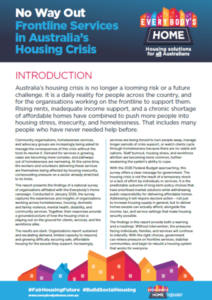 The report presents the findings of a national survey in January 2026 capturing the experiences and insights of organisations working across homelessness, housing, domestic and family violence, mental health, disability and community services. The responses provide a picture of how the housing crisis is playing out on the ground for clients, services, and the workforce alike.
State of the older nation 2025 | COTA Australia
 This report reveals the result of a national biennial survey of older Australians. The report reveals that while many older Australians report feeling more positive about their own lives, the data reveals a starkly uneven reality. It finds the stereotype of older Australians as uniformly wealthy is wrong, fuelling ageism that hurts people of all ages.
AI transparency in practice | ARC Centre of Excellence for Automated Decision-Making and Society
 This report examines Commonwealth agencies’ compliance with the government’s policy on responsible artificial intelligence (AI) use. It finds AI transparency statements are often difficult to locate, with few available through the recommended direct link. Thirty entities had no identifiable statement and published statements varied in quality. The report provides recommendations to improve their findability and informativeness.
Loneliness by numbers: a South Australian snapshot – January 2026 | Uniting Communities
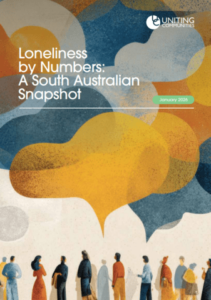 The snapshot presents the latest findings from Uniting Communities’ long running loneliness tracking. The report shows that more than half of South Australians experience loneliness at least sometimes, with the highest ‘often’ lonely rates recorded since 2023. The report outlines practical, community wide actions needed to reduce loneliness and strengthen social connection across the state.
Barriers experienced by Aboriginal and Torres Strait Islander children and families accessing legal supports | SNAICC – National Voice for our Children
 This study sets out evidence-based reforms to reduce Aboriginal and Torres Strait Islander child removals and strengthen child protection and justice systems. It aims to identify opportunities and options to address systemic discrimination and barriers, improve legal and related supports, and reduce the over-representation of Aboriginal and Torres Strait Islander children in out-of-home care.
Workplace trauma on the social housing and homelessness frontline | Australian Housing and Urban Research Institute
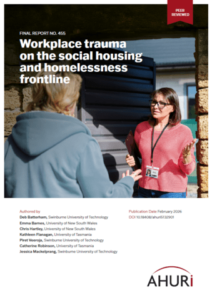 People working in the housing and homelessness sector are exposed to significant trauma in their role as service providers of last resort. This research explores workplace trauma in Australia’s social housing and homelessness services – including its extent, causes and impacts. It examines practices to address this trauma, options to mitigate it and guiding principles for response.
Social media minimum age | Department of Infrastructure, Transport, Regional Development, Communications, Sport and the Arts
The Australian Government has taken world-leading action to reduce online harms experienced by young Australians by introducing a minimum age of 16 to access social media. The Online Safety Act 2021 (the Act) was amended in November 2024 to introduce a social media minimum age framework. This fact sheet sets out the background, legal framework, how it works, age verification and penalties.
Administering Australian housing policy: practitioner perspectives | Australian Housing and Urban Research Institute
 This research aims to deepen understanding of the design and impact of the ‘machinery of government’ – the administrative, bureaucratic or institutional arrangements that deliver public policy – with respect to housing policy in Australia. The report concludes identifying and settling on a feasible and effective governance and administrative structure will allow agencies the longevity and stability to deliver better policy outcomes.
Want to submit something to the FRSA eBulletin?
If you have an news item or event that you would like to be featured in a future eBulletin please submit your announcement via the form below or email communications@frsa.org.au with the subject “FRSA eBulletin submission”.
Please note FRSA members receive priority for items posted in the eBulletin. And to keep information current, relevant and useful, submissions will not be repeated from week to week.
Subscribe
Subscribe to receive future eBulletin editions directly to your inbox!
