19 November 2026
Go to:
From FRSA's Executive Director
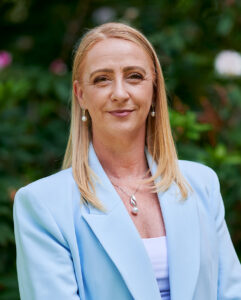
I had the privilege of attending Centacare South West NSW’s 35 year celebration in Wagga Wagga on Tuesday night (see below) and then took the opportunity to catch up with the Centacare team the following morning. FRSA’s policy and advocacy is, of course, grounded by the amazing work of our members and I value every opportunity to spend time ‘in the field’.
As we head towards the holiday season, the FRSA team is really excited to be bringing some key pieces of work to fruition. We’ve just gone live with our new website, which has a fresher, cleaner look while retaining some of the former structure – you won’t get lost on there! A key feature of the new website is the searchable Member Services Map. I encourage you to take a look.
We are also about to release the final report for our latest commissioned study – Australia’s FRS Workforce – Now and into the Future. This study (undertaken by the Centre for International Economics) provides an evidence base to advocate for the workforce, inform funding and program reform, contribute to industrial relations discussions, and support future workforce planning. We are hosting a Member-exclusive briefing on the findings next week, prior to the report’s release (see below).
It’s been a huge piece of work, and I offer my heartfelt thanks to all our members who responded to the CIE’s workforce survey and participated in focus group discussions. I also thank the FRSA Members who so generously shared their time, experience and expertise to participate on the project Advisory Group.
It’s proving to be a busy time of year for everyone – not least those who are in the midst of the DSS Children and Family Support Program recommissioning process. We’ve had several requests for more time to get abstracts in for the FRSA National Conference 2027. So, we’ve decided to offer another (final) extension to the closing date, with abstracts now due 30 November 2026 (see details below). It’s always a fabulous event and we encourage you to share your work – be it practice, policy or research.
I am looking forward to seeing many of our members online next Wednesday at the FRSA AGM to report on the 2025/2026 year and to announce the new member elected Directors who will take up their position on that day.
Kind regards,
Jackie Brady
FRSA Executive Director



FRSA National Conference 2027 - FINAL call for abstracts extension!

The family and relationship services sector has had an exceptionally busy period. We are hearing from members about the immense workloads you are carrying fuelled by a lot of activity happening at all levels of Government and across portfolio areas.
We want to make the 2027 our best yet! FRSA will be celebrating 20 years and want the Conference to be a signature/key event in next year’s special program.
To provide prospective presenters with additional time to prepare and submit their abstracts, FRSA has decided to extend the Call for Abstracts for the FRSA National Conference 2027 one final time. Submissions will now close on Monday, 30 November 2026.
We welcome abstracts that speak to the conference theme – Building Strong and Safe supports for children, families and communities.
Be part of the conversation by presenting in our Conference concurrent session program. The Conference provides you with an opportunity to showcase your work and share your knowledge and experience with the sector. In particular, we are looking for abstracts that demonstrate:
- the ways you are working to meet the needs of children, adults, families and communities
- the evidence underpinning and emerging from practice
- the impact that different practices and approaches generate for the people accessing services – and for your local communities.
Submissions close 5pm AEDT Monday, 30 November 2026.
Please call the FRSA office if you would like to discuss further: events@frsa.org.au or via phone (02) 6162 1811.
FRSA Webinar – Australia’s Family and Relationship Services (FRS) Workforce
FRSA is excited to release the findings of our latest commissioned study, Australia’s FRS Workforce – Now and into the Future, at a Member-exclusive webinar.
This study was undertaken by the Centre for International Economics (CIE) on behalf of FRSA and provides an evidence base to advocate for the workforce, inform funding and program reform, contribute to industrial relations discussions, and support future workforce planning.
Project lead, Sarina Lacey from the CIE, will brief Members on the project findings.
The webinar will be held on Thursday 26 November 2026, 12:00pm – 1:00pm (AEDT).
The project report will be publicly available on the FRSA website after the webinar.
FRSA at STOP Domestic Violence Conference 2026
 FRSA is a Showcase exhibitor at the STOP Domestic Violence Conference 2026 (SDV26) in Canberra next week, 23-25 November.
SDV26 will bring together practitioners, researchers, advocates, government, legal and service system leaders to confront what safety actually requires: risk and lethality prevention, system accountability, culturally safe and inclusive responses and coordinated implementation at scale.
Drop by our booth and say hello!
Find out more: anzmh.asn.au/sdvc

Essential workers priced out of almost every rental home in Australia
 New research from Anglicare Australia has found that essential workers are being priced out of almost the entire rental market, with even full-time workers struggling to find somewhere affordable to live.
Anglicare Australia’s Rental Affordability Snapshot: Essential Workers Snapshot surveyed 48,776 rental listings across Australia, testing whether they were affordable for sixteen essential occupations. It finds that:
- Ten occupations surveyed could afford fewer than one percent of rental listings.
- Just 0.8 percent of rentals were affordable for cleaners, 0.9 percent for retail workers, and 0.7 percent for hospitality workers.
- Nurses could afford just 1.1 percent of listings, while aged care workers could afford 1.7 percent.
- Even teachers and firefighters, who fared better than other workers, could afford just 3.3 percent and 2.7 percent of listings respectively.
- Affordability fell or stagnated for thirteen of the sixteen occupations surveyed, despite increases in wages.
Measure of Australia’s democratic health - 2026
 The findings of the McKinnon Index, which is an annual measure of Australia’s democratic health, have just been released. The Index tracks how Australians experience, understand and participate in democracy.
The 2026 Index draws on a survey of more than 4,000 Australians and, now in its second year, examines how attitudes towards government, political leaders and democratic institutions are changing over time.
Some key findings:
- Support for democracy remains strong: 76% of Australians prefer democracy to any other system of government, while trust in independent institutions has held steady or improved.
- Confidence in politics is weakening: Trust in governments, politicians and political parties has fallen since 2025. Satisfaction with how democracy works has declined, and fewer Australians feel they have a say in government decisions.
- Education is a significant dividing line: Australians without a university degree are less satisfied with democracy, less trusting of government and less likely to feel politically represented. The divide by education is greater than that by income across a range of measures.
- Personal circumstances shape democratic experiences: Australians with lower life satisfaction and those living outside major cities report lower levels of trust in government and satisfaction with democracy.
- Support for democracy varies by age: Younger Australians are less likely than older generations to favour democracy over other systems, with further declines recorded among young men since 2025.
- Strengthening democracy remains a priority: 81% of Australians agree that ongoing efforts to strengthen democracy should be a priority for government.
You can explore the McKinnon Index here
Gambling in Australia 2026
 New research from the Australian National University (ANU) shows that one in six Australian adults report indicators of risky gambling, and online gambling continues to grow.
The report, Gambling in Australia 2026, draws on a national survey of 3,482 adults and is the seventh wave of research tracking gambling participation and risk since 2019.
While overall gambling participation has stabilised at around 60 per cent since 2023, approximately 17 per cent of Australian adults report at least one indicator of gambling-related problems.
Lead author Associate Professor Aino Suomi, Director of the ANU Centre for Gambling Research, said “We’re seeing fewer Australians gambling than a decade ago, but that hasn’t translated into a corresponding reduction in gambling-related problems. … We need to shift attention from looking at how many people gamble to how they gamble, and who is most affected.”
Online gambling is now the predominant mode of gambling, with 35 per cent of Australian adults gambling online at least half the time.
Healthy Starts: The state of Australia’s child and family health service system
 The Centre for Policy Development has released research that maps the experiences of families accessing the network of health services and supports available from the very beginning of pregnancy, through birth, and across the first 2,000 days of a child’s life.
The report – Healthy Starts: The state of Australia’s child and family health service system – identifies key system-wide barriers that prevent children and families from accessing high-quality, connected support. These barriers cut across pregnancy, birth, postnatal care, and early childhood:
- Availability and access to services can be limited: Where a family lives determines the care they receive. Widespread workforce shortages mean families in regional, remote, or outer-metro areas face long wait times, closed books, and shorter appointments.
- Costs are too high for families: Out-of-pocket costs and limited bulk billing delays families from accessing care and hit low-income families hardest.
- Services lack flexibility to respond to specific families’ needs: Most health services are binary, offering either standard or targeted support based on strict eligibility criteria. This means many families fall through the cracks.
- The system is fragmented: Different services are often not coordinated or integrated. Families must navigate the complex system themselves without clear pathways or support.
- There is limited public awareness: Families are often unaware of what services exist, what they are entitled to, or when to engage.
You can download the report here.
Will you be charged a fee to be on the SMS Sender ID Register?
Will your organisation be charged a fee to be on the SMS Sender ID Register?
The Australian Communications and Media Authority (ACMA) launched the Register on 1 July this year. It was introduced to protect Australians from scams that impersonate organisations in branded text messages (SMS or MMS).
Now ACMA is seeking feedback on proposed arrangements to recover the ongoing operational costs of the SMS Sender ID Register from the 2027-28 financial year via an annual application fee.
ACMA wants to hear your views on the proposed charging model and administration arrangements, including whether applicants or telcos should pay application fees to the ACMA, the duration of the registration period, and whether lower fees or exemptions should apply to some entities (for example, charities).
You can find out more information about the consultation on the ACMA website. Submissions close 5pm (AEDT) on Friday 4 December 2026.
Birth registrations in 2025
The Australian Bureau of Statistics (ABS) has released birth registration data for 2025.
The fertility rate increased slightly with 299,903 registered births in 2025, up 7,585 from the year before. This represents a 2.6% increase. However, the fertility rate remained at historically low levels – 1.497 births per woman. The fertility rate 10 years ago was 1.796.
Of the total births registered in 2025:
- 5% were males, resulting in a sex ratio at birth of 106.2 male births per 100 female births
- 2% were to parents in a registered marriage.
The median age was 32.1 years for mothers and 33.9 years for fathers.
Find out more here.

Centacare South West NSW Celebrates 35 Years of Supporting Regional Communities

Centacare South West NSW recently celebrated 35 years of supporting individuals, children and families across the Riverina, Murray and M.I.A regions.
The milestone brought together founding members, past and present Board Directors, staff, funding partners and community supporters to recognise the organisation’s history and its ongoing commitment to strengthening regional communities.
The celebration also marked the official opening of newly renovated therapy facilities in Wagga Wagga. The new buildings are beautiful spaces, including sensory spaces, family therapy rooms, observation/training rooms as well as calm spaces for psychology and counselling services.
The gathering concluded with refreshments and the cutting of the anniversary cake by Sister Margaret Hart, one of Centacare’s original founders.
Centacare South West NSW continues to invest in the future of regional communities through mental health, counselling, parenting, family support, school wellbeing, disability and migrant services.

CEO Annemaree Binger highlighted the importance of accessible regional services.
“Investing in regional services is investing in the future of our communities. When we support children, strengthen families and ensure people can access professional care close to home, we create stronger, healthier and more resilient communities for generations to come.”
After 35 years, Centacare South West NSW remains committed to responding to community needs through compassion, innovation and accessible services.
UnitingSA welcomes new CEO
 This week, UnitingSA welcomed their new CEO, Helen Sheppard.
Helen was appointed in August and was previously the CEO of UnitingCare Wesley Bowden, a position she has held for the past five years.
She succeeds former CEO Jenny Hall (who left in July 2026 to lead SYC), following an interim period with Stephen Dawes serving as Acting CEO.
FRSA congratulates Helen on the new role and looks forward to working together in the future.
Vale Dr Donald Edgar OAM
 FRSA was saddened to learn of the passing of Dr Donald Edgar OAM, the founding Director of the Australian Institute of Family Studies.
As AIFS’ inaugural Director, Dr Edgar played a pivotal role in shaping the organisation and establishing its commitment to independent, evidence-based research that has informed understanding of Australian families for generations.
We acknowledge and thank Dr Edgar for his outstanding contribution to AIFS and to Australian family wellbeing. We extend our sincere condolences to his family, friends, colleagues, and all those whose lives and work were touched by his leadership, scholarship, and dedication.
Webinar: What if we stopped waiting for family violence to become a crisis?
 Monday 23 November 2026 | 1–2pm AEDT | Online via Zoom | Free
What does the latest evidence tell us about family and domestic violence in Australia?
Join Relationships Australia Victoria for a free national webinar exploring key findings from their Understanding Family and Domestic Violence Evidence Paper 2026.
We’ll examine the latest data, research and emerging trends, progress and gaps in prevention and response, and emerging issues explored in this year’s paper, including young people’s use of violence, the ‘manosphere’ and grievance-fuelled violence.
Panellists:
- Dr Genevieve Heard, Manager Research
- Alyson La’Brooy, Manager Family Violence Services

Trans Awareness Week
 This week is Trans Awareness Week from 13-19 November 2026. The week celebrates the resilience and strength of transgender, gender diverse and non-binary communities. It is also an opportunity to advocate for the rights, wellbeing and issues facing the community. All trans young people deserve to be treated with respect – yet over 70% of trans youth experience transphobia firsthand. This November, we’re proudly standing up for trans rights.
The week also builds towards Trans Day of Remembrance on 20 November, where we pause to honour the trans lives lost to violence and discrimination.
New campaign: helping young people navigate big emotions
 The Line has launched End of the World, a new national campaign helping young people aged 14–21 navigate difficult emotions in relationships. Through videos, practical tools and relatable examples, the campaign encourages young people to pause, regulate then communicate, and help them respond to big emotions in healthy, respectful ways.
Explore the campaign, or download the campaign assets to share with your networks.
2026 national LGBTQ+ sexual and reproductive health survey
 A 2026 national survey exploring the sexual and reproductive health of LGBTQ+ communities is now open. It focuses on the experiences of LGBTQ+ women, trans and gender diverse people, and their partners. Your responses will help evaluate the Word on the Sheets resource and shape how services continue to support communities.
What will the survey ask about?
- Sexual health (consent, relationships, pleasure, sex, STI symptoms and testing)
- Reproductive health (contraception, pregnancy, abortion, assisted reproduction, fertility preservation)
- Experiences accessing healthcare, testing and screening
- The Word on the Sheets website and campaign
The survey is open to people aged 18 and over. Participation is especially welcomed from LGBTQ+ women and trans and gender diverse people who are:
- Aboriginal and/or Torres Strait Islander
- Multicultural, CALD or migrant
- Living in regional, rural or remote areas
- Aged 40+
The survey takes up to 15 minutes to complete and closes Monday, 30 November 2026. All responses are anonymous and data is de-identified. Everyone who completes it can go in the draw to win a $50 gift voucher. Click here to complete the survey.


NSW
FAMILY DISPUTE RESOLUTION PRACTITIONER | Interrelate
CONTACT WORKER, CHILDREN’S CONTACT SERVICE | Interrelate
If you have any events you’d like listed on the FRSA Events and Training Calendar or job vacancies you’d like listed on the FRSA Jobs Board, email Communications Officer, Vanessa Lam at communications@frsa.org.au. Please note that posting onto the FRSA website is reserved for FRSA Members only.

Data for change: A national approach to anti-racism data | Australian Human Rights Commission
 This report found that data on race and racism in Australia is often fragmented or collected inconsistently across society. As a result, many experiences of racism go unreported, undercounted or unseen. The report makes 16 recommendations, including a National Anti-Racism Data Plan, to strengthen how information about race and racism is collected, governed and used, while ensuring communities have a meaningful role in shaping decisions that affect them.
The lived experience of eviction | University of Queensland
 This report shares the stories of tenants from New South Wales and Queensland, focusing on the factors that shape how eviction is experienced and the aftermath. It notes across all the experiences described, the relationship between tenants, landlords, and/or property managers shapes every stage of the eviction process.
Wellbeing now and for generations to come | Deakin University
 Subjective wellbeing is increasingly used alongside economic measures to show how a country is doing. This report outlines the results of the latest Australian Unity Wellbeing Index. It shows how Australians feel about their own lives and about life in the nation, how this changes over time, and how it differs between groups.
The opportunity to grow: how place, opportunity and disadvantage shape children’s development in Australia | Social Ventures Australia
 This report examines how place-based disadvantage affects children’s development across Australia. It identifies 783 communities experiencing high early childhood disadvantage, particularly in regional, remote, and Aboriginal and Torres Strait Islander communities. The report highlights unequal access to opportunities and services, and makes recommendations to improve equity, better target investment, coordinate reform and strengthen child development outcomes.
DVassist: counselling services – final report | Centre for Social Impact
 DVassist provides free, specialist family and domestic violence counselling and support to people living across 65 regional, rural and remote shires in Western Australia. This evaluation found the flexible telephone-based model was particularly effective in overcoming barriers faced in regional communities, while ongoing relationships with counsellors provided valued continuity of care.
Child and young person MARAM practice guides | Department of Families, Fairness and Housing (Victoria)
The guidance is designed to support identifying, assessing and managing family violence risk, and identifying and responding to wellbeing needs and suicide risk when working with children and young people experiencing family violence and young people using family violence.
Gender Equality @ Work Index: 2026 national report | University of Sydney
 The Index offers a comprehensive, national and longitudinal snapshot of gender equality at work. It provides insights for the community, policymakers and employers on Australia’s progress and highlights areas requiring urgent action to address the root causes of inequality. This is the second annual National index report.
Fertility and differential exposure to the expansion of work from home in Australia | e61 Institute
One suggested explanation for Australia’s fertility rate given is that paid work is hard to combine with raising children. The shift to working from home after the pandemic provided a chance to test that explanation. This note compares women aged 30 to 44 whose 2019 occupations differed in how easily the work could be done from home.
Pregnancy to parenthood: changing life trajectories for vulnerable families | Bankwest Curtin Economics Centre
 This report examines the effectiveness, accessibility and economic value of two programs providing mental health support for vulnerable families with young children. The findings demonstrate the value of targeted, relationship-focused support for families experiencing challenges, with improvements in mental health and parenting outcomes alongside measurable economic benefits.
Want to submit something to the FRSA eBulletin?
If you have an news item or event that you would like to be featured in a future eBulletin please submit your announcement via the form below or email communications@frsa.org.au with the subject “FRSA eBulletin submission”.
Please note FRSA members receive priority for items posted in the eBulletin. And to keep information current, relevant and useful, submissions will not be repeated from week to week.
Subscribe
Subscribe to receive future eBulletin editions directly to your inbox!